
I hope you enjoy reading this blog post.

If you want my team to just do your marketing for you, click here.


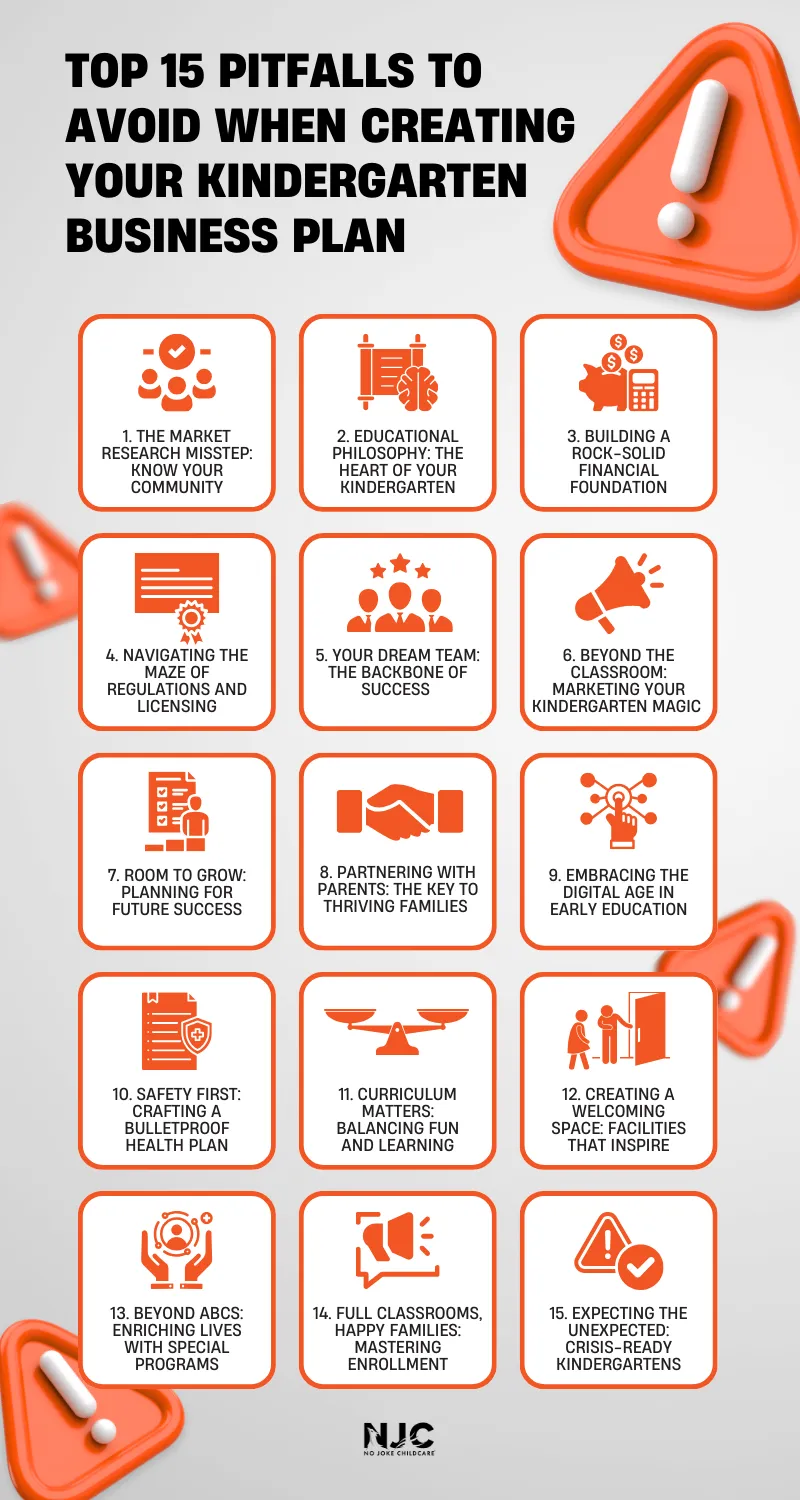
Top 15 Pitfalls to Avoid When Creating Your Kindergarten Business Plan

Published On: 07/26/2024By 7.2 min readCategories: Daycare Business, Kindergarten MarketingViews: 1446
kindergarten business plan

Thinking of starting a kindergarten? Awesome! You’re about to embark on an amazing journey filled with tiny shoes, big dreams, and more glitter than you ever thought possible. But before you dive into the world of ABCs and naptime, there’s one crucial step: creating a rock-solid kindergarten business plan.

At No Joke Childcare, we’ve seen many daycare centers stumble when trying to expand into kindergarten services. That’s why we’ve put together this guide to the top fifteen pitfalls to avoid when crafting your kindergarten business plan, helping you set a strong foundation for your new educational endeavor.

1. The Market Research Misstep: Know Your Community

kindergarten business plan sample

One of the biggest mistakes new kindergarten owners make is diving in without proper market research. Understanding your local community’s needs is key to a thriving kindergarten business.

  • Know your neighborhood: Research the demographics, income levels, and family structures in your area.

  • Identify competitors: Look at existing kindergartens and preschools nearby. What do they offer?

  • Find your niche: What unique services can you provide that others don’t?

Remember, a kindergarten business plan sample might look great on paper, but it needs to fit your specific market. Don’t just copy what others are doing – tailor your plan to meet local needs.

2. Educational Philosophy: The Heart of Your Kindergarten

In the rush to get started, some forget to clearly outline their educational approach. This is a critical mistake to avoid when starting a kindergarten business.

  • Choose your method: Will you follow Montessori, Waldorf, or traditional teaching styles?

  • Align with parents’ values: Make sure your philosophy resonates with local families.

  • Stay consistent: Your chosen approach should guide all aspects of your program.

Your educational philosophy isn’t just a fancy add-on. It’s the heart of your kindergarten and should shine through in every part of your business plan.

3. Building a Rock-Solid Financial Foundation

Money matters, especially in education. A weak financial strategy can sink your kindergarten before it even sets sail.

  • Budget realistically: Account for all possible expenses, from toys to teacher salaries.

  • Plan for growth: How will you fund expansion as your kindergarten grows?

  • Consider various income streams: Think beyond tuition. Could you offer after-school programs or summer camps?

Remember, a thorough financial section is a must-have in any kindergarten school business plan. It shows you’re serious and helps secure funding if needed.

4. Navigating the Maze of Regulations and Licensing

The world of early childhood education is heavily regulated, and for good reason. Skimping on legal requirements is a no-go.

  • Research local laws: Each state has different rules for kindergartens and childcare centers.

  • Plan for inspections: Your facilities need to meet specific safety and health standards.

  • Budget for compliance: Meeting regulations can be costly. Factor this into your financial plans.

Don’t let red tape trip you up. A good kindergarten business plan always includes a strategy for meeting all legal requirements.

5. Your Dream Team: The Backbone of Success

kindergarten school business plan

Your staff can make or break your kindergarten. Yet, some business plans treat hiring as an afterthought.

  • Prioritize qualified teachers: Skilled educators are worth their weight in gold.

  • Don’t forget support staff: From administrators to janitors, every role matters.

  • Plan for professional development: Ongoing training keeps your team sharp and your kindergarten competitive.

Remember, happy teachers mean happy kids (and parents). Make sure your kindergarten business plan puts people first.

6. Beyond the Classroom: Marketing Your Kindergarten Magic

In today’s digital world, a “build it and they will come” approach won’t cut it. Your kindergarten needs a solid marketing strategy.

  • Develop a strong brand: What makes your kindergarten special? Make sure parents know.

  • Embrace digital marketing: A user-friendly website and active social media presence are must-haves.

  • Plan for community outreach: Local events and partnerships can be great for visibility.

Don’t let your amazing kindergarten be the best-kept secret in town. A good business plan includes smart marketing ideas to get the word out.

7. Room to Grow: Planning for Future Success

It’s great to start small, but what happens when your kindergarten becomes the talk of the town? Planning for success is crucial.

  • Think about space: Will your current location accommodate more students?

  • Consider staffing needs: How will you maintain quality as you grow?

  • Plan for curriculum expansion: Will you add grade levels or specialized programs?

A forward-thinking kindergarten business plan sample always includes strategies for scaling up. Don’t let success catch you off guard!

8. Partnering with Parents: The Key to Thriving Families

Parents are your partners in education. Forgetting to include them in your plans is a big mistake.

  • Outline communication strategies: How will you keep parents in the loop?

  • Plan for parent involvement: Think volunteer opportunities, family events, and parent-teacher meetings.

  • Consider feedback mechanisms: How will you gather and act on parent suggestions?

Remember, happy parents are your best advertisers. Make sure your business plan prioritizes strong family relationships.

9. Embracing the Digital Age in Early Education

In our digital age, tech-savvy kindergartens have an edge. Don’t let your business plan get stuck in the past.

  • Plan for educational technology: Interactive whiteboards, tablets for learning games, etc.

  • Consider management software: Tools for attendance, billing, and parent communication can save time and headaches.

  • Think about online presence: Could you offer virtual tours or online registration?

While finger paints and building blocks are still kindergarten staples, a sprinkle of tech can take your program to the next level.

10. Safety First: Crafting a Bulletproof Health Plan

Health and safety should be top priorities in any kindergarten business plan.

  • Outline safety procedures: From fire drills to allergy protocols, leave no stone unturned.

  • Plan for health emergencies: How will you handle injuries or illnesses?

  • Consider ongoing safety training: Keep your staff up-to-date on best practices.

In the wake of recent global events, parents are more concerned than ever about their children’s well-being. A thorough health and safety plan can set your kindergarten apart.

11. Curriculum Matters: Balancing Fun and Learning

A well-planned curriculum is the backbone of any successful kindergarten. Don’t skimp on this crucial element.

  • Align with standards: Ensure your curriculum meets state and national education standards.

  • Balance academics and play: Remember, kindergarteners learn best through a mix of structured lessons and free play.

  • Plan for individual needs: How will you accommodate different learning styles and abilities?

A solid curriculum plan shows parents and stakeholders that you’re serious about education.

12. Creating a Welcoming Space: Facilities that Inspire

Your kindergarten’s physical space plays a big role in its success. Don’t overlook the nuts and bolts of facilities management.

  • Plan for maintenance: Regular upkeep prevents costly repairs down the line.

  • Think about aesthetics: A welcoming, colorful environment can be a big selling point for parents.

  • Consider future needs: How might your space requirements change as you grow?

A well-maintained, attractive facility can be a powerful marketing tool for your kindergarten.

13. Beyond ABCs: Enriching Lives with Special Programs

Special events and extracurricular activities can set your kindergarten apart from the competition. Don’t forget to include these in your plan.

  • Outline annual events: Think holiday celebrations, end-of-year shows, and parent nights.

  • Consider after-school programs: Could you offer music lessons, sports, or language classes?

  • Plan for field trips: Educational outings can be a big draw for parents and kids alike.

These extras can add value to your program and help build a strong school community.

14. Full Classrooms, Happy Families: Mastering Enrollment

Even the best kindergarten won’t succeed without students. Make sure your plan includes strategies for attracting and retaining families.

  • Develop an enrollment process: How will you handle applications, waitlists, and registration?

  • Plan for retention: What will you do to keep families coming back year after year?

  • Consider sibling policies: Many parents appreciate priority enrollment for siblings.

A clear enrollment strategy helps ensure a steady stream of students for your kindergarten.

15. Expecting the Unexpected: Crisis-Ready Kindergartens

In today’s world, being prepared for the unexpected is crucial. Don’t let your kindergarten be caught off guard.

  • Plan for various scenarios: From natural disasters to security threats, think through different crisis situations.

  • Outline communication protocols: How will you keep parents informed during an emergency?

  • Consider backup plans: What if your building becomes unusable? Have alternatives in mind.

A comprehensive crisis management plan shows parents that their children’s safety is their top priority.
Conclusion

Crafting a successful kindergarten business plan requires careful thought and strategic planning. By avoiding these pitfalls, you’re setting your kindergarten up for long-term success and creating a solid foundation for children’s early education.

If you’re ready to take your daycare center to the next level or launch a new kindergarten venture, No Joke Childcare is here to help – schedule a free strategy call with us today. Let’s build a bright future for little learners together!

Do you want
more traffic?

Stop wasting money and unlock the hidden potential of your advertising.

Are you using Google Ads

Try our new free ads grader?

Boost your childcare center's ROI with Michael Tasner, Founder of No Joke Childcare. With his extensive experience and expertise in childcare marketing, Michael Tasner offers innovative strategies tailored to the unique needs of your center. From web 3.0 marketing to social media strategies, he'll guide you to achieve maximum visibility and generate quality leads. Don't miss out on this opportunity to supercharge your marketing efforts and position your center for success.

About Michael Tasner

Hey, I'm Michael Tasner. I'm determined to make your childcare center grow. My only question is, will it be yours?

Categories
kindergarten business plan
Published On: 07/26/20247.2 min readViews: 1446

Thinking of starting a kindergarten? Awesome! You’re about to embark on an amazing journey filled with tiny shoes, big dreams, and more glitter than you ever thought possible. But before you dive into the world of ABCs and naptime, there’s one crucial step: creating a rock-solid kindergarten business plan.

At No Joke Childcare, we’ve seen many daycare centers stumble when trying to expand into kindergarten services. That’s why we’ve put together this guide to the top fifteen pitfalls to avoid when crafting your kindergarten business plan, helping you set a strong foundation for your new educational endeavor.

1. The Market Research Misstep: Know Your Community

kindergarten business plan sample

One of the biggest mistakes new kindergarten owners make is diving in without proper market research. Understanding your local community’s needs is key to a thriving kindergarten business.

  • Know your neighborhood: Research the demographics, income levels, and family structures in your area.

  • Identify competitors: Look at existing kindergartens and preschools nearby. What do they offer?

  • Find your niche: What unique services can you provide that others don’t?

Remember, a kindergarten business plan sample might look great on paper, but it needs to fit your specific market. Don’t just copy what others are doing – tailor your plan to meet local needs.

2. Educational Philosophy: The Heart of Your Kindergarten

In the rush to get started, some forget to clearly outline their educational approach. This is a critical mistake to avoid when starting a kindergarten business.

  • Choose your method: Will you follow Montessori, Waldorf, or traditional teaching styles?

  • Align with parents’ values: Make sure your philosophy resonates with local families.

  • Stay consistent: Your chosen approach should guide all aspects of your program.

Your educational philosophy isn’t just a fancy add-on. It’s the heart of your kindergarten and should shine through in every part of your business plan.

3. Building a Rock-Solid Financial Foundation

Money matters, especially in education. A weak financial strategy can sink your kindergarten before it even sets sail.

  • Budget realistically: Account for all possible expenses, from toys to teacher salaries.

  • Plan for growth: How will you fund expansion as your kindergarten grows?

  • Consider various income streams: Think beyond tuition. Could you offer after-school programs or summer camps?

Remember, a thorough financial section is a must-have in any kindergarten school business plan. It shows you’re serious and helps secure funding if needed.

4. Navigating the Maze of Regulations and Licensing

The world of early childhood education is heavily regulated, and for good reason. Skimping on legal requirements is a no-go.

  • Research local laws: Each state has different rules for kindergartens and childcare centers.

  • Plan for inspections: Your facilities need to meet specific safety and health standards.

  • Budget for compliance: Meeting regulations can be costly. Factor this into your financial plans.

Don’t let red tape trip you up. A good kindergarten business plan always includes a strategy for meeting all legal requirements.

5. Your Dream Team: The Backbone of Success

kindergarten school business plan

Your staff can make or break your kindergarten. Yet, some business plans treat hiring as an afterthought.

  • Prioritize qualified teachers: Skilled educators are worth their weight in gold.

  • Don’t forget support staff: From administrators to janitors, every role matters.

  • Plan for professional development: Ongoing training keeps your team sharp and your kindergarten competitive.

Remember, happy teachers mean happy kids (and parents). Make sure your kindergarten business plan puts people first.

6. Beyond the Classroom: Marketing Your Kindergarten Magic

In today’s digital world, a “build it and they will come” approach won’t cut it. Your kindergarten needs a solid marketing strategy.

  • Develop a strong brand: What makes your kindergarten special? Make sure parents know.

  • Embrace digital marketing: A user-friendly website and active social media presence are must-haves.

  • Plan for community outreach: Local events and partnerships can be great for visibility.

Don’t let your amazing kindergarten be the best-kept secret in town. A good business plan includes smart marketing ideas to get the word out.

7. Room to Grow: Planning for Future Success

It’s great to start small, but what happens when your kindergarten becomes the talk of the town? Planning for success is crucial.

  • Think about space: Will your current location accommodate more students?

  • Consider staffing needs: How will you maintain quality as you grow?

  • Plan for curriculum expansion: Will you add grade levels or specialized programs?

A forward-thinking kindergarten business plan sample always includes strategies for scaling up. Don’t let success catch you off guard!

8. Partnering with Parents: The Key to Thriving Families

Parents are your partners in education. Forgetting to include them in your plans is a big mistake.

  • Outline communication strategies: How will you keep parents in the loop?

  • Plan for parent involvement: Think volunteer opportunities, family events, and parent-teacher meetings.

  • Consider feedback mechanisms: How will you gather and act on parent suggestions?

Remember, happy parents are your best advertisers. Make sure your business plan prioritizes strong family relationships.

9. Embracing the Digital Age in Early Education

In our digital age, tech-savvy kindergartens have an edge. Don’t let your business plan get stuck in the past.

  • Plan for educational technology: Interactive whiteboards, tablets for learning games, etc.

  • Consider management software: Tools for attendance, billing, and parent communication can save time and headaches.

  • Think about online presence: Could you offer virtual tours or online registration?

While finger paints and building blocks are still kindergarten staples, a sprinkle of tech can take your program to the next level.

10. Safety First: Crafting a Bulletproof Health Plan

Health and safety should be top priorities in any kindergarten business plan.

  • Outline safety procedures: From fire drills to allergy protocols, leave no stone unturned.

  • Plan for health emergencies: How will you handle injuries or illnesses?

  • Consider ongoing safety training: Keep your staff up-to-date on best practices.

In the wake of recent global events, parents are more concerned than ever about their children’s well-being. A thorough health and safety plan can set your kindergarten apart.

11. Curriculum Matters: Balancing Fun and Learning

A well-planned curriculum is the backbone of any successful kindergarten. Don’t skimp on this crucial element.

  • Align with standards: Ensure your curriculum meets state and national education standards.

  • Balance academics and play: Remember, kindergarteners learn best through a mix of structured lessons and free play.

  • Plan for individual needs: How will you accommodate different learning styles and abilities?

A solid curriculum plan shows parents and stakeholders that you’re serious about education.

12. Creating a Welcoming Space: Facilities that Inspire

Your kindergarten’s physical space plays a big role in its success. Don’t overlook the nuts and bolts of facilities management.

  • Plan for maintenance: Regular upkeep prevents costly repairs down the line.

  • Think about aesthetics: A welcoming, colorful environment can be a big selling point for parents.

  • Consider future needs: How might your space requirements change as you grow?

A well-maintained, attractive facility can be a powerful marketing tool for your kindergarten.

13. Beyond ABCs: Enriching Lives with Special Programs

Special events and extracurricular activities can set your kindergarten apart from the competition. Don’t forget to include these in your plan.

  • Outline annual events: Think holiday celebrations, end-of-year shows, and parent nights.

  • Consider after-school programs: Could you offer music lessons, sports, or language classes?

  • Plan for field trips: Educational outings can be a big draw for parents and kids alike.

These extras can add value to your program and help build a strong school community.

14. Full Classrooms, Happy Families: Mastering Enrollment

Even the best kindergarten won’t succeed without students. Make sure your plan includes strategies for attracting and retaining families.

  • Develop an enrollment process: How will you handle applications, waitlists, and registration?

  • Plan for retention: What will you do to keep families coming back year after year?

  • Consider sibling policies: Many parents appreciate priority enrollment for siblings.

A clear enrollment strategy helps ensure a steady stream of students for your kindergarten.

15. Expecting the Unexpected: Crisis-Ready Kindergartens

In today’s world, being prepared for the unexpected is crucial. Don’t let your kindergarten be caught off guard.

  • Plan for various scenarios: From natural disasters to security threats, think through different crisis situations.

  • Outline communication protocols: How will you keep parents informed during an emergency?

  • Consider backup plans: What if your building becomes unusable? Have alternatives in mind.

A comprehensive crisis management plan shows parents that their children’s safety is their top priority.

Conclusion

Crafting a successful kindergarten business plan requires careful thought and strategic planning. By avoiding these pitfalls, you’re setting your kindergarten up for long-term success and creating a solid foundation for children’s early education.

If you’re ready to take your daycare center to the next level or launch a new kindergarten venture, No Joke Childcare is here to help – schedule a free strategy call with us today. Let’s build a bright future for little learners together!

kindergarten business plan
Published On: 07/26/20247.2 min readViews: 1446

Thinking of starting a kindergarten? Awesome! You’re about to embark on an amazing journey filled with tiny shoes, big dreams, and more glitter than you ever thought possible. But before you dive into the world of ABCs and naptime, there’s one crucial step: creating a rock-solid kindergarten business plan.

At No Joke Childcare, we’ve seen many daycare centers stumble when trying to expand into kindergarten services. That’s why we’ve put together this guide to the top fifteen pitfalls to avoid when crafting your kindergarten business plan, helping you set a strong foundation for your new educational endeavor.

1. The Market Research Misstep: Know Your Community

kindergarten business plan sample

One of the biggest mistakes new kindergarten owners make is diving in without proper market research. Understanding your local community’s needs is key to a thriving kindergarten business.

  • Know your neighborhood: Research the demographics, income levels, and family structures in your area.

  • Identify competitors: Look at existing kindergartens and preschools nearby. What do they offer?

  • Find your niche: What unique services can you provide that others don’t?

Remember, a kindergarten business plan sample might look great on paper, but it needs to fit your specific market. Don’t just copy what others are doing – tailor your plan to meet local needs.

2. Educational Philosophy: The Heart of Your Kindergarten

In the rush to get started, some forget to clearly outline their educational approach. This is a critical mistake to avoid when starting a kindergarten business.

  • Choose your method: Will you follow Montessori, Waldorf, or traditional teaching styles?

  • Align with parents’ values: Make sure your philosophy resonates with local families.

  • Stay consistent: Your chosen approach should guide all aspects of your program.

Your educational philosophy isn’t just a fancy add-on. It’s the heart of your kindergarten and should shine through in every part of your business plan.

3. Building a Rock-Solid Financial Foundation

Money matters, especially in education. A weak financial strategy can sink your kindergarten before it even sets sail.

  • Budget realistically: Account for all possible expenses, from toys to teacher salaries.

  • Plan for growth: How will you fund expansion as your kindergarten grows?

  • Consider various income streams: Think beyond tuition. Could you offer after-school programs or summer camps?

Remember, a thorough financial section is a must-have in any kindergarten school business plan. It shows you’re serious and helps secure funding if needed.

4. Navigating the Maze of Regulations and Licensing

The world of early childhood education is heavily regulated, and for good reason. Skimping on legal requirements is a no-go.

  • Research local laws: Each state has different rules for kindergartens and childcare centers.

  • Plan for inspections: Your facilities need to meet specific safety and health standards.

  • Budget for compliance: Meeting regulations can be costly. Factor this into your financial plans.

Don’t let red tape trip you up. A good kindergarten business plan always includes a strategy for meeting all legal requirements.

5. Your Dream Team: The Backbone of Success

kindergarten school business plan

Your staff can make or break your kindergarten. Yet, some business plans treat hiring as an afterthought.

  • Prioritize qualified teachers: Skilled educators are worth their weight in gold.

  • Don’t forget support staff: From administrators to janitors, every role matters.

  • Plan for professional development: Ongoing training keeps your team sharp and your kindergarten competitive.

Remember, happy teachers mean happy kids (and parents). Make sure your kindergarten business plan puts people first.

6. Beyond the Classroom: Marketing Your Kindergarten Magic

In today’s digital world, a “build it and they will come” approach won’t cut it. Your kindergarten needs a solid marketing strategy.

  • Develop a strong brand: What makes your kindergarten special? Make sure parents know.

  • Embrace digital marketing: A user-friendly website and active social media presence are must-haves.

  • Plan for community outreach: Local events and partnerships can be great for visibility.

Don’t let your amazing kindergarten be the best-kept secret in town. A good business plan includes smart marketing ideas to get the word out.

7. Room to Grow: Planning for Future Success

It’s great to start small, but what happens when your kindergarten becomes the talk of the town? Planning for success is crucial.

  • Think about space: Will your current location accommodate more students?

  • Consider staffing needs: How will you maintain quality as you grow?

  • Plan for curriculum expansion: Will you add grade levels or specialized programs?

A forward-thinking kindergarten business plan sample always includes strategies for scaling up. Don’t let success catch you off guard!

8. Partnering with Parents: The Key to Thriving Families

Parents are your partners in education. Forgetting to include them in your plans is a big mistake.

  • Outline communication strategies: How will you keep parents in the loop?

  • Plan for parent involvement: Think volunteer opportunities, family events, and parent-teacher meetings.

  • Consider feedback mechanisms: How will you gather and act on parent suggestions?

Remember, happy parents are your best advertisers. Make sure your business plan prioritizes strong family relationships.

9. Embracing the Digital Age in Early Education

In our digital age, tech-savvy kindergartens have an edge. Don’t let your business plan get stuck in the past.

  • Plan for educational technology: Interactive whiteboards, tablets for learning games, etc.

  • Consider management software: Tools for attendance, billing, and parent communication can save time and headaches.

  • Think about online presence: Could you offer virtual tours or online registration?

While finger paints and building blocks are still kindergarten staples, a sprinkle of tech can take your program to the next level.

10. Safety First: Crafting a Bulletproof Health Plan

Health and safety should be top priorities in any kindergarten business plan.

  • Outline safety procedures: From fire drills to allergy protocols, leave no stone unturned.

  • Plan for health emergencies: How will you handle injuries or illnesses?

  • Consider ongoing safety training: Keep your staff up-to-date on best practices.

In the wake of recent global events, parents are more concerned than ever about their children’s well-being. A thorough health and safety plan can set your kindergarten apart.

11. Curriculum Matters: Balancing Fun and Learning

A well-planned curriculum is the backbone of any successful kindergarten. Don’t skimp on this crucial element.

  • Align with standards: Ensure your curriculum meets state and national education standards.

  • Balance academics and play: Remember, kindergarteners learn best through a mix of structured lessons and free play.

  • Plan for individual needs: How will you accommodate different learning styles and abilities?

A solid curriculum plan shows parents and stakeholders that you’re serious about education.

12. Creating a Welcoming Space: Facilities that Inspire

Your kindergarten’s physical space plays a big role in its success. Don’t overlook the nuts and bolts of facilities management.

  • Plan for maintenance: Regular upkeep prevents costly repairs down the line.

  • Think about aesthetics: A welcoming, colorful environment can be a big selling point for parents.

  • Consider future needs: How might your space requirements change as you grow?

A well-maintained, attractive facility can be a powerful marketing tool for your kindergarten.

13. Beyond ABCs: Enriching Lives with Special Programs

Special events and extracurricular activities can set your kindergarten apart from the competition. Don’t forget to include these in your plan.

  • Outline annual events: Think holiday celebrations, end-of-year shows, and parent nights.

  • Consider after-school programs: Could you offer music lessons, sports, or language classes?

  • Plan for field trips: Educational outings can be a big draw for parents and kids alike.

These extras can add value to your program and help build a strong school community.

14. Full Classrooms, Happy Families: Mastering Enrollment

Even the best kindergarten won’t succeed without students. Make sure your plan includes strategies for attracting and retaining families.

  • Develop an enrollment process: How will you handle applications, waitlists, and registration?

  • Plan for retention: What will you do to keep families coming back year after year?

  • Consider sibling policies: Many parents appreciate priority enrollment for siblings.

A clear enrollment strategy helps ensure a steady stream of students for your kindergarten.

15. Expecting the Unexpected: Crisis-Ready Kindergartens

In today’s world, being prepared for the unexpected is crucial. Don’t let your kindergarten be caught off guard.

  • Plan for various scenarios: From natural disasters to security threats, think through different crisis situations.

  • Outline communication protocols: How will you keep parents informed during an emergency?

  • Consider backup plans: What if your building becomes unusable? Have alternatives in mind.

A comprehensive crisis management plan shows parents that their children’s safety is their top priority.

Conclusion

Crafting a successful kindergarten business plan requires careful thought and strategic planning. By avoiding these pitfalls, you’re setting your kindergarten up for long-term success and creating a solid foundation for children’s early education.

If you’re ready to take your daycare center to the next level or launch a new kindergarten venture, No Joke Childcare is here to help – schedule a free strategy call with us today. Let’s build a bright future for little learners together!