
I hope you enjoy reading this blog post.

If you want my team to just do your marketing for you, click here.


Your Complete Guide to Fulfilling Daycare Certification Requirements

Published On: 07/11/2024By 7.4 min readCategories: Daycare Business, Daycare Operations, GeneralViews: 1110
daycare certification requirements

Are you dreaming of opening a daycare center? Whether you’re considering a home-based operation or a larger facility, understanding and fulfilling daycare certification requirements is crucial for your success.

This guide will walk you through the essentials of how to get certified for daycare, ensuring you’re well-prepared to provide a safe, nurturing environment for children while complying with all necessary regulations.

Understanding Daycare Certification: The First Step to Success
Before diving into the specifics, let’s clarify what daycare certification means. In the world of childcare, the terms “certification” and “licensing” are often used interchangeably, but there’s a subtle difference:

  • Certification typically refers to meeting specific developmental and educational criteria set by non-governmental organizations.
  • Licensing is usually issued by state agencies and signifies compliance with state-mandated health, safety, and staffing regulations.

The Importance of Daycare Certification
You might be wondering, “Why do I need to get certified for daycare?” The answer is simple: certification ensures that your daycare meets minimum standards for health, safety, and education. This not only protects the children in your care but also gives parents peace of mind and can boost your business’s credibility.

Moreover, operating without proper certification can lead to legal troubles and potential closure of your daycare. So, while the process might seem daunting, it’s an essential step in establishing a successful and reputable childcare business.

Navigating the Daycare Certification Process: A Step-by-Step Guide
how to get certified for daycare

While specific daycare certification requirements vary by state, the general process follows a similar pattern. Let’s break it down into manageable steps:

1. Research Your State’s Requirements

Start by contacting your state’s Child Care Licensing Department. Their website should be your first stop for information on:

  • Licensing applications
  • State-specific regulations
  • Contact details for regional licensing specialists

2. Review and Understand Regulations

Familiarize yourself with your state’s Child Care Licensing regulations. These typically cover:

  • Facility Requirements: This includes fire safety measures, space requirements per child, and appropriate furnishings and equipment.

  • Staff Qualifications: Details about required education levels, training in CPR and first aid, and background check mandates.

  • Child-to-Staff Ratios: Guidelines on how many children a caregiver can safely supervise, often based on age groups.

  • Curriculum and Activities: Expectations for age-appropriate learning experiences.

  • Health and Nutrition: Food safety guidelines, medication administration protocols, and child health screenings.

  • Recordkeeping: Types of records you need to maintain, such as attendance logs and health records.

3. Prepare Your Facility

Ensure your daycare space adheres to all safety regulations. This may involve:

  • Installing fire alarms and extinguishers
  • Ensuring proper ventilation
  • Providing designated nap areas
  • Childproofing all areas accessible to children
  • Setting up age-appropriate play areas

4. Complete Required Training

Both you and your staff will likely need to undergo mandatory training. Common requirements include:

  • First Aid and CPR certification
  • Child development courses
  • Training in managing children with special needs
  • Food safety and nutrition courses

5. Submit Your Application and Fees

Download and complete the licensing application form from your state’s Child Care Licensing Department. Be prepared to pay non-refundable processing fees, which vary by state.

6. Prepare for the Pre-Licensing Inspection

A licensing specialist will visit your daycare to verify compliance with regulations. They may review:

7. Obtain Your License

If you pass the inspection, your license will be issued. Remember, this typically requires renewal every few years, with periodic inspections in between.

Home-Based Daycare Certification Requirements: A Closer Look

If you’re planning to open a home-based daycare, the certification process is similar but with some unique considerations:

  • Zoning Laws: Check your local zoning laws to ensure you’re allowed to operate a business from your home.

  • Space Requirements: Your home will need to have adequate space for childcare activities, separate from your living areas.

  • Safety Modifications: You may need to make specific safety modifications to your home, such as installing safety gates or securing potential hazards.

  • Capacity Limits: Home-based daycares often have stricter limits on the number of children they can care for compared to center-based facilities.

  • Insurance: You’ll likely need to obtain specific insurance coverage for your home-based daycare.

Remember, while home-based daycares might have some different requirements, the core principles of providing safe, nurturing care remain the same.

Beyond Basic Certification: Building a Strong Foundation for Your Daycare
daycare certification requirements

While meeting daycare certification requirements is crucial, it’s just the beginning of creating a successful childcare center. Here are some strategies to elevate your daycare beyond the basics:

1. Develop a Comprehensive Curriculum

Go beyond basic playtime and create a stimulating environment that promotes age-appropriate learning and development. Consider incorporating:

  • Structured learning activities
  • Free play time
  • Outdoor exploration
  • Arts and crafts
  • Music and movement
  • Early literacy activities

2. Invest in Ongoing Staff Development

Encourage continuous learning for your staff. This can involve:

  • Regular training sessions on child development best practices
  • Workshops on positive discipline techniques
  • Seminars on fostering inclusivity in the classroom
  • Team-building activities to improve staff cohesion

3. Maintain Open Communication with Parents

Build trust and transparency through regular communication with parents. Consider:

  • Implementing a parent-teacher conference schedule
  • Creating a monthly newsletter highlighting daycare activities
  • Using a secure online portal for daily updates and photos
  • Hosting parent engagement events or workshops

4. Partner with Community Resources

Collaborate with local resources to create a well-rounded support network for the children and families you serve. This could include partnerships with:

  • Local libraries for storytime sessions
  • Pediatric healthcare providers for health and wellness guidance
  • Early intervention specialists for children with special needs
  • Local farms or community gardens for nature education

Staffing Up for Success: Building a Qualified Daycare Team

Meeting the daycare certification requirements means nothing without having qualified and passionate staff. Here’s how to build a team that fosters a nurturing and stimulating environment:

1. Identify the Right People

Look for individuals who possess not just the necessary qualifications but also a genuine passion for working with children. Key qualities to consider include:

  • Patience and empathy
  • Strong communication skills
  • Creativity and resourcefulness
  • Ability to work well in a team

2. Build a Well-Rounded Team

Consider the diverse needs of your daycare when building your team:

  • Lead Teachers: Look for qualified individuals with experience in early childhood education and a strong understanding of child development.

  • Assistant Teachers: Consider candidates with childcare experience or those pursuing early childhood education certifications.

  • Specialists: Depending on your daycare’s focus, you might want to hire specialists in areas like music, art, or physical education.

3. Invest in Ongoing Training

Don’t let qualifications become stagnant. Invest in ongoing training opportunities for your staff, covering topics like:

  • Child development
  • Positive discipline techniques
  • Cultural competency
  • Safety and health procedures

Overcoming Common Challenges in the Certification Process

While pursuing daycare certification, you might encounter some hurdles. Here are some common challenges and tips to overcome them:

1. Navigating Complex Regulations

  • Break down regulations into manageable sections
  • Consider joining a local childcare association for support and guidance
  • Don’t hesitate to reach out to your licensing agency for clarification

2. Meeting Facility Requirements

  • Start early in assessing your facility’s needs
  • Consider consulting with a childcare design specialist
  • Look into grants or low-interest loans for necessary renovations

3. Completing Required Training

  • Create a schedule to complete training systematically
  • Look for online training options for flexibility
  • Consider group training sessions for your staff to save time and build team spirit

4. Managing Costs

  • Budget carefully, and include all potential costs

  • Look into small business loans or grants for childcare providers
  • Consider a phased approach to opening, starting small, and expanding as your business grows

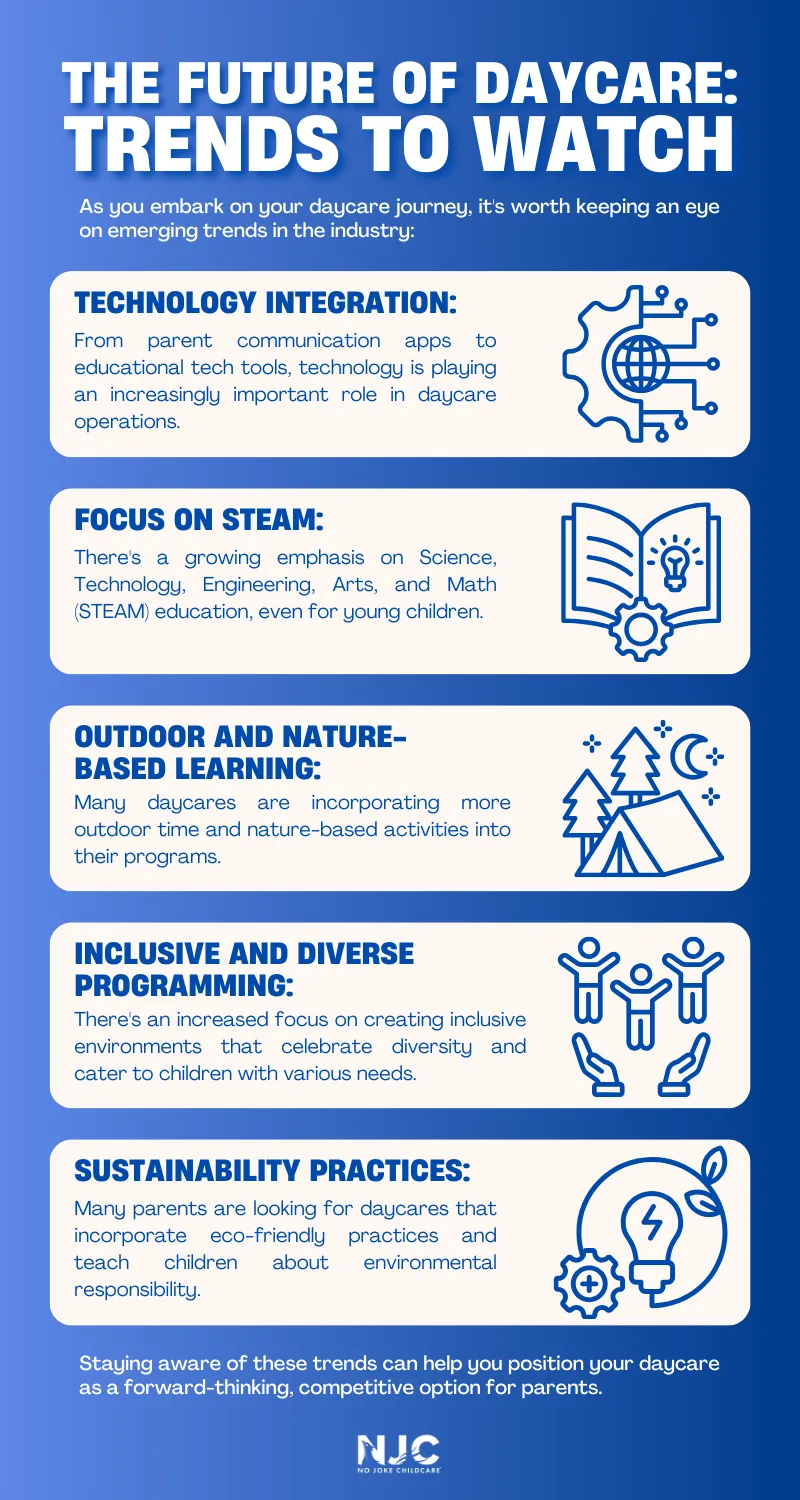
The Future of Daycare: Trends to Watch
daycare certification requirements

As you embark on your daycare journey, it’s worth keeping an eye on emerging trends in the industry:

  • Technology Integration: From parent communication apps to educational tech tools, technology is playing an increasingly important role in daycare operations.

  • Focus on STEAM: There’s a growing emphasis on Science, Technology, Engineering, Arts, and Math (STEAM) education, even for young children.

  • Outdoor and Nature-Based Learning: Many daycares are incorporating more outdoor time and nature-based activities into their programs.

  • Inclusive and Diverse Programming: There’s an increased focus on creating inclusive environments that celebrate diversity and cater to children with various needs.

  • Sustainability Practices: Many parents are looking for daycares that incorporate eco-friendly practices and teach children about environmental responsibility.

Staying aware of these trends can help you position your daycare as a forward-thinking, competitive option for parents.

Conclusion

Navigating daycare certification requirements is a crucial step in establishing a successful childcare center. While the process may seem daunting, it’s an investment in the safety, quality, and credibility of your daycare.

Remember, certification is just the beginning. By going above and beyond the basic requirements, you can create a thriving environment where children can learn, grow, and flourish.

At No Joke Childcare, we specialize in helping daycare centers boost their business. Schedule a free strategy call with us today to discover how we can help you maximize your daycare’s potential and create a nurturing environment that parents and children will love.

Do you want
more traffic?

Stop wasting money and unlock the hidden potential of your advertising.

Are you using Google Ads

Try our new free ads grader?

Boost your childcare center's ROI with Michael Tasner, Founder of No Joke Childcare. With his extensive experience and expertise in childcare marketing, Michael Tasner offers innovative strategies tailored to the unique needs of your center. From web 3.0 marketing to social media strategies, he'll guide you to achieve maximum visibility and generate quality leads. Don't miss out on this opportunity to supercharge your marketing efforts and position your center for success.

About Michael Tasner

Hey, I'm Michael Tasner. I'm determined to make your childcare center grow. My only question is, will it be yours?

Categories
daycare certification requirements
Published On: 07/11/20247.4 min readViews: 1110

Are you dreaming of opening a daycare center? Whether you’re considering a home-based operation or a larger facility, understanding and fulfilling daycare certification requirements is crucial for your success.

This guide will walk you through the essentials of how to get certified for daycare, ensuring you’re well-prepared to provide a safe, nurturing environment for children while complying with all necessary regulations.

Understanding Daycare Certification: The First Step to Success

Before diving into the specifics, let’s clarify what daycare certification means. In the world of childcare, the terms “certification” and “licensing” are often used interchangeably, but there’s a subtle difference:

  • Certification typically refers to meeting specific developmental and educational criteria set by non-governmental organizations.
  • Licensing is usually issued by state agencies and signifies compliance with state-mandated health, safety, and staffing regulations.

The Importance of Daycare Certification

You might be wondering, “Why do I need to get certified for daycare?” The answer is simple: certification ensures that your daycare meets minimum standards for health, safety, and education. This not only protects the children in your care but also gives parents peace of mind and can boost your business’s credibility.

Moreover, operating without proper certification can lead to legal troubles and potential closure of your daycare. So, while the process might seem daunting, it’s an essential step in establishing a successful and reputable childcare business.

Navigating the Daycare Certification Process: A Step-by-Step Guide

how to get certified for daycare

While specific daycare certification requirements vary by state, the general process follows a similar pattern. Let’s break it down into manageable steps:

1. Research Your State’s Requirements

Start by contacting your state’s Child Care Licensing Department. Their website should be your first stop for information on:

  • Licensing applications
  • State-specific regulations
  • Contact details for regional licensing specialists

2. Review and Understand Regulations

Familiarize yourself with your state’s Child Care Licensing regulations. These typically cover:

  • Facility Requirements: This includes fire safety measures, space requirements per child, and appropriate furnishings and equipment.

  • Staff Qualifications: Details about required education levels, training in CPR and first aid, and background check mandates.

  • Child-to-Staff Ratios: Guidelines on how many children a caregiver can safely supervise, often based on age groups.

  • Curriculum and Activities: Expectations for age-appropriate learning experiences.

  • Health and Nutrition: Food safety guidelines, medication administration protocols, and child health screenings.

  • Recordkeeping: Types of records you need to maintain, such as attendance logs and health records.

3. Prepare Your Facility

Ensure your daycare space adheres to all safety regulations. This may involve:

  • Installing fire alarms and extinguishers
  • Ensuring proper ventilation
  • Providing designated nap areas
  • Childproofing all areas accessible to children
  • Setting up age-appropriate play areas

4. Complete Required Training

Both you and your staff will likely need to undergo mandatory training. Common requirements include:

  • First Aid and CPR certification
  • Child development courses
  • Training in managing children with special needs
  • Food safety and nutrition courses

5. Submit Your Application and Fees

Download and complete the licensing application form from your state’s Child Care Licensing Department. Be prepared to pay non-refundable processing fees, which vary by state.

6. Prepare for the Pre-Licensing Inspection

A licensing specialist will visit your daycare to verify compliance with regulations. They may review:

7. Obtain Your License

If you pass the inspection, your license will be issued. Remember, this typically requires renewal every few years, with periodic inspections in between.

Home-Based Daycare Certification Requirements: A Closer Look

If you’re planning to open a home-based daycare, the certification process is similar but with some unique considerations:

  • Zoning Laws: Check your local zoning laws to ensure you’re allowed to operate a business from your home.

  • Space Requirements: Your home will need to have adequate space for childcare activities, separate from your living areas.

  • Safety Modifications: You may need to make specific safety modifications to your home, such as installing safety gates or securing potential hazards.

  • Capacity Limits: Home-based daycares often have stricter limits on the number of children they can care for compared to center-based facilities.

  • Insurance: You’ll likely need to obtain specific insurance coverage for your home-based daycare.

Remember, while home-based daycares might have some different requirements, the core principles of providing safe, nurturing care remain the same.

Beyond Basic Certification: Building a Strong Foundation for Your Daycare

daycare certification requirements

While meeting daycare certification requirements is crucial, it’s just the beginning of creating a successful childcare center. Here are some strategies to elevate your daycare beyond the basics:

1. Develop a Comprehensive Curriculum

Go beyond basic playtime and create a stimulating environment that promotes age-appropriate learning and development. Consider incorporating:

  • Structured learning activities
  • Free play time
  • Outdoor exploration
  • Arts and crafts
  • Music and movement
  • Early literacy activities

2. Invest in Ongoing Staff Development

Encourage continuous learning for your staff. This can involve:

  • Regular training sessions on child development best practices
  • Workshops on positive discipline techniques
  • Seminars on fostering inclusivity in the classroom
  • Team-building activities to improve staff cohesion

3. Maintain Open Communication with Parents

Build trust and transparency through regular communication with parents. Consider:

  • Implementing a parent-teacher conference schedule
  • Creating a monthly newsletter highlighting daycare activities
  • Using a secure online portal for daily updates and photos
  • Hosting parent engagement events or workshops

4. Partner with Community Resources

Collaborate with local resources to create a well-rounded support network for the children and families you serve. This could include partnerships with:

  • Local libraries for storytime sessions
  • Pediatric healthcare providers for health and wellness guidance
  • Early intervention specialists for children with special needs
  • Local farms or community gardens for nature education

Staffing Up for Success: Building a Qualified Daycare Team

Meeting the daycare certification requirements means nothing without having qualified and passionate staff. Here’s how to build a team that fosters a nurturing and stimulating environment:

1. Identify the Right People

Look for individuals who possess not just the necessary qualifications but also a genuine passion for working with children. Key qualities to consider include:

  • Patience and empathy
  • Strong communication skills
  • Creativity and resourcefulness
  • Ability to work well in a team

2. Build a Well-Rounded Team

Consider the diverse needs of your daycare when building your team:

  • Lead Teachers: Look for qualified individuals with experience in early childhood education and a strong understanding of child development.

  • Assistant Teachers: Consider candidates with childcare experience or those pursuing early childhood education certifications.

  • Specialists: Depending on your daycare’s focus, you might want to hire specialists in areas like music, art, or physical education.

3. Invest in Ongoing Training

Don’t let qualifications become stagnant. Invest in ongoing training opportunities for your staff, covering topics like:

  • Child development
  • Positive discipline techniques
  • Cultural competency
  • Safety and health procedures

Overcoming Common Challenges in the Certification Process

While pursuing daycare certification, you might encounter some hurdles. Here are some common challenges and tips to overcome them:

1. Navigating Complex Regulations

  • Break down regulations into manageable sections
  • Consider joining a local childcare association for support and guidance
  • Don’t hesitate to reach out to your licensing agency for clarification

2. Meeting Facility Requirements

  • Start early in assessing your facility’s needs
  • Consider consulting with a childcare design specialist
  • Look into grants or low-interest loans for necessary renovations

3. Completing Required Training

  • Create a schedule to complete training systematically
  • Look for online training options for flexibility
  • Consider group training sessions for your staff to save time and build team spirit

4. Managing Costs

  • Budget carefully, and include all potential costs

  • Look into small business loans or grants for childcare providers
  • Consider a phased approach to opening, starting small, and expanding as your business grows

The Future of Daycare: Trends to Watch

daycare certification requirements

As you embark on your daycare journey, it’s worth keeping an eye on emerging trends in the industry:

  • Technology Integration: From parent communication apps to educational tech tools, technology is playing an increasingly important role in daycare operations.

  • Focus on STEAM: There’s a growing emphasis on Science, Technology, Engineering, Arts, and Math (STEAM) education, even for young children.

  • Outdoor and Nature-Based Learning: Many daycares are incorporating more outdoor time and nature-based activities into their programs.

  • Inclusive and Diverse Programming: There’s an increased focus on creating inclusive environments that celebrate diversity and cater to children with various needs.

  • Sustainability Practices: Many parents are looking for daycares that incorporate eco-friendly practices and teach children about environmental responsibility.

Staying aware of these trends can help you position your daycare as a forward-thinking, competitive option for parents.

Conclusion

Navigating daycare certification requirements is a crucial step in establishing a successful childcare center. While the process may seem daunting, it’s an investment in the safety, quality, and credibility of your daycare.

Remember, certification is just the beginning. By going above and beyond the basic requirements, you can create a thriving environment where children can learn, grow, and flourish.

At No Joke Childcare, we specialize in helping daycare centers boost their business. Schedule a free strategy call with us today to discover how we can help you maximize your daycare’s potential and create a nurturing environment that parents and children will love.

daycare certification requirements
Published On: 07/11/20247.4 min readViews: 1110

Are you dreaming of opening a daycare center? Whether you’re considering a home-based operation or a larger facility, understanding and fulfilling daycare certification requirements is crucial for your success.

This guide will walk you through the essentials of how to get certified for daycare, ensuring you’re well-prepared to provide a safe, nurturing environment for children while complying with all necessary regulations.

Understanding Daycare Certification: The First Step to Success

Before diving into the specifics, let’s clarify what daycare certification means. In the world of childcare, the terms “certification” and “licensing” are often used interchangeably, but there’s a subtle difference:

  • Certification typically refers to meeting specific developmental and educational criteria set by non-governmental organizations.
  • Licensing is usually issued by state agencies and signifies compliance with state-mandated health, safety, and staffing regulations.

The Importance of Daycare Certification

You might be wondering, “Why do I need to get certified for daycare?” The answer is simple: certification ensures that your daycare meets minimum standards for health, safety, and education. This not only protects the children in your care but also gives parents peace of mind and can boost your business’s credibility.

Moreover, operating without proper certification can lead to legal troubles and potential closure of your daycare. So, while the process might seem daunting, it’s an essential step in establishing a successful and reputable childcare business.

Navigating the Daycare Certification Process: A Step-by-Step Guide

how to get certified for daycare

While specific daycare certification requirements vary by state, the general process follows a similar pattern. Let’s break it down into manageable steps:

1. Research Your State’s Requirements

Start by contacting your state’s Child Care Licensing Department. Their website should be your first stop for information on:

  • Licensing applications
  • State-specific regulations
  • Contact details for regional licensing specialists

2. Review and Understand Regulations

Familiarize yourself with your state’s Child Care Licensing regulations. These typically cover:

  • Facility Requirements: This includes fire safety measures, space requirements per child, and appropriate furnishings and equipment.

  • Staff Qualifications: Details about required education levels, training in CPR and first aid, and background check mandates.

  • Child-to-Staff Ratios: Guidelines on how many children a caregiver can safely supervise, often based on age groups.

  • Curriculum and Activities: Expectations for age-appropriate learning experiences.

  • Health and Nutrition: Food safety guidelines, medication administration protocols, and child health screenings.

  • Recordkeeping: Types of records you need to maintain, such as attendance logs and health records.

3. Prepare Your Facility

Ensure your daycare space adheres to all safety regulations. This may involve:

  • Installing fire alarms and extinguishers
  • Ensuring proper ventilation
  • Providing designated nap areas
  • Childproofing all areas accessible to children
  • Setting up age-appropriate play areas

4. Complete Required Training

Both you and your staff will likely need to undergo mandatory training. Common requirements include:

  • First Aid and CPR certification
  • Child development courses
  • Training in managing children with special needs
  • Food safety and nutrition courses

5. Submit Your Application and Fees

Download and complete the licensing application form from your state’s Child Care Licensing Department. Be prepared to pay non-refundable processing fees, which vary by state.

6. Prepare for the Pre-Licensing Inspection

A licensing specialist will visit your daycare to verify compliance with regulations. They may review:

7. Obtain Your License

If you pass the inspection, your license will be issued. Remember, this typically requires renewal every few years, with periodic inspections in between.

Home-Based Daycare Certification Requirements: A Closer Look

If you’re planning to open a home-based daycare, the certification process is similar but with some unique considerations:

  • Zoning Laws: Check your local zoning laws to ensure you’re allowed to operate a business from your home.

  • Space Requirements: Your home will need to have adequate space for childcare activities, separate from your living areas.

  • Safety Modifications: You may need to make specific safety modifications to your home, such as installing safety gates or securing potential hazards.

  • Capacity Limits: Home-based daycares often have stricter limits on the number of children they can care for compared to center-based facilities.

  • Insurance: You’ll likely need to obtain specific insurance coverage for your home-based daycare.

Remember, while home-based daycares might have some different requirements, the core principles of providing safe, nurturing care remain the same.

Beyond Basic Certification: Building a Strong Foundation for Your Daycare

daycare certification requirements

While meeting daycare certification requirements is crucial, it’s just the beginning of creating a successful childcare center. Here are some strategies to elevate your daycare beyond the basics:

1. Develop a Comprehensive Curriculum

Go beyond basic playtime and create a stimulating environment that promotes age-appropriate learning and development. Consider incorporating:

  • Structured learning activities
  • Free play time
  • Outdoor exploration
  • Arts and crafts
  • Music and movement
  • Early literacy activities

2. Invest in Ongoing Staff Development

Encourage continuous learning for your staff. This can involve:

  • Regular training sessions on child development best practices
  • Workshops on positive discipline techniques
  • Seminars on fostering inclusivity in the classroom
  • Team-building activities to improve staff cohesion

3. Maintain Open Communication with Parents

Build trust and transparency through regular communication with parents. Consider:

  • Implementing a parent-teacher conference schedule
  • Creating a monthly newsletter highlighting daycare activities
  • Using a secure online portal for daily updates and photos
  • Hosting parent engagement events or workshops

4. Partner with Community Resources

Collaborate with local resources to create a well-rounded support network for the children and families you serve. This could include partnerships with:

  • Local libraries for storytime sessions
  • Pediatric healthcare providers for health and wellness guidance
  • Early intervention specialists for children with special needs
  • Local farms or community gardens for nature education

Staffing Up for Success: Building a Qualified Daycare Team

Meeting the daycare certification requirements means nothing without having qualified and passionate staff. Here’s how to build a team that fosters a nurturing and stimulating environment:

1. Identify the Right People

Look for individuals who possess not just the necessary qualifications but also a genuine passion for working with children. Key qualities to consider include:

  • Patience and empathy
  • Strong communication skills
  • Creativity and resourcefulness
  • Ability to work well in a team

2. Build a Well-Rounded Team

Consider the diverse needs of your daycare when building your team:

  • Lead Teachers: Look for qualified individuals with experience in early childhood education and a strong understanding of child development.

  • Assistant Teachers: Consider candidates with childcare experience or those pursuing early childhood education certifications.

  • Specialists: Depending on your daycare’s focus, you might want to hire specialists in areas like music, art, or physical education.

3. Invest in Ongoing Training

Don’t let qualifications become stagnant. Invest in ongoing training opportunities for your staff, covering topics like:

  • Child development
  • Positive discipline techniques
  • Cultural competency
  • Safety and health procedures

Overcoming Common Challenges in the Certification Process

While pursuing daycare certification, you might encounter some hurdles. Here are some common challenges and tips to overcome them:

1. Navigating Complex Regulations

  • Break down regulations into manageable sections
  • Consider joining a local childcare association for support and guidance
  • Don’t hesitate to reach out to your licensing agency for clarification

2. Meeting Facility Requirements

  • Start early in assessing your facility’s needs
  • Consider consulting with a childcare design specialist
  • Look into grants or low-interest loans for necessary renovations

3. Completing Required Training

  • Create a schedule to complete training systematically
  • Look for online training options for flexibility
  • Consider group training sessions for your staff to save time and build team spirit

4. Managing Costs

  • Budget carefully, and include all potential costs

  • Look into small business loans or grants for childcare providers
  • Consider a phased approach to opening, starting small, and expanding as your business grows

The Future of Daycare: Trends to Watch

daycare certification requirements

As you embark on your daycare journey, it’s worth keeping an eye on emerging trends in the industry:

  • Technology Integration: From parent communication apps to educational tech tools, technology is playing an increasingly important role in daycare operations.

  • Focus on STEAM: There’s a growing emphasis on Science, Technology, Engineering, Arts, and Math (STEAM) education, even for young children.

  • Outdoor and Nature-Based Learning: Many daycares are incorporating more outdoor time and nature-based activities into their programs.

  • Inclusive and Diverse Programming: There’s an increased focus on creating inclusive environments that celebrate diversity and cater to children with various needs.

  • Sustainability Practices: Many parents are looking for daycares that incorporate eco-friendly practices and teach children about environmental responsibility.

Staying aware of these trends can help you position your daycare as a forward-thinking, competitive option for parents.

Conclusion

Navigating daycare certification requirements is a crucial step in establishing a successful childcare center. While the process may seem daunting, it’s an investment in the safety, quality, and credibility of your daycare.

Remember, certification is just the beginning. By going above and beyond the basic requirements, you can create a thriving environment where children can learn, grow, and flourish.

At No Joke Childcare, we specialize in helping daycare centers boost their business. Schedule a free strategy call with us today to discover how we can help you maximize your daycare’s potential and create a nurturing environment that parents and children will love.