

If you want my team to just do your marketing for you, click here.



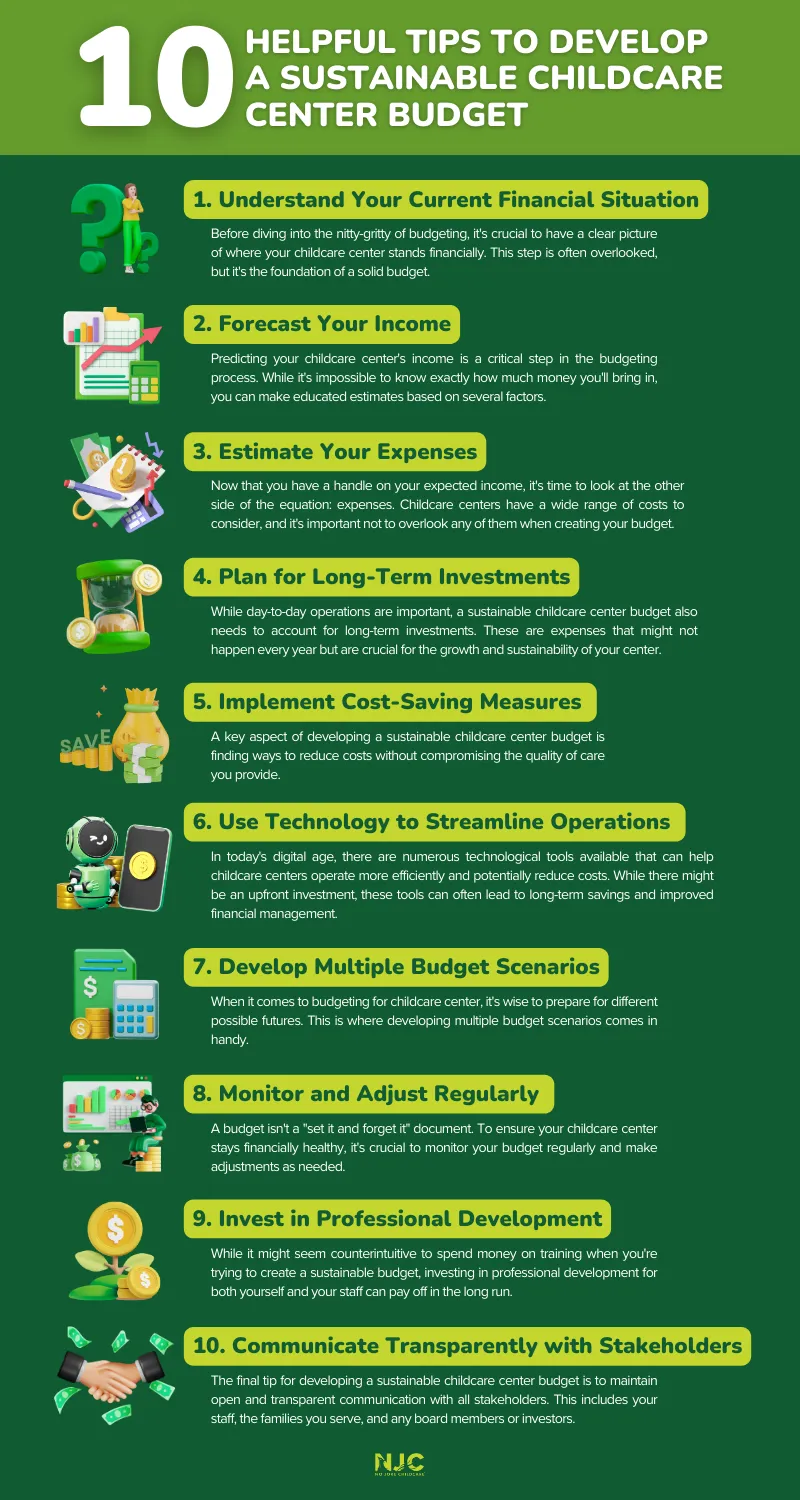
Developing a sustainable childcare center budget is crucial for the long-term success of your center. This guide offers ten practical tips to help you create a robust budget that supports your center’s growth and stability. From understanding your finances to implementing cost-saving measures, we’ll explore strategies to ensure your center thrives financially while providing quality care.
1. Understand Your Current Financial Situation

Before diving into the nitty-gritty of budgeting, it’s crucial to have a clear picture of where your childcare center stands financially. This step is often overlooked, but it’s the foundation of a solid budget.
Start by gathering all your financial documents, including:
Review these documents carefully to identify trends in your income and expenses. Are there certain months when enrollment tends to dip? Do you see any recurring expenses that seem unusually high? Understanding these patterns will help you make more accurate projections for your budget.
Don’t forget to consider any outstanding debts or loans your center may have. These ongoing financial obligations will need to be factored into your budget planning.
2. Forecast Your Income
Predicting your childcare center’s income is a critical step in the budgeting process. While it’s impossible to know exactly how much money you’ll bring in, you can make educated estimates based on several factors:
When forecasting income, it’s generally better to err on the side of caution. It’s easier to adjust your budget upward if you exceed your income projections than to scramble to cut costs if you fall short.
3. Estimate Your Expenses

Now that you have a handle on your expected income, it’s time to look at the other side of the equation: expenses. Childcare centers have a wide range of costs to consider, and it’s important not to overlook any of them when creating your budget.
Here are some major expense categories to consider:
When tracking and estimating expenses, it’s helpful to look at your past spending patterns. However, don’t simply copy last year’s numbers. Consider any changes that might affect your costs, such as inflation, new regulations, or changes in your program offerings.
4. Plan for Long-Term Investments

While day-to-day operations are important, a sustainable childcare center budget also needs to account for long-term investments. These are expenses that might not happen every year but are crucial for the growth and sustainability of your center.
Some long-term investments to consider include:
When budgeting for these long-term investments, consider creating a separate savings account or line item in your budget. This way, you’re consistently setting aside funds for these larger expenses rather than scrambling to find the money when the need arises.
5. Implement Cost-Saving Measures
A key aspect of developing a sustainable childcare center budget is finding ways to reduce costs without compromising the quality of care you provide.
Here are some cost-saving strategies to consider:
Remember, the goal isn’t to cut costs at any cost. It’s about finding smart, efficient ways to reduce expenses while maintaining or even improving the quality of your program.
6. Use Technology to Streamline Operations

In today’s digital age, there are numerous technological tools available that can help childcare centers operate more efficiently and potentially reduce costs. While there might be an upfront investment, these tools can often lead to long-term savings and improved financial management.
Consider implementing:
When budgeting for technology, remember to factor in not just the initial purchase cost but also ongoing expenses like software subscriptions or maintenance fees.
7. Develop Multiple Budget Scenarios
When it comes to budgeting for childcare center, it’s wise to prepare for different possible futures. This is where developing multiple budget scenarios comes in handy.
Consider creating at least three different budgets for:
By preparing these different scenarios, you’ll be better equipped to handle whatever the future brings. If things go better than expected, you’ll know how to allocate the extra funds. If challenges arise, you’ll already have a plan in place to address them.
8. Monitor and Adjust Regularly
A budget isn’t a “set it and forget it” document. To ensure your childcare center stays financially healthy, it’s crucial to monitor your budget regularly and make adjustments as needed.
Set aside time each month to review your actual income and expenses against your budget projections. Are you on track? If not, why? Understanding these variances can help you make informed decisions about where to cut costs or where you might have room to increase spending.
Don’t be afraid to adjust your budget as the year progresses. If you notice that certain expenses are consistently higher or lower than you projected, update your budget to reflect this new information.
Regular monitoring also allows you to catch potential issues early. If you notice that enrollment is trending downward, for example, you can start implementing cost-effective strategies to attract new families before it becomes a major financial problem.
9. Invest in Professional Development
While it might seem counterintuitive to spend money on training when you’re trying to create a sustainable budget, investing in professional development for both yourself and your staff can pay off in the long run.
Here’s why:
When budgeting for professional development, consider a mix of options:
Remember to factor in not just the cost of the training itself but also any associated expenses like travel costs or the need for substitute staff while regular staff are in training.
10. Communicate Transparently with Stakeholders
The final tip for developing a sustainable childcare center budget is to maintain open and transparent communication with all stakeholders. This includes your staff, the families you serve, and any board members or investors.
Transparent communication builds trust and can make it easier to navigate financial challenges when they arise. It can also lead to valuable suggestions or support from your community.
Conclusion
Developing a sustainable childcare center budget is crucial for long-term success. By implementing these strategies, you’ll build a strong financial foundation. Need personalized guidance? Schedule a free strategy call with No Joke Childcare today. Let’s work together to ensure your center thrives financially while providing excellent care!
Developing a sustainable childcare center budget is crucial for the long-term success of your center. This guide offers ten practical tips to help you create a robust budget that supports your center’s growth and stability. From understanding your finances to implementing cost-saving measures, we’ll explore strategies to ensure your center thrives financially while providing quality care.
1. Understand Your Current Financial Situation
Before diving into the nitty-gritty of budgeting, it’s crucial to have a clear picture of where your childcare center stands financially. This step is often overlooked, but it’s the foundation of a solid budget.
Start by gathering all your financial documents, including:
Review these documents carefully to identify trends in your income and expenses. Are there certain months when enrollment tends to dip? Do you see any recurring expenses that seem unusually high? Understanding these patterns will help you make more accurate projections for your budget.
Don’t forget to consider any outstanding debts or loans your center may have. These ongoing financial obligations will need to be factored into your budget planning.
2. Forecast Your Income
Predicting your childcare center’s income is a critical step in the budgeting process. While it’s impossible to know exactly how much money you’ll bring in, you can make educated estimates based on several factors:
When forecasting income, it’s generally better to err on the side of caution. It’s easier to adjust your budget upward if you exceed your income projections than to scramble to cut costs if you fall short.
3. Estimate Your Expenses
Now that you have a handle on your expected income, it’s time to look at the other side of the equation: expenses. Childcare centers have a wide range of costs to consider, and it’s important not to overlook any of them when creating your budget.
Here are some major expense categories to consider:
When tracking and estimating expenses, it’s helpful to look at your past spending patterns. However, don’t simply copy last year’s numbers. Consider any changes that might affect your costs, such as inflation, new regulations, or changes in your program offerings.
4. Plan for Long-Term Investments
While day-to-day operations are important, a sustainable childcare center budget also needs to account for long-term investments. These are expenses that might not happen every year but are crucial for the growth and sustainability of your center.
Some long-term investments to consider include:
When budgeting for these long-term investments, consider creating a separate savings account or line item in your budget. This way, you’re consistently setting aside funds for these larger expenses rather than scrambling to find the money when the need arises.
5. Implement Cost-Saving Measures
A key aspect of developing a sustainable childcare center budget is finding ways to reduce costs without compromising the quality of care you provide.
Here are some cost-saving strategies to consider:
Remember, the goal isn’t to cut costs at any cost. It’s about finding smart, efficient ways to reduce expenses while maintaining or even improving the quality of your program.
6. Use Technology to Streamline Operations
In today’s digital age, there are numerous technological tools available that can help childcare centers operate more efficiently and potentially reduce costs. While there might be an upfront investment, these tools can often lead to long-term savings and improved financial management.
Consider implementing:
When budgeting for technology, remember to factor in not just the initial purchase cost but also ongoing expenses like software subscriptions or maintenance fees.
7. Develop Multiple Budget Scenarios
When it comes to budgeting for childcare center, it’s wise to prepare for different possible futures. This is where developing multiple budget scenarios comes in handy.
Consider creating at least three different budgets for:
By preparing these different scenarios, you’ll be better equipped to handle whatever the future brings. If things go better than expected, you’ll know how to allocate the extra funds. If challenges arise, you’ll already have a plan in place to address them.
8. Monitor and Adjust Regularly
A budget isn’t a “set it and forget it” document. To ensure your childcare center stays financially healthy, it’s crucial to monitor your budget regularly and make adjustments as needed.
Set aside time each month to review your actual income and expenses against your budget projections. Are you on track? If not, why? Understanding these variances can help you make informed decisions about where to cut costs or where you might have room to increase spending.
Don’t be afraid to adjust your budget as the year progresses. If you notice that certain expenses are consistently higher or lower than you projected, update your budget to reflect this new information.
Regular monitoring also allows you to catch potential issues early. If you notice that enrollment is trending downward, for example, you can start implementing cost-effective strategies to attract new families before it becomes a major financial problem.
9. Invest in Professional Development
While it might seem counterintuitive to spend money on training when you’re trying to create a sustainable budget, investing in professional development for both yourself and your staff can pay off in the long run.
Here’s why:
When budgeting for professional development, consider a mix of options:
Remember to factor in not just the cost of the training itself but also any associated expenses like travel costs or the need for substitute staff while regular staff are in training.
10. Communicate Transparently with Stakeholders
The final tip for developing a sustainable childcare center budget is to maintain open and transparent communication with all stakeholders. This includes your staff, the families you serve, and any board members or investors.
Transparent communication builds trust and can make it easier to navigate financial challenges when they arise. It can also lead to valuable suggestions or support from your community.
Conclusion
Developing a sustainable childcare center budget is crucial for long-term success. By implementing these strategies, you’ll build a strong financial foundation. Need personalized guidance? Schedule a free strategy call with No Joke Childcare today. Let’s work together to ensure your center thrives financially while providing excellent care!


