

If you want my team to just do your marketing for you, click here.



Are you a daycare owner looking to boost your business? Understanding and meeting child care certification requirements is crucial for success in this highly competitive industry.
This blog post will explore ten common challenges child care providers face and offer practical solutions to help you navigate the certification process with ease.
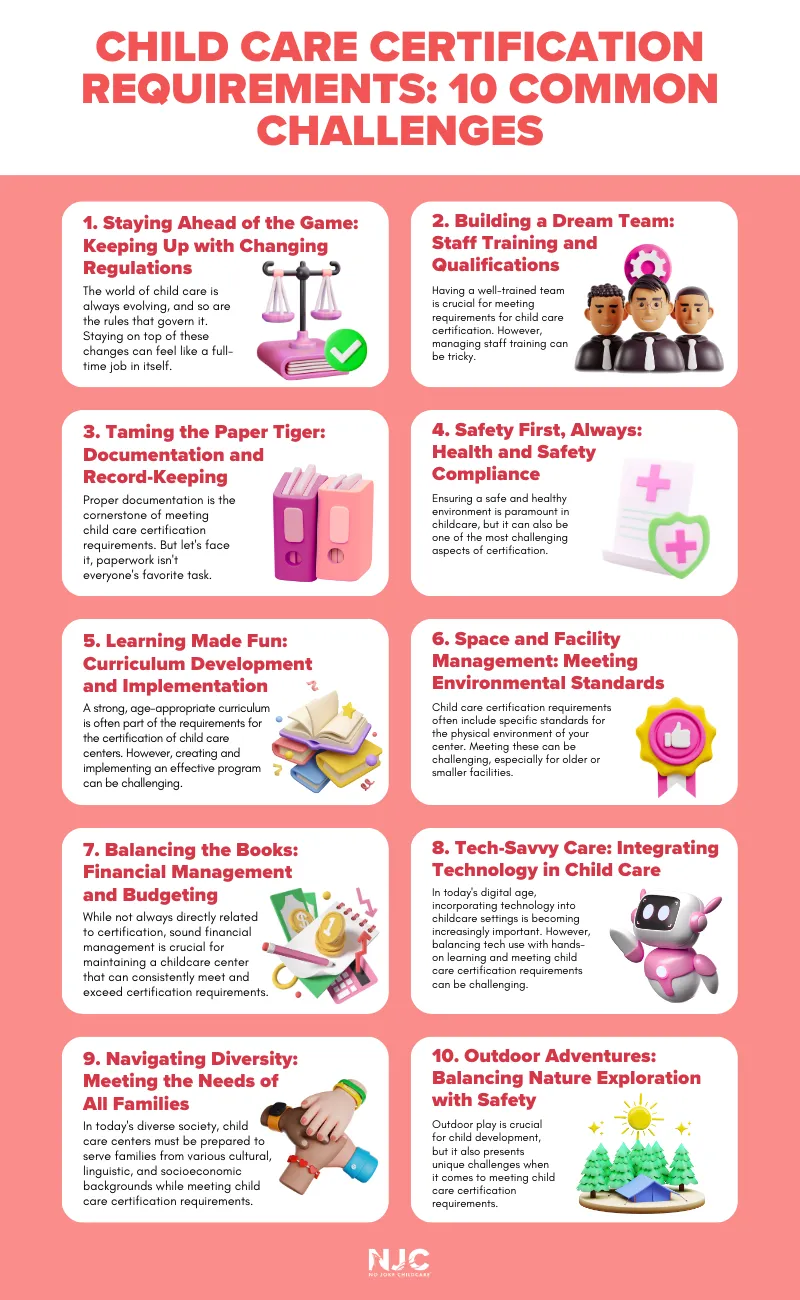
1. Staying Ahead of the Game: Keeping Up with Changing Regulations

The world of child care is always evolving, and so are the rules that govern it. Staying on top of these changes can feel like a full-time job in itself.
Challenge
Child care certificate requirements often change, and it’s easy to fall behind if you’re not vigilant. This can lead to compliance issues and potential penalties.
Solution
Set up a system to stay informed. Subscribe to newsletters from your local child care licensing agency. Join professional organizations that provide updates on industry standards. Consider assigning a team member to be your “regulation expert” who keeps track of changes and shares them with the staff.
Pro Tip
Create a digital folder or bulletin board where you post the latest updates on child care certification requirements. This keeps everyone in the loop and shows inspectors that you’re proactive about compliance.
2. Building a Dream Team: Staff Training and Qualifications
Having a well-trained team is crucial for meeting requirements for child care certification. However, managing staff training can be tricky.
Challenge
Finding time for staff training without disrupting daily operations can be difficult. Additionally, high turnover rates in the child care industry can mean constantly training new hires.
Solution
Develop a comprehensive onboarding program that covers all essential certification requirements. Offer ongoing training opportunities through online courses, which staff can complete during downtimes. Partner with local colleges or training centers to provide discounted education programs for your employees.
Smart Move
Create a mentorship program where experienced staff members guide newcomers through the certification process. This not only helps with training but also boosts team morale and retention.
3. Taming the Paper Tiger: Documentation and Record-Keeping

Proper documentation is the cornerstone of meeting child care certification requirements. But let’s face it, paperwork isn’t everyone’s favorite task.
Challenge
Keeping track of all necessary documents, from staff certifications to children’s medical records, can be overwhelming. Missing or outdated paperwork can lead to certification issues.
Solution
Invest in good child care management software that helps you organize and track all required documentation. Set up automatic reminders for when certifications or records need updating. Create a clear filing system, whether physical or digital, that all staff members understand and can easily navigate.
Handy Hack
Implement a “Document Check Friday” where staff members take a few minutes at the end of each week to ensure all their paperwork is up to date. Make it fun with small incentives for those who consistently stay on top of their documentation.
4. Safety First, Always: Health and Safety Compliance
Ensuring a safe and healthy environment is paramount in childcare, but it can also be one of the most challenging aspects of certification.
Challenge
From proper food handling to maintaining safe play areas, there are numerous health and safety regulations to follow. Keeping up with all these requirements can be daunting.
Solution
Create detailed checklists for daily, weekly, and monthly safety inspections. Train all staff members in these procedures and rotate responsibilities so everyone is familiar with all aspects of health and safety compliance. Regularly review and update your emergency preparedness plan.
Safety First Tip
Organize quarterly “Safety Superhero” days where children learn about safety in fun, engaging ways. This not only helps with compliance but also teaches children valuable life skills.
5. Learning Made Fun: Curriculum Development and Implementation
A strong, age-appropriate curriculum is often part of the requirements for the certification of child care centers. However, creating and implementing an effective program can be challenging.
Challenge
Developing a curriculum that meets certification standards while also engaging children and supporting their development requires time, expertise, and resources.
Solution
Consider purchasing a pre-approved curriculum that aligns with your state’s early learning guidelines. Alternatively, work with an early childhood education consultant to develop a custom program. Regularly assess and adjust your curriculum based on children’s progress and feedback from parents and staff.
Curriculum Boost
Incorporate local culture and community resources into your curriculum. This not only enriches the learning experience but can also be a unique selling point for your center.
6. Space and Facility Management: Meeting Environmental Standards
Child care certification requirements often include specific standards for the physical environment of your center. Meeting these can be challenging, especially for older or smaller facilities.
Challenge
Ensuring your facility meets all space, safety, and environmental requirements while creating an engaging learning environment can be difficult. This includes aspects like square footage per child, proper lighting, ventilation, and accessibility.
Solution
Conduct a thorough assessment of your facility against current certification standards. Create a prioritized list of necessary upgrades or modifications. Consider consulting with a child care facility designer or architect to maximize your space efficiently.
Space Savvy Tip
Create multi-functional spaces that can be easily transformed for different activities throughout the day. For example, a reading nook could convert into a dramatic play area, maximizing your use of limited space while still meeting certification requirements.
7. Balancing the Books: Financial Management and Budgeting
While not always directly related to certification, sound financial management is crucial for maintaining a childcare center that can consistently meet and exceed certification requirements.
Challenge
Balancing the costs of meeting certification standards with the need to keep childcare affordable can be difficult. This includes expenses for staff training, equipment upgrades, and curriculum resources.
Solution
Develop a detailed budget that accounts for all certification-related expenses. Look for grants or subsidies available for childcare centers in your area. Consider joining a childcare cooperative to share resources and reduce costs. Regularly review your pricing structure to ensure it covers your expenses while remaining competitive.
Budget Booster
Implement an energy-saving program in your center. This not only reduces costs but can also be incorporated into your curriculum as a way to teach children about environmental responsibility.
8. Tech-Savvy Care: Integrating Technology in Child Care
In today’s digital age, incorporating technology into childcare settings is becoming increasingly important. However, balancing tech use with hands-on learning and meeting child care certification requirements can be challenging.
Challenge
Integrating technology in a way that enhances learning and operational efficiency while adhering to screen time guidelines and data privacy regulations can be complex. Many centers struggle to find the right balance between traditional and tech-enhanced approaches.
Solution
Start by clearly defining your center’s technology policy, ensuring it aligns with certification requirements and best practices for early childhood education. Invest in age-appropriate educational software and apps that support your curriculum goals. Train staff on how to use technology effectively as a teaching tool, not a replacement for hands-on learning.
Tech Tip
Create “Tech Exploration Stations” where children can engage with educational apps or programs in small, supervised groups. Rotate these stations with other activities to ensure balanced exposure to technology.
9. Navigating Diversity: Meeting the Needs of All Families
In today’s diverse society, child care centers must be prepared to serve families from various cultural, linguistic, and socioeconomic backgrounds while meeting child care certification requirements.
Challenge
Providing inclusive care that respects and celebrates diversity while ensuring all children receive equal opportunities for development can be complex. This includes accommodating different languages, cultural practices, and special needs.
Solution
Develop a comprehensive diversity and inclusion policy that aligns with certification standards. Offer staff training on cultural competence and inclusive practices. Create a multilingual environment with signs and materials in the most common languages spoken by your families. Partner with cultural organizations in your community to provide authentic experiences and resources.
Diversity Tip
Organize a monthly “Cultural Celebration Day” where families are invited to share their traditions, foods, and stories. This not only promotes inclusivity but also enriches the learning experience for all children.
10. Outdoor Adventures: Balancing Nature Exploration with Safety
Outdoor play is crucial for child development, but it also presents unique challenges when it comes to meeting child care certification requirements.
Challenge
Providing safe, engaging outdoor experiences that comply with certification standards while encouraging exploration and risk-taking can be tricky. Many centers struggle to create outdoor spaces that are both stimulating and secure.
Solution
Design your outdoor area with both safety and adventure in mind. Use natural elements like logs, rocks, and plants to create varied play spaces. Ensure all equipment meets safety standards and is regularly inspected. Develop clear policies for outdoor play that balance safety with exploration.
Nature Nurture
Create a “Discovery Garden” where children can plant, tend, and harvest vegetables and flowers. This not only provides hands-on learning experiences but also teaches responsibility and respect for nature.
Conclusion
Child care certification requirements are stepping stones to success, not roadblocks. By addressing challenges head-on and implementing smart solutions, you can create a thriving center that exceeds standards. Remember, certification is about providing the best care and education for children, showcasing your commitment to excellence in early childhood development.
Ready to uplevel your business and exceed certification standards? Schedule a free strategy call. No Joke Childcare is here to help you create a brighter future for your center and the children you serve.
Are you a daycare owner looking to boost your business? Understanding and meeting child care certification requirements is crucial for success in this highly competitive industry.
This blog post will explore ten common challenges child care providers face and offer practical solutions to help you navigate the certification process with ease.
1. Staying Ahead of the Game: Keeping Up with Changing Regulations
The world of child care is always evolving, and so are the rules that govern it. Staying on top of these changes can feel like a full-time job in itself.
Challenge
Child care certificate requirements often change, and it’s easy to fall behind if you’re not vigilant. This can lead to compliance issues and potential penalties.
Solution
Set up a system to stay informed. Subscribe to newsletters from your local child care licensing agency. Join professional organizations that provide updates on industry standards. Consider assigning a team member to be your “regulation expert” who keeps track of changes and shares them with the staff.
Pro Tip
Create a digital folder or bulletin board where you post the latest updates on child care certification requirements. This keeps everyone in the loop and shows inspectors that you’re proactive about compliance.
2. Building a Dream Team: Staff Training and Qualifications
Having a well-trained team is crucial for meeting requirements for child care certification. However, managing staff training can be tricky.
Challenge
Finding time for staff training without disrupting daily operations can be difficult. Additionally, high turnover rates in the child care industry can mean constantly training new hires.
Solution
Develop a comprehensive onboarding program that covers all essential certification requirements. Offer ongoing training opportunities through online courses, which staff can complete during downtimes. Partner with local colleges or training centers to provide discounted education programs for your employees.
Smart Move
Create a mentorship program where experienced staff members guide newcomers through the certification process. This not only helps with training but also boosts team morale and retention.
3. Taming the Paper Tiger: Documentation and Record-Keeping
Proper documentation is the cornerstone of meeting child care certification requirements. But let’s face it, paperwork isn’t everyone’s favorite task.
Challenge
Keeping track of all necessary documents, from staff certifications to children’s medical records, can be overwhelming. Missing or outdated paperwork can lead to certification issues.
Solution
Invest in good child care management software that helps you organize and track all required documentation. Set up automatic reminders for when certifications or records need updating. Create a clear filing system, whether physical or digital, that all staff members understand and can easily navigate.
Handy Hack
Implement a “Document Check Friday” where staff members take a few minutes at the end of each week to ensure all their paperwork is up to date. Make it fun with small incentives for those who consistently stay on top of their documentation.
4. Safety First, Always: Health and Safety Compliance
Ensuring a safe and healthy environment is paramount in childcare, but it can also be one of the most challenging aspects of certification.
Challenge
From proper food handling to maintaining safe play areas, there are numerous health and safety regulations to follow. Keeping up with all these requirements can be daunting.
Solution
Create detailed checklists for daily, weekly, and monthly safety inspections. Train all staff members in these procedures and rotate responsibilities so everyone is familiar with all aspects of health and safety compliance. Regularly review and update your emergency preparedness plan.
Safety First Tip
Organize quarterly “Safety Superhero” days where children learn about safety in fun, engaging ways. This not only helps with compliance but also teaches children valuable life skills.
5. Learning Made Fun: Curriculum Development and Implementation
A strong, age-appropriate curriculum is often part of the requirements for the certification of child care centers. However, creating and implementing an effective program can be challenging.
Challenge
Developing a curriculum that meets certification standards while also engaging children and supporting their development requires time, expertise, and resources.
Solution
Consider purchasing a pre-approved curriculum that aligns with your state’s early learning guidelines. Alternatively, work with an early childhood education consultant to develop a custom program. Regularly assess and adjust your curriculum based on children’s progress and feedback from parents and staff.
Curriculum Boost
Incorporate local culture and community resources into your curriculum. This not only enriches the learning experience but can also be a unique selling point for your center.
6. Space and Facility Management: Meeting Environmental Standards
Child care certification requirements often include specific standards for the physical environment of your center. Meeting these can be challenging, especially for older or smaller facilities.
Challenge
Ensuring your facility meets all space, safety, and environmental requirements while creating an engaging learning environment can be difficult. This includes aspects like square footage per child, proper lighting, ventilation, and accessibility.
Solution
Conduct a thorough assessment of your facility against current certification standards. Create a prioritized list of necessary upgrades or modifications. Consider consulting with a child care facility designer or architect to maximize your space efficiently.
Space Savvy Tip
Create multi-functional spaces that can be easily transformed for different activities throughout the day. For example, a reading nook could convert into a dramatic play area, maximizing your use of limited space while still meeting certification requirements.
7. Balancing the Books: Financial Management and Budgeting
While not always directly related to certification, sound financial management is crucial for maintaining a childcare center that can consistently meet and exceed certification requirements.
Challenge
Balancing the costs of meeting certification standards with the need to keep childcare affordable can be difficult. This includes expenses for staff training, equipment upgrades, and curriculum resources.
Solution
Develop a detailed budget that accounts for all certification-related expenses. Look for grants or subsidies available for childcare centers in your area. Consider joining a childcare cooperative to share resources and reduce costs. Regularly review your pricing structure to ensure it covers your expenses while remaining competitive.
Budget Booster
Implement an energy-saving program in your center. This not only reduces costs but can also be incorporated into your curriculum as a way to teach children about environmental responsibility.
8. Tech-Savvy Care: Integrating Technology in Child Care
In today’s digital age, incorporating technology into childcare settings is becoming increasingly important. However, balancing tech use with hands-on learning and meeting child care certification requirements can be challenging.
Challenge
Integrating technology in a way that enhances learning and operational efficiency while adhering to screen time guidelines and data privacy regulations can be complex. Many centers struggle to find the right balance between traditional and tech-enhanced approaches.
Solution
Start by clearly defining your center’s technology policy, ensuring it aligns with certification requirements and best practices for early childhood education. Invest in age-appropriate educational software and apps that support your curriculum goals. Train staff on how to use technology effectively as a teaching tool, not a replacement for hands-on learning.
Tech Tip
Create “Tech Exploration Stations” where children can engage with educational apps or programs in small, supervised groups. Rotate these stations with other activities to ensure balanced exposure to technology.
9. Navigating Diversity: Meeting the Needs of All Families
In today’s diverse society, child care centers must be prepared to serve families from various cultural, linguistic, and socioeconomic backgrounds while meeting child care certification requirements.
Challenge
Providing inclusive care that respects and celebrates diversity while ensuring all children receive equal opportunities for development can be complex. This includes accommodating different languages, cultural practices, and special needs.
Solution
Develop a comprehensive diversity and inclusion policy that aligns with certification standards. Offer staff training on cultural competence and inclusive practices. Create a multilingual environment with signs and materials in the most common languages spoken by your families. Partner with cultural organizations in your community to provide authentic experiences and resources.
Diversity Tip
Organize a monthly “Cultural Celebration Day” where families are invited to share their traditions, foods, and stories. This not only promotes inclusivity but also enriches the learning experience for all children.
10. Outdoor Adventures: Balancing Nature Exploration with Safety
Outdoor play is crucial for child development, but it also presents unique challenges when it comes to meeting child care certification requirements.
Challenge
Providing safe, engaging outdoor experiences that comply with certification standards while encouraging exploration and risk-taking can be tricky. Many centers struggle to create outdoor spaces that are both stimulating and secure.
Solution
Design your outdoor area with both safety and adventure in mind. Use natural elements like logs, rocks, and plants to create varied play spaces. Ensure all equipment meets safety standards and is regularly inspected. Develop clear policies for outdoor play that balance safety with exploration.
Nature Nurture
Create a “Discovery Garden” where children can plant, tend, and harvest vegetables and flowers. This not only provides hands-on learning experiences but also teaches responsibility and respect for nature.
Conclusion
Child care certification requirements are stepping stones to success, not roadblocks. By addressing challenges head-on and implementing smart solutions, you can create a thriving center that exceeds standards. Remember, certification is about providing the best care and education for children, showcasing your commitment to excellence in early childhood development.
Ready to uplevel your business and exceed certification standards? Schedule a free strategy call. No Joke Childcare is here to help you create a brighter future for your center and the children you serve.


