

If you want my team to just do your marketing for you, click here.



Crafting a detailed and clear daycare parent handbook template is essential for any childcare center. It sets the base for effective communication between your center and the parents. It outlines the policies and approaches that ensure children’s safe, engaging, and nurturing environment. At No Joke Childcare, we understand the importance of providing you with tips to develop a handbook that addresses everything from daily schedules to emergency protocols.
This guide will walk you through the crucial components of a successful daycare handbook, ensuring your childcare center operates smoothly and transparently. Whether starting a new center or looking to refine your existing documents, this guide is tailored to meet all your needs.
Daycare Handbook Template: Key Elements to Include

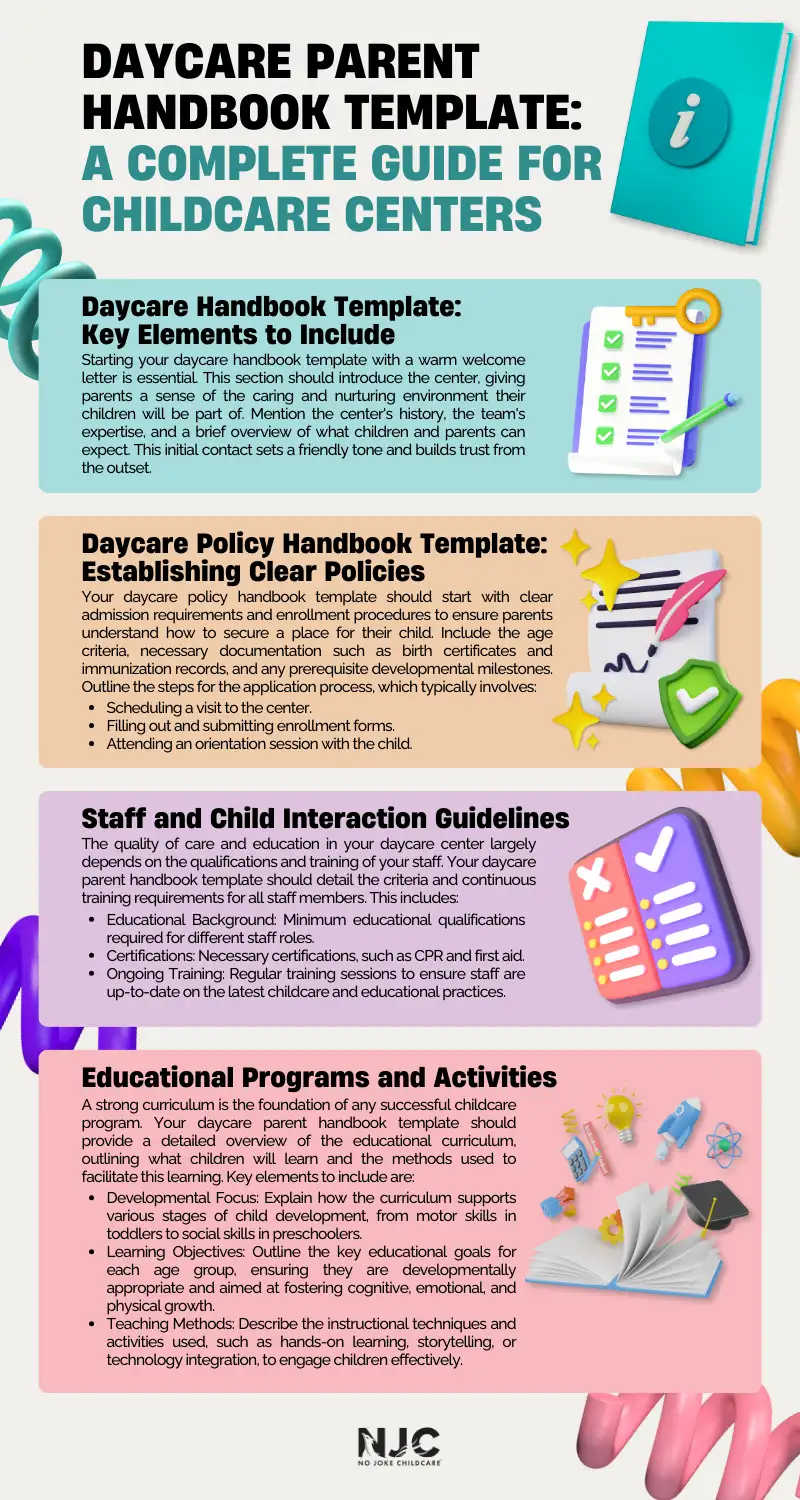
Starting your daycare handbook template with a warm welcome letter is essential. This section should introduce the center, giving parents a sense of the caring and nurturing environment their children will be part of. Mention the center’s history, the team’s expertise, and a brief overview of what children and parents can expect. This initial contact sets a friendly tone and builds trust from the outset.
Mission Statement and Educational Philosophy
Your daycare parent handbook template should clearly articulate the center’s mission and educational philosophy. This part is crucial as it aligns expectations and communicates your childcare environment’s core values and goals.
Include statements about your commitment to fostering a safe, inclusive, and thrilling learning environment that promotes each child’s development. Explain how your curriculum and teaching methods support these goals, highlighting any unique approaches or special programs your center offers.
Contact Information and Communication Procedures
Efficient communication is the backbone of effective daycare management. In your daycare parent handbook template, provide comprehensive contact information for the center, including physical addresses, phone numbers, email addresses, and any relevant social media handles. Outline the preferred methods and times for parents to contact the center for general inquiries, emergencies, or feedback.
Additionally, describe the communication procedures in place. Explain how the center will update parents about their child’s progress, share news about upcoming events, or notify them in emergencies. Include information on regular newsletters, parent-teacher meetings, and digital platforms used for daily communications.
By detailing these procedures, parents will know exactly how and when to expect to receive updates and be reassured that they are always in the loop regarding their child’s care and education.
Daycare Policy Handbook Template: Establishing Clear Policies

Your daycare policy handbook template should start with clear admission requirements and enrollment procedures to ensure parents understand how to secure a place for their child. Include the age criteria, necessary documentation such as birth certificates and immunization records, and any prerequisite developmental milestones. Outline the steps for the application process, which typically involves:
Fees, Payments, and Billing Policies
Maintaining transparency about financial aspects within your daycare parent handbook template is essential. Clearly state the fees for different age groups and programs, including any deposits required at enrollment. Explain your billing cycle—whether weekly, monthly, or quarterly—and the accepted payment methods.
Highlight policies regarding late payments, including any fees and the procedure for handling declined transactions. Also, include details of any discounts available, such as for siblings or advance payments, and the process for terminating services, including any required notice period and penalties.
Health and Safety Regulations
The health and safety section of your daycare parent handbook template is crucial for reassuring parents about the care their children will receive. Address the following key points:
Illness Policy
Safety Measures
Also, describe how the center handles medication administration and allergy management, ensuring all staff can help in first aid and CPR. Outline your emergency response strategies, including how to communicate with parents in a crisis.
Staff and Child Interaction Guidelines

The quality of care and education in your daycare center largely depends on the qualifications and training of your staff. Your daycare parent handbook template should detail the criteria and continuous training requirements for all staff members. This includes:
Emphasize that your center commits to maintaining a highly qualified team that fosters a safe and nurturing environment for children.
Child Supervision and Discipline Policies
Adequate supervision and positive discipline strategies are critical to a nurturing childcare setting. Your daycare parent handbook template should clearly define these policies to ensure safety and promote a positive learning environment. Outline the following:
This section assures parents that their children are in a safe environment, closely supervised, and guided through positive behavioral practices.
Parent-Staff Interaction and Conflict Resolution
Encouraging open and respectful relationships between parents and staff is crucial for building a cooperative community within your daycare center. Your daycare parent handbook template should provide guidelines for effective communication and resolving any potential conflicts:
Additionally, include suggestions for how parents can provide feedback and participate in regular meetings or surveys, helping to foster a collaborative relationship.
This section of your daycare parent handbook template is designed to reassure parents about your staff’s professional qualifications, their children’s safety and well-being, and the mechanisms in place for maintaining positive relationships between the daycare center and the families it serves.
Educational Programs and Activities

A strong curriculum is the foundation of any successful childcare program. Your daycare parent handbook template should provide a detailed overview of the educational curriculum, outlining what children will learn and the methods used to facilitate this learning. Key elements to include are:
Special Programs and Extracurricular Activities
Enhance your daycare parent handbook template by detailing any special programs or extracurricular activities at your center. These might include:
Highlight how these programs contribute to a well-rounded education, enhancing academic skills and social and creative abilities.
Field Trips and External Events
Field trips and external events are vital in expanding the educational experience beyond the classroom. In your daycare parent handbook template, outline:
Inform parents about how these activities are designed to complement the in-house curriculum and provide valuable real-world learning experiences.
Conclusion
Overall, it’s clear that having a well-crafted handbook is indispensable for any childcare center. It helps streamline operations and communication and builds a bridge of trust between your center and the families you serve.
As you develop or refine your daycare parent handbook template, remember that this document is more than just a formality; it reflects the quality of care you offer to the children and their parents. Whether you’re introducing new families to your center’s philosophy or outlining daily procedures and special activities, your handbook serves as a critical resource for ensuring everyone involved has a positive and enriching experience.
Visit us at No Joke Childcare for more tips, marketing ideas, and expert guidance. If you have any questions or need assistance, please call us at (706) 303-3012 or Schedule a strategy call. Let’s work together to make your childcare center the best it can be!
Crafting a detailed and clear daycare parent handbook template is essential for any childcare center. It sets the base for effective communication between your center and the parents. It outlines the policies and approaches that ensure children’s safe, engaging, and nurturing environment. At No Joke Childcare, we understand the importance of providing you with tips to develop a handbook that addresses everything from daily schedules to emergency protocols.
This guide will walk you through the crucial components of a successful daycare handbook, ensuring your childcare center operates smoothly and transparently. Whether starting a new center or looking to refine your existing documents, this guide is tailored to meet all your needs.
Daycare Handbook Template: Key Elements to Include
Starting your daycare handbook template with a warm welcome letter is essential. This section should introduce the center, giving parents a sense of the caring and nurturing environment their children will be part of. Mention the center’s history, the team’s expertise, and a brief overview of what children and parents can expect. This initial contact sets a friendly tone and builds trust from the outset.
Mission Statement and Educational Philosophy
Your daycare parent handbook template should clearly articulate the center’s mission and educational philosophy. This part is crucial as it aligns expectations and communicates your childcare environment’s core values and goals.
Include statements about your commitment to fostering a safe, inclusive, and thrilling learning environment that promotes each child’s development. Explain how your curriculum and teaching methods support these goals, highlighting any unique approaches or special programs your center offers.
Contact Information and Communication Procedures
Efficient communication is the backbone of effective daycare management. In your daycare parent handbook template, provide comprehensive contact information for the center, including physical addresses, phone numbers, email addresses, and any relevant social media handles. Outline the preferred methods and times for parents to contact the center for general inquiries, emergencies, or feedback.
Additionally, describe the communication procedures in place. Explain how the center will update parents about their child’s progress, share news about upcoming events, or notify them in emergencies. Include information on regular newsletters, parent-teacher meetings, and digital platforms used for daily communications.
By detailing these procedures, parents will know exactly how and when to expect to receive updates and be reassured that they are always in the loop regarding their child’s care and education.
Daycare Policy Handbook Template: Establishing Clear Policies
Your daycare policy handbook template should start with clear admission requirements and enrollment procedures to ensure parents understand how to secure a place for their child. Include the age criteria, necessary documentation such as birth certificates and immunization records, and any prerequisite developmental milestones. Outline the steps for the application process, which typically involves:
Fees, Payments, and Billing Policies
Maintaining transparency about financial aspects within your daycare parent handbook template is essential. Clearly state the fees for different age groups and programs, including any deposits required at enrollment. Explain your billing cycle—whether weekly, monthly, or quarterly—and the accepted payment methods.
Highlight policies regarding late payments, including any fees and the procedure for handling declined transactions. Also, include details of any discounts available, such as for siblings or advance payments, and the process for terminating services, including any required notice period and penalties.
Health and Safety Regulations
The health and safety section of your daycare parent handbook template is crucial for reassuring parents about the care their children will receive. Address the following key points:
Illness Policy
Safety Measures
Also, describe how the center handles medication administration and allergy management, ensuring all staff can help in first aid and CPR. Outline your emergency response strategies, including how to communicate with parents in a crisis.
Staff and Child Interaction Guidelines
The quality of care and education in your daycare center largely depends on the qualifications and training of your staff. Your daycare parent handbook template should detail the criteria and continuous training requirements for all staff members. This includes:
Emphasize that your center commits to maintaining a highly qualified team that fosters a safe and nurturing environment for children.
Child Supervision and Discipline Policies
Adequate supervision and positive discipline strategies are critical to a nurturing childcare setting. Your daycare parent handbook template should clearly define these policies to ensure safety and promote a positive learning environment. Outline the following:
This section assures parents that their children are in a safe environment, closely supervised, and guided through positive behavioral practices.
Parent-Staff Interaction and Conflict Resolution
Encouraging open and respectful relationships between parents and staff is crucial for building a cooperative community within your daycare center. Your daycare parent handbook template should provide guidelines for effective communication and resolving any potential conflicts:
Additionally, include suggestions for how parents can provide feedback and participate in regular meetings or surveys, helping to foster a collaborative relationship.
This section of your daycare parent handbook template is designed to reassure parents about your staff’s professional qualifications, their children’s safety and well-being, and the mechanisms in place for maintaining positive relationships between the daycare center and the families it serves.
Educational Programs and Activities
A strong curriculum is the foundation of any successful childcare program. Your daycare parent handbook template should provide a detailed overview of the educational curriculum, outlining what children will learn and the methods used to facilitate this learning. Key elements to include are:
Special Programs and Extracurricular Activities
Enhance your daycare parent handbook template by detailing any special programs or extracurricular activities at your center. These might include:
Highlight how these programs contribute to a well-rounded education, enhancing academic skills and social and creative abilities.
Field Trips and External Events
Field trips and external events are vital in expanding the educational experience beyond the classroom. In your daycare parent handbook template, outline:
Inform parents about how these activities are designed to complement the in-house curriculum and provide valuable real-world learning experiences.
Conclusion
Overall, it’s clear that having a well-crafted handbook is indispensable for any childcare center. It helps streamline operations and communication and builds a bridge of trust between your center and the families you serve.
As you develop or refine your daycare parent handbook template, remember that this document is more than just a formality; it reflects the quality of care you offer to the children and their parents. Whether you’re introducing new families to your center’s philosophy or outlining daily procedures and special activities, your handbook serves as a critical resource for ensuring everyone involved has a positive and enriching experience.
Visit us at No Joke Childcare for more tips, marketing ideas, and expert guidance. If you have any questions or need assistance, please call us at (706) 303-3012 or Schedule a strategy call. Let’s work together to make your childcare center the best it can be!


