I hope you enjoy reading this blog post.

If you want my team to just do your marketing for you, click here.


5 Top Tactics for Writing Your Childcare Employee Handbook

Published On: 05/23/2024By 10.6 min readCategories: Child Care Marketing, Daycare MarketingViews: 1149
childcare employee handbook

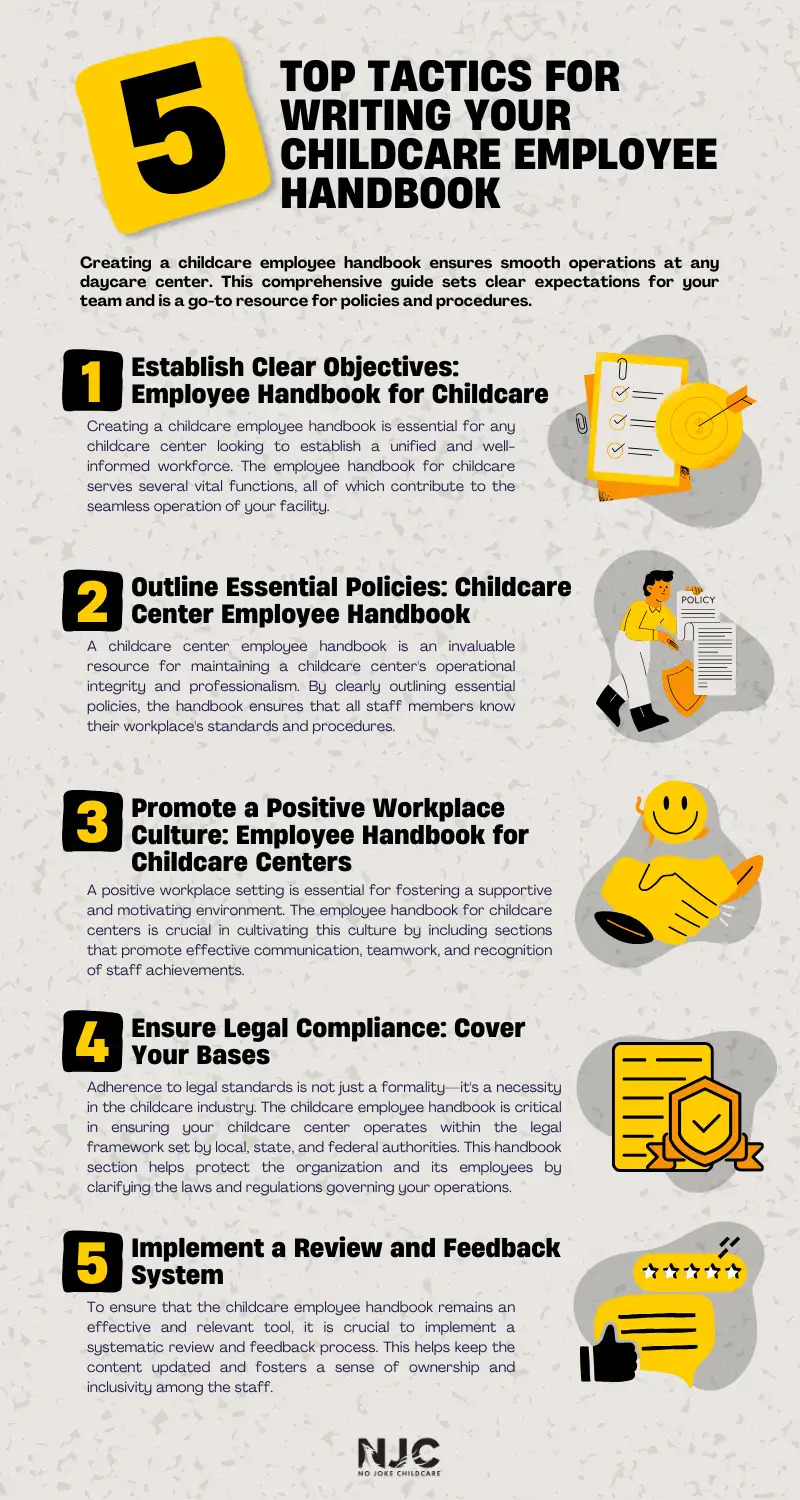
Creating a childcare employee handbook ensures smooth operations at any daycare center. This comprehensive guide sets clear expectations for your team and is a go-to resource for policies and procedures. At No Joke Childcare, we understand the importance of such a document in fostering a positive and professional work environment.

In this blog post, we’ll explore five top tactics to help you craft a practical handbook that supports your staff and aligns with your childcare center’s values and goals. Whether drafting a handbook for the first time or looking to refine an existing one, these tips will guide you toward creating a clear and helpful resource. Let’s dive into the essentials of a well-structured childcare employee handbook

1. Establish Clear Objectives: Employee Handbook for Childcare

child care employee handbook

Creating a childcare employee handbook is essential for any childcare center looking to establish a unified and well-informed workforce. The employee handbook for childcare serves several vital functions, all of which contribute to the seamless operation of your facility.

Importance of Setting Specific Goals for the Handbook

First and foremost, the handbook should clearly outline the specific goals it aims to achieve. These objectives might include:

  • Clarifying Roles and Responsibilities: All team members must understand their organizational roles. A detailed description helps prevent overlap and confusion, ensuring each staff member knows their duties and how they contribute to the operation.

  • Standardizing Procedures: Standardization ensures consistency and efficiency in daily routines, emergency protocols, and administrative tasks. The childcare employee handbook should provide clear instructions that are easy to follow.

  • Enhancing Compliance and Safety: Ensuring all employees know safety guidelines and compliance requirements reduces the risk of accidents and legal issues. This includes adherence to health codes, safety regulations, and child protection laws.

  • Fostering a Positive Work Environment: A well-crafted handbook can also outline the expectations for workplace conduct, which helps maintain a respectful and supportive environment.

Integrating Mission and Values into Your Handbook

The childcare employee handbook is not just a set of instructions; it reflects your childcare center’s ethos and principles. By aligning the handbook with your center’s mission and values, you reinforce the culture you wish to cultivate. Here are a few ways the handbook can support this:

  • Mission Alignment: The handbook should echo the childcare center’s mission statement, reminding staff of the bigger picture and their critical role in achieving it. For instance, if your mission emphasizes holistic child development, the handbook can include educational and emotional support strategies guidelines.

  • Value Promotion: Include a section that explicitly states your organization’s core values, such as integrity, compassion, and excellence. This section can also detail expected behaviors that reflect these values, integrating them into daily practices.

  • Building Community: A section on teamwork and collaboration can encourage staff to support one another, essential in a high-energy environment like childcare. This improves morale and enhances the quality of care provided to the children.

By thoughtfully crafting your childcare employee handbook to include these elements, you provide a functional tool for your staff and create a document that embodies the spirit of your center.

2. Outline Essential Policies: Childcare Center Employee Handbook

A childcare center employee handbook is an invaluable resource for maintaining a childcare center’s operational integrity and professionalism. By clearly outlining essential policies, the handbook ensures that all staff members know their workplace’s standards and procedures. This section typically includes critical areas such as health and safety protocols, employee conduct and dress code, and leave and attendance policies.

Health and Safety Protocols

The health and safety of both children and staff are paramount in any childcare setting. Essential components of this section should include:

  • Hygiene Practices: Detailed guidelines on handwashing, sanitization of toys and equipment, and illness prevention measures to maintain a clean and safe environment

  • Emergency Procedures: Clearly defined steps for handling emergencies, such as fire drills, first aid response, and evacuation plans.

  • Child Supervision: Standards for child-to-staff ratios, supervision during outdoor play, and monitoring of visitors to ensure child safety.

Our commitment to following these protocols goes beyond regulations, it creates a proactive safety culture that builds trust with parents.

Employee Conduct and Dress Code

A section on employee conduct and dress code in your childcare employee handbook establishes professional expectations and helps create a positive work environment. Key elements include:

  • Behavioral Standards: Expectations for professional behavior, including how to address conflicts, maintain confidentiality, and interact with children and parents.

  • Dress Code: Guidelines on appropriate attire that is safe and practical for working with children, including footwear and any required uniforms or badges.

This section reinforces the professional image of your childcare center and promotes a respectful and secure atmosphere for everyone.

Leave and Attendance Policies

Reliable attendance is critical in childcare to ensure adequate staffing and continuity of care for children. The leave and attendance section should cover:

  • Attendance Requirements: Clear expectations for reporting to work on time and procedures for clocking in and out.

  • Leave Entitlements: Information on sick leave, vacation, personal days, and any family leave, including how to request time off and the notice required.

  • Consequences of Unplanned Absences: Outline the impact of unexpected absences and the steps for disciplinary action if necessary.

By detailing these policies in your childcare employee handbook, you help ensure that staff are present and accountable, directly affecting your center’s quality of care and operational efficiency.

3. Promote a Positive Workplace Culture: Employee Handbook for Childcare Centers

A positive workplace setting is essential for fostering a supportive and motivating environment. The employee handbook for childcare centers is crucial in cultivating this culture by including sections that promote effective communication, teamwork, and recognition of staff achievements.

Including Sections on Communication Practices

Clear and effective communication is vital to any successful team. In the childcare employee handbook, it’s essential to establish:

  • Communication Channels: Outline the preferred methods for daily communications, including team meetings, email policies, and appropriate use of social media related to work.

  • Conflict Resolution: Provide guidelines for respectfully handling disputes or disagreements among staff, ensuring issues are resolved constructively and aligned with the center’s values.

  • Feedback Mechanisms: Encourage a two-way feedback system where employees can share their insights and suggestions for improvement, and management can provide constructive feedback on performance.

These communication practices ensure that all team members are on the same page, leading to a more harmonious work environment.

Encouraging Teamwork and Professional Development

Teamwork and ongoing professional growth are vital for maintaining a high standard of care and education in a childcare setting. The childcare employee handbook should promote these aspects by:

  • Team-Building Activities: Suggest regular team-building exercises that enhance collaboration and trust among staff.

  • Professional Development Opportunities: Detail available training programs, workshops, and courses that employees can participate in to advance their skills and knowledge.

  • Career Advancement Paths: Outline potential career paths within the organization and the criteria for advancement, encouraging staff to aspire to higher positions and responsibilities.

These initiatives improve the quality of service provided and contribute to higher job satisfaction and employee retention.

Recognizing and Rewarding Employee Achievements

Acknowledging and rewarding employees’ hard work and dedication is critical for morale and motivation. In the childcare employee handbook, include:

  • Recognition Programs: Implement a system to regularly recognize employee achievements, whether through ‘Employee of the Month’ awards, celebratory mentions in team meetings, or annual awards ceremonies.

  • Reward Systems: Provide incentives for exemplary performance, such as bonuses, additional leave days, or professional development grants.

These recognition and reward programs celebrate staff efforts, reinforce their value to the organization, and encourage continued excellence.

By emphasizing these aspects in the childcare employee handbook, you create a more dynamic and supportive workplace where employees are motivated to contribute positively to the childcare center’s overall goals and success.

4. Ensure Legal Compliance: Cover Your Bases

Adherence to legal standards is not just a formality—it’s a necessity in the childcare industry. The childcare employee handbook is critical in ensuring your childcare center operates within the legal framework set by local, state, and federal authorities. This handbook section helps protect the organization and its employees by clarifying the laws and regulations governing your operations.

Importance of Aligning with State and Federal Regulations

Aligning with legal standards minimizes the risk of fines, penalties, and lawsuits arising from non-compliance. In the childcare employee handbook, emphasize the importance of:

  • Understanding Applicable Laws: Provide a basic overview of the childcare-related laws that affect your operations, including those related to child welfare, safety, employment, and privacy.

  • Ongoing Training: Regular training sessions should be mandated to keep all staff updated on new laws and changes to existing regulations. This ensures your team remains informed and compliant.

  • Responsibility of Staff: Make it clear that compliance is everyone’s responsibility. Each employee should understand their role in maintaining legal standards within the center.

The handbook’s detailing of these points reinforces the importance of legal compliance. It helps create a culture of accountability and vigilance.

Sections to Include for Legal Protection

To safeguard your childcare center and ensure thorough coverage of legal bases, you must include several sections in the childcare employee handbook:

  • Nondiscrimination Policies: Clearly state your center’s commitment to providing an equal opportunity workplace free from discrimination based on race, color, religion, sex, national origin, age, disability, or other protected status.

  • Harassment Policies: Outline what constitutes harassment in the workplace and the procedures for reporting and handling such incidents. Ensure these policies comply with state and federal laws.

  • Safety Regulations: Detail the specific health and safety regulations for childcare facilities, including guidelines for handling medical emergencies, food safety protocols, and general facility safety standards.

  • Employee Records: Explain the procedures for maintaining confidential employee records, including how long records are kept and who has access to them. This section should align with privacy laws and regulations.

Including these sections in your childcare employee handbook helps with regulatory compliance and provides a solid legal foundation that protects the employees and the organization. Regular updates and reviews of the handbook are crucial to confirm all information remains accurate and up-to-date as laws evolve.
By rigorously detailing these compliance measures in the childcare employee handbook, your childcare center can foster a legally sound, ethical, and secure working environment.

5. Implement a Review and Feedback System

employee handbook for childcare

To ensure that the childcare employee handbook remains an effective and relevant tool, it is crucial to implement a systematic review and feedback process. This helps keep the content updated and fosters a sense of ownership and inclusivity among the staff.

Involving Staff in the Handbook Development Process

Involvement of employees in the development and periodic revision of the childcare employee handbook encourages a collaborative work culture and enhances compliance. Consider these strategies:

  • Feedback Surveys: Distribute surveys regularly to gather input on the handbook’s clarity, usefulness, and areas for improvement.

  • Focus Groups: Organize focus groups with members from various departments to discuss potential changes and challenges in adhering to the handbook policies.

  • Suggestion Box: Maintain a physical or digital suggestion box where employees can anonymously submit their ideas or concerns regarding the handbook.

Integrating these methods creates an open dialogue about the handbook’s content and effectiveness, which can lead to more practical and applicable policies.

Periodic Review and Updates to Keep the Handbook Current

Like many others, the childcare industry is subject to changes in laws, regulations, and best practices. To address this, the childcare employee handbook should undergo:

  • Scheduled Reviews: Establish a routine, such as bi-annual or annual reviews, to assess and update the handbook. This helps ensure that all information is current and complies with new regulations.
  • Ad-hoc Updates: When significant regulatory changes occur, the handbook should be immediately updated to maintain legal compliance and operational effectiveness.

  • Record of Revisions: Keep a log of all updates and revisions made to the handbook. This record should include the change’s date, the nature of the update, and who approved it.

Implementing these review and feedback mechanisms ensures that the childcare employee handbook evolves with your center, continually serving as a valuable resource for all employees. This process helps maintain the handbook’s relevance and reinforces its role as a foundational document within your organization.
Conclusion

As we’ve explored the essential components of creating an effective childcare employee handbook, it’s clear that such a document is not just a set of rules—it’s a living guide that supports your childcare center’s operational and cultural framework.

Following the tactics discussed, from establishing clear objectives and outlining essential policies to promoting a positive workplace culture and ensuring legal compliance, your childcare employee handbook can become a cornerstone of your center’s success. Remember, a well-maintained handbook denotes a professional and proactive organization that cares deeply about its team and mission.

Contact us at No Joke Childcare to discover how our expertise can enhance your center’s effectiveness and marketing approach. Alternatively, call us at (706) 303-3012 to learn more about our services. Let’s work together to make your childcare center the best it can be!

Do you want
more traffic?

Stop wasting money and unlock the hidden potential of your advertising.

Are you using Google Ads

Try our new free ads grader?

Boost your childcare center's ROI with Michael Tasner, Founder of No Joke Childcare. With his extensive experience and expertise in childcare marketing, Michael Tasner offers innovative strategies tailored to the unique needs of your center. From web 3.0 marketing to social media strategies, he'll guide you to achieve maximum visibility and generate quality leads. Don't miss out on this opportunity to supercharge your marketing efforts and position your center for success.

About Michael Tasner

Hey, I'm Michael Tasner. I'm determined to make your childcare center grow. My only question is, will it be yours?

Categories
childcare employee handbook
Published On: 05/23/202410.6 min readViews: 1149

Creating a childcare employee handbook ensures smooth operations at any daycare center. This comprehensive guide sets clear expectations for your team and is a go-to resource for policies and procedures. At No Joke Childcare, we understand the importance of such a document in fostering a positive and professional work environment.

In this blog post, we’ll explore five top tactics to help you craft a practical handbook that supports your staff and aligns with your childcare center’s values and goals. Whether drafting a handbook for the first time or looking to refine an existing one, these tips will guide you toward creating a clear and helpful resource. Let’s dive into the essentials of a well-structured childcare employee handbook

1. Establish Clear Objectives: Employee Handbook for Childcare

child care employee handbook

Creating a childcare employee handbook is essential for any childcare center looking to establish a unified and well-informed workforce. The employee handbook for childcare serves several vital functions, all of which contribute to the seamless operation of your facility.

Importance of Setting Specific Goals for the Handbook

First and foremost, the handbook should clearly outline the specific goals it aims to achieve. These objectives might include:

  • Clarifying Roles and Responsibilities: All team members must understand their organizational roles. A detailed description helps prevent overlap and confusion, ensuring each staff member knows their duties and how they contribute to the operation.

  • Standardizing Procedures: Standardization ensures consistency and efficiency in daily routines, emergency protocols, and administrative tasks. The childcare employee handbook should provide clear instructions that are easy to follow.

  • Enhancing Compliance and Safety: Ensuring all employees know safety guidelines and compliance requirements reduces the risk of accidents and legal issues. This includes adherence to health codes, safety regulations, and child protection laws.

  • Fostering a Positive Work Environment: A well-crafted handbook can also outline the expectations for workplace conduct, which helps maintain a respectful and supportive environment.

Integrating Mission and Values into Your Handbook

The childcare employee handbook is not just a set of instructions; it reflects your childcare center’s ethos and principles. By aligning the handbook with your center’s mission and values, you reinforce the culture you wish to cultivate. Here are a few ways the handbook can support this:

  • Mission Alignment: The handbook should echo the childcare center’s mission statement, reminding staff of the bigger picture and their critical role in achieving it. For instance, if your mission emphasizes holistic child development, the handbook can include educational and emotional support strategies guidelines.

  • Value Promotion: Include a section that explicitly states your organization’s core values, such as integrity, compassion, and excellence. This section can also detail expected behaviors that reflect these values, integrating them into daily practices.

  • Building Community: A section on teamwork and collaboration can encourage staff to support one another, essential in a high-energy environment like childcare. This improves morale and enhances the quality of care provided to the children.

By thoughtfully crafting your childcare employee handbook to include these elements, you provide a functional tool for your staff and create a document that embodies the spirit of your center.

2. Outline Essential Policies: Childcare Center Employee Handbook

A childcare center employee handbook is an invaluable resource for maintaining a childcare center’s operational integrity and professionalism. By clearly outlining essential policies, the handbook ensures that all staff members know their workplace’s standards and procedures. This section typically includes critical areas such as health and safety protocols, employee conduct and dress code, and leave and attendance policies.

Health and Safety Protocols

The health and safety of both children and staff are paramount in any childcare setting. Essential components of this section should include:

  • Hygiene Practices: Detailed guidelines on handwashing, sanitization of toys and equipment, and illness prevention measures to maintain a clean and safe environment

  • Emergency Procedures: Clearly defined steps for handling emergencies, such as fire drills, first aid response, and evacuation plans.

  • Child Supervision: Standards for child-to-staff ratios, supervision during outdoor play, and monitoring of visitors to ensure child safety.

Our commitment to following these protocols goes beyond regulations, it creates a proactive safety culture that builds trust with parents.

Employee Conduct and Dress Code

A section on employee conduct and dress code in your childcare employee handbook establishes professional expectations and helps create a positive work environment. Key elements include:

  • Behavioral Standards: Expectations for professional behavior, including how to address conflicts, maintain confidentiality, and interact with children and parents.

  • Dress Code: Guidelines on appropriate attire that is safe and practical for working with children, including footwear and any required uniforms or badges.

This section reinforces the professional image of your childcare center and promotes a respectful and secure atmosphere for everyone.

Leave and Attendance Policies

Reliable attendance is critical in childcare to ensure adequate staffing and continuity of care for children. The leave and attendance section should cover:

  • Attendance Requirements: Clear expectations for reporting to work on time and procedures for clocking in and out.

  • Leave Entitlements: Information on sick leave, vacation, personal days, and any family leave, including how to request time off and the notice required.

  • Consequences of Unplanned Absences: Outline the impact of unexpected absences and the steps for disciplinary action if necessary.

By detailing these policies in your childcare employee handbook, you help ensure that staff are present and accountable, directly affecting your center’s quality of care and operational efficiency.

3. Promote a Positive Workplace Culture: Employee Handbook for Childcare Centers

A positive workplace setting is essential for fostering a supportive and motivating environment. The employee handbook for childcare centers is crucial in cultivating this culture by including sections that promote effective communication, teamwork, and recognition of staff achievements.

Including Sections on Communication Practices

Clear and effective communication is vital to any successful team. In the childcare employee handbook, it’s essential to establish:

  • Communication Channels: Outline the preferred methods for daily communications, including team meetings, email policies, and appropriate use of social media related to work.

  • Conflict Resolution: Provide guidelines for respectfully handling disputes or disagreements among staff, ensuring issues are resolved constructively and aligned with the center’s values.

  • Feedback Mechanisms: Encourage a two-way feedback system where employees can share their insights and suggestions for improvement, and management can provide constructive feedback on performance.

These communication practices ensure that all team members are on the same page, leading to a more harmonious work environment.

Encouraging Teamwork and Professional Development

Teamwork and ongoing professional growth are vital for maintaining a high standard of care and education in a childcare setting. The childcare employee handbook should promote these aspects by:

  • Team-Building Activities: Suggest regular team-building exercises that enhance collaboration and trust among staff.

  • Professional Development Opportunities: Detail available training programs, workshops, and courses that employees can participate in to advance their skills and knowledge.

  • Career Advancement Paths: Outline potential career paths within the organization and the criteria for advancement, encouraging staff to aspire to higher positions and responsibilities.

These initiatives improve the quality of service provided and contribute to higher job satisfaction and employee retention.

Recognizing and Rewarding Employee Achievements

Acknowledging and rewarding employees’ hard work and dedication is critical for morale and motivation. In the childcare employee handbook, include:

  • Recognition Programs: Implement a system to regularly recognize employee achievements, whether through ‘Employee of the Month’ awards, celebratory mentions in team meetings, or annual awards ceremonies.

  • Reward Systems: Provide incentives for exemplary performance, such as bonuses, additional leave days, or professional development grants.

These recognition and reward programs celebrate staff efforts, reinforce their value to the organization, and encourage continued excellence.

By emphasizing these aspects in the childcare employee handbook, you create a more dynamic and supportive workplace where employees are motivated to contribute positively to the childcare center’s overall goals and success.

4. Ensure Legal Compliance: Cover Your Bases

Adherence to legal standards is not just a formality—it’s a necessity in the childcare industry. The childcare employee handbook is critical in ensuring your childcare center operates within the legal framework set by local, state, and federal authorities. This handbook section helps protect the organization and its employees by clarifying the laws and regulations governing your operations.

Importance of Aligning with State and Federal Regulations

Aligning with legal standards minimizes the risk of fines, penalties, and lawsuits arising from non-compliance. In the childcare employee handbook, emphasize the importance of:

  • Understanding Applicable Laws: Provide a basic overview of the childcare-related laws that affect your operations, including those related to child welfare, safety, employment, and privacy.

  • Ongoing Training: Regular training sessions should be mandated to keep all staff updated on new laws and changes to existing regulations. This ensures your team remains informed and compliant.

  • Responsibility of Staff: Make it clear that compliance is everyone’s responsibility. Each employee should understand their role in maintaining legal standards within the center.

The handbook’s detailing of these points reinforces the importance of legal compliance. It helps create a culture of accountability and vigilance.

Sections to Include for Legal Protection

To safeguard your childcare center and ensure thorough coverage of legal bases, you must include several sections in the childcare employee handbook:

  • Nondiscrimination Policies: Clearly state your center’s commitment to providing an equal opportunity workplace free from discrimination based on race, color, religion, sex, national origin, age, disability, or other protected status.

  • Harassment Policies: Outline what constitutes harassment in the workplace and the procedures for reporting and handling such incidents. Ensure these policies comply with state and federal laws.

  • Safety Regulations: Detail the specific health and safety regulations for childcare facilities, including guidelines for handling medical emergencies, food safety protocols, and general facility safety standards.

  • Employee Records: Explain the procedures for maintaining confidential employee records, including how long records are kept and who has access to them. This section should align with privacy laws and regulations.

Including these sections in your childcare employee handbook helps with regulatory compliance and provides a solid legal foundation that protects the employees and the organization. Regular updates and reviews of the handbook are crucial to confirm all information remains accurate and up-to-date as laws evolve.
By rigorously detailing these compliance measures in the childcare employee handbook, your childcare center can foster a legally sound, ethical, and secure working environment.

5. Implement a Review and Feedback System

employee handbook for childcare

To ensure that the childcare employee handbook remains an effective and relevant tool, it is crucial to implement a systematic review and feedback process. This helps keep the content updated and fosters a sense of ownership and inclusivity among the staff.

Involving Staff in the Handbook Development Process

Involvement of employees in the development and periodic revision of the childcare employee handbook encourages a collaborative work culture and enhances compliance. Consider these strategies:

  • Feedback Surveys: Distribute surveys regularly to gather input on the handbook’s clarity, usefulness, and areas for improvement.

  • Focus Groups: Organize focus groups with members from various departments to discuss potential changes and challenges in adhering to the handbook policies.

  • Suggestion Box: Maintain a physical or digital suggestion box where employees can anonymously submit their ideas or concerns regarding the handbook.

Integrating these methods creates an open dialogue about the handbook’s content and effectiveness, which can lead to more practical and applicable policies.

Periodic Review and Updates to Keep the Handbook Current

Like many others, the childcare industry is subject to changes in laws, regulations, and best practices. To address this, the childcare employee handbook should undergo:

  • Scheduled Reviews: Establish a routine, such as bi-annual or annual reviews, to assess and update the handbook. This helps ensure that all information is current and complies with new regulations.
  • Ad-hoc Updates: When significant regulatory changes occur, the handbook should be immediately updated to maintain legal compliance and operational effectiveness.

  • Record of Revisions: Keep a log of all updates and revisions made to the handbook. This record should include the change’s date, the nature of the update, and who approved it.

Implementing these review and feedback mechanisms ensures that the childcare employee handbook evolves with your center, continually serving as a valuable resource for all employees. This process helps maintain the handbook’s relevance and reinforces its role as a foundational document within your organization.

Conclusion

As we’ve explored the essential components of creating an effective childcare employee handbook, it’s clear that such a document is not just a set of rules—it’s a living guide that supports your childcare center’s operational and cultural framework.

Following the tactics discussed, from establishing clear objectives and outlining essential policies to promoting a positive workplace culture and ensuring legal compliance, your childcare employee handbook can become a cornerstone of your center’s success. Remember, a well-maintained handbook denotes a professional and proactive organization that cares deeply about its team and mission.

Contact us at No Joke Childcare to discover how our expertise can enhance your center’s effectiveness and marketing approach. Alternatively, call us at (706) 303-3012 to learn more about our services. Let’s work together to make your childcare center the best it can be!

childcare employee handbook
Published On: 05/23/202410.6 min readViews: 1149

Creating a childcare employee handbook ensures smooth operations at any daycare center. This comprehensive guide sets clear expectations for your team and is a go-to resource for policies and procedures. At No Joke Childcare, we understand the importance of such a document in fostering a positive and professional work environment.

In this blog post, we’ll explore five top tactics to help you craft a practical handbook that supports your staff and aligns with your childcare center’s values and goals. Whether drafting a handbook for the first time or looking to refine an existing one, these tips will guide you toward creating a clear and helpful resource. Let’s dive into the essentials of a well-structured childcare employee handbook

1. Establish Clear Objectives: Employee Handbook for Childcare

child care employee handbook

Creating a childcare employee handbook is essential for any childcare center looking to establish a unified and well-informed workforce. The employee handbook for childcare serves several vital functions, all of which contribute to the seamless operation of your facility.

Importance of Setting Specific Goals for the Handbook

First and foremost, the handbook should clearly outline the specific goals it aims to achieve. These objectives might include:

  • Clarifying Roles and Responsibilities: All team members must understand their organizational roles. A detailed description helps prevent overlap and confusion, ensuring each staff member knows their duties and how they contribute to the operation.

  • Standardizing Procedures: Standardization ensures consistency and efficiency in daily routines, emergency protocols, and administrative tasks. The childcare employee handbook should provide clear instructions that are easy to follow.

  • Enhancing Compliance and Safety: Ensuring all employees know safety guidelines and compliance requirements reduces the risk of accidents and legal issues. This includes adherence to health codes, safety regulations, and child protection laws.

  • Fostering a Positive Work Environment: A well-crafted handbook can also outline the expectations for workplace conduct, which helps maintain a respectful and supportive environment.

Integrating Mission and Values into Your Handbook

The childcare employee handbook is not just a set of instructions; it reflects your childcare center’s ethos and principles. By aligning the handbook with your center’s mission and values, you reinforce the culture you wish to cultivate. Here are a few ways the handbook can support this:

  • Mission Alignment: The handbook should echo the childcare center’s mission statement, reminding staff of the bigger picture and their critical role in achieving it. For instance, if your mission emphasizes holistic child development, the handbook can include educational and emotional support strategies guidelines.

  • Value Promotion: Include a section that explicitly states your organization’s core values, such as integrity, compassion, and excellence. This section can also detail expected behaviors that reflect these values, integrating them into daily practices.

  • Building Community: A section on teamwork and collaboration can encourage staff to support one another, essential in a high-energy environment like childcare. This improves morale and enhances the quality of care provided to the children.

By thoughtfully crafting your childcare employee handbook to include these elements, you provide a functional tool for your staff and create a document that embodies the spirit of your center.

2. Outline Essential Policies: Childcare Center Employee Handbook

A childcare center employee handbook is an invaluable resource for maintaining a childcare center’s operational integrity and professionalism. By clearly outlining essential policies, the handbook ensures that all staff members know their workplace’s standards and procedures. This section typically includes critical areas such as health and safety protocols, employee conduct and dress code, and leave and attendance policies.

Health and Safety Protocols

The health and safety of both children and staff are paramount in any childcare setting. Essential components of this section should include:

  • Hygiene Practices: Detailed guidelines on handwashing, sanitization of toys and equipment, and illness prevention measures to maintain a clean and safe environment

  • Emergency Procedures: Clearly defined steps for handling emergencies, such as fire drills, first aid response, and evacuation plans.

  • Child Supervision: Standards for child-to-staff ratios, supervision during outdoor play, and monitoring of visitors to ensure child safety.

Our commitment to following these protocols goes beyond regulations, it creates a proactive safety culture that builds trust with parents.

Employee Conduct and Dress Code

A section on employee conduct and dress code in your childcare employee handbook establishes professional expectations and helps create a positive work environment. Key elements include:

  • Behavioral Standards: Expectations for professional behavior, including how to address conflicts, maintain confidentiality, and interact with children and parents.

  • Dress Code: Guidelines on appropriate attire that is safe and practical for working with children, including footwear and any required uniforms or badges.

This section reinforces the professional image of your childcare center and promotes a respectful and secure atmosphere for everyone.

Leave and Attendance Policies

Reliable attendance is critical in childcare to ensure adequate staffing and continuity of care for children. The leave and attendance section should cover:

  • Attendance Requirements: Clear expectations for reporting to work on time and procedures for clocking in and out.

  • Leave Entitlements: Information on sick leave, vacation, personal days, and any family leave, including how to request time off and the notice required.

  • Consequences of Unplanned Absences: Outline the impact of unexpected absences and the steps for disciplinary action if necessary.

By detailing these policies in your childcare employee handbook, you help ensure that staff are present and accountable, directly affecting your center’s quality of care and operational efficiency.

3. Promote a Positive Workplace Culture: Employee Handbook for Childcare Centers

A positive workplace setting is essential for fostering a supportive and motivating environment. The employee handbook for childcare centers is crucial in cultivating this culture by including sections that promote effective communication, teamwork, and recognition of staff achievements.

Including Sections on Communication Practices

Clear and effective communication is vital to any successful team. In the childcare employee handbook, it’s essential to establish:

  • Communication Channels: Outline the preferred methods for daily communications, including team meetings, email policies, and appropriate use of social media related to work.

  • Conflict Resolution: Provide guidelines for respectfully handling disputes or disagreements among staff, ensuring issues are resolved constructively and aligned with the center’s values.

  • Feedback Mechanisms: Encourage a two-way feedback system where employees can share their insights and suggestions for improvement, and management can provide constructive feedback on performance.

These communication practices ensure that all team members are on the same page, leading to a more harmonious work environment.

Encouraging Teamwork and Professional Development

Teamwork and ongoing professional growth are vital for maintaining a high standard of care and education in a childcare setting. The childcare employee handbook should promote these aspects by:

  • Team-Building Activities: Suggest regular team-building exercises that enhance collaboration and trust among staff.

  • Professional Development Opportunities: Detail available training programs, workshops, and courses that employees can participate in to advance their skills and knowledge.

  • Career Advancement Paths: Outline potential career paths within the organization and the criteria for advancement, encouraging staff to aspire to higher positions and responsibilities.

These initiatives improve the quality of service provided and contribute to higher job satisfaction and employee retention.

Recognizing and Rewarding Employee Achievements

Acknowledging and rewarding employees’ hard work and dedication is critical for morale and motivation. In the childcare employee handbook, include:

  • Recognition Programs: Implement a system to regularly recognize employee achievements, whether through ‘Employee of the Month’ awards, celebratory mentions in team meetings, or annual awards ceremonies.

  • Reward Systems: Provide incentives for exemplary performance, such as bonuses, additional leave days, or professional development grants.

These recognition and reward programs celebrate staff efforts, reinforce their value to the organization, and encourage continued excellence.

By emphasizing these aspects in the childcare employee handbook, you create a more dynamic and supportive workplace where employees are motivated to contribute positively to the childcare center’s overall goals and success.

4. Ensure Legal Compliance: Cover Your Bases

Adherence to legal standards is not just a formality—it’s a necessity in the childcare industry. The childcare employee handbook is critical in ensuring your childcare center operates within the legal framework set by local, state, and federal authorities. This handbook section helps protect the organization and its employees by clarifying the laws and regulations governing your operations.

Importance of Aligning with State and Federal Regulations

Aligning with legal standards minimizes the risk of fines, penalties, and lawsuits arising from non-compliance. In the childcare employee handbook, emphasize the importance of:

  • Understanding Applicable Laws: Provide a basic overview of the childcare-related laws that affect your operations, including those related to child welfare, safety, employment, and privacy.

  • Ongoing Training: Regular training sessions should be mandated to keep all staff updated on new laws and changes to existing regulations. This ensures your team remains informed and compliant.

  • Responsibility of Staff: Make it clear that compliance is everyone’s responsibility. Each employee should understand their role in maintaining legal standards within the center.

The handbook’s detailing of these points reinforces the importance of legal compliance. It helps create a culture of accountability and vigilance.

Sections to Include for Legal Protection

To safeguard your childcare center and ensure thorough coverage of legal bases, you must include several sections in the childcare employee handbook:

  • Nondiscrimination Policies: Clearly state your center’s commitment to providing an equal opportunity workplace free from discrimination based on race, color, religion, sex, national origin, age, disability, or other protected status.

  • Harassment Policies: Outline what constitutes harassment in the workplace and the procedures for reporting and handling such incidents. Ensure these policies comply with state and federal laws.

  • Safety Regulations: Detail the specific health and safety regulations for childcare facilities, including guidelines for handling medical emergencies, food safety protocols, and general facility safety standards.

  • Employee Records: Explain the procedures for maintaining confidential employee records, including how long records are kept and who has access to them. This section should align with privacy laws and regulations.

Including these sections in your childcare employee handbook helps with regulatory compliance and provides a solid legal foundation that protects the employees and the organization. Regular updates and reviews of the handbook are crucial to confirm all information remains accurate and up-to-date as laws evolve.
By rigorously detailing these compliance measures in the childcare employee handbook, your childcare center can foster a legally sound, ethical, and secure working environment.

5. Implement a Review and Feedback System

employee handbook for childcare

To ensure that the childcare employee handbook remains an effective and relevant tool, it is crucial to implement a systematic review and feedback process. This helps keep the content updated and fosters a sense of ownership and inclusivity among the staff.

Involving Staff in the Handbook Development Process

Involvement of employees in the development and periodic revision of the childcare employee handbook encourages a collaborative work culture and enhances compliance. Consider these strategies:

  • Feedback Surveys: Distribute surveys regularly to gather input on the handbook’s clarity, usefulness, and areas for improvement.

  • Focus Groups: Organize focus groups with members from various departments to discuss potential changes and challenges in adhering to the handbook policies.

  • Suggestion Box: Maintain a physical or digital suggestion box where employees can anonymously submit their ideas or concerns regarding the handbook.

Integrating these methods creates an open dialogue about the handbook’s content and effectiveness, which can lead to more practical and applicable policies.

Periodic Review and Updates to Keep the Handbook Current

Like many others, the childcare industry is subject to changes in laws, regulations, and best practices. To address this, the childcare employee handbook should undergo:

  • Scheduled Reviews: Establish a routine, such as bi-annual or annual reviews, to assess and update the handbook. This helps ensure that all information is current and complies with new regulations.
  • Ad-hoc Updates: When significant regulatory changes occur, the handbook should be immediately updated to maintain legal compliance and operational effectiveness.

  • Record of Revisions: Keep a log of all updates and revisions made to the handbook. This record should include the change’s date, the nature of the update, and who approved it.

Implementing these review and feedback mechanisms ensures that the childcare employee handbook evolves with your center, continually serving as a valuable resource for all employees. This process helps maintain the handbook’s relevance and reinforces its role as a foundational document within your organization.

Conclusion

As we’ve explored the essential components of creating an effective childcare employee handbook, it’s clear that such a document is not just a set of rules—it’s a living guide that supports your childcare center’s operational and cultural framework.

Following the tactics discussed, from establishing clear objectives and outlining essential policies to promoting a positive workplace culture and ensuring legal compliance, your childcare employee handbook can become a cornerstone of your center’s success. Remember, a well-maintained handbook denotes a professional and proactive organization that cares deeply about its team and mission.

Contact us at No Joke Childcare to discover how our expertise can enhance your center’s effectiveness and marketing approach. Alternatively, call us at (706) 303-3012 to learn more about our services. Let’s work together to make your childcare center the best it can be!