I hope you enjoy reading this blog post.

If you want my team to just do your marketing for you, click here.


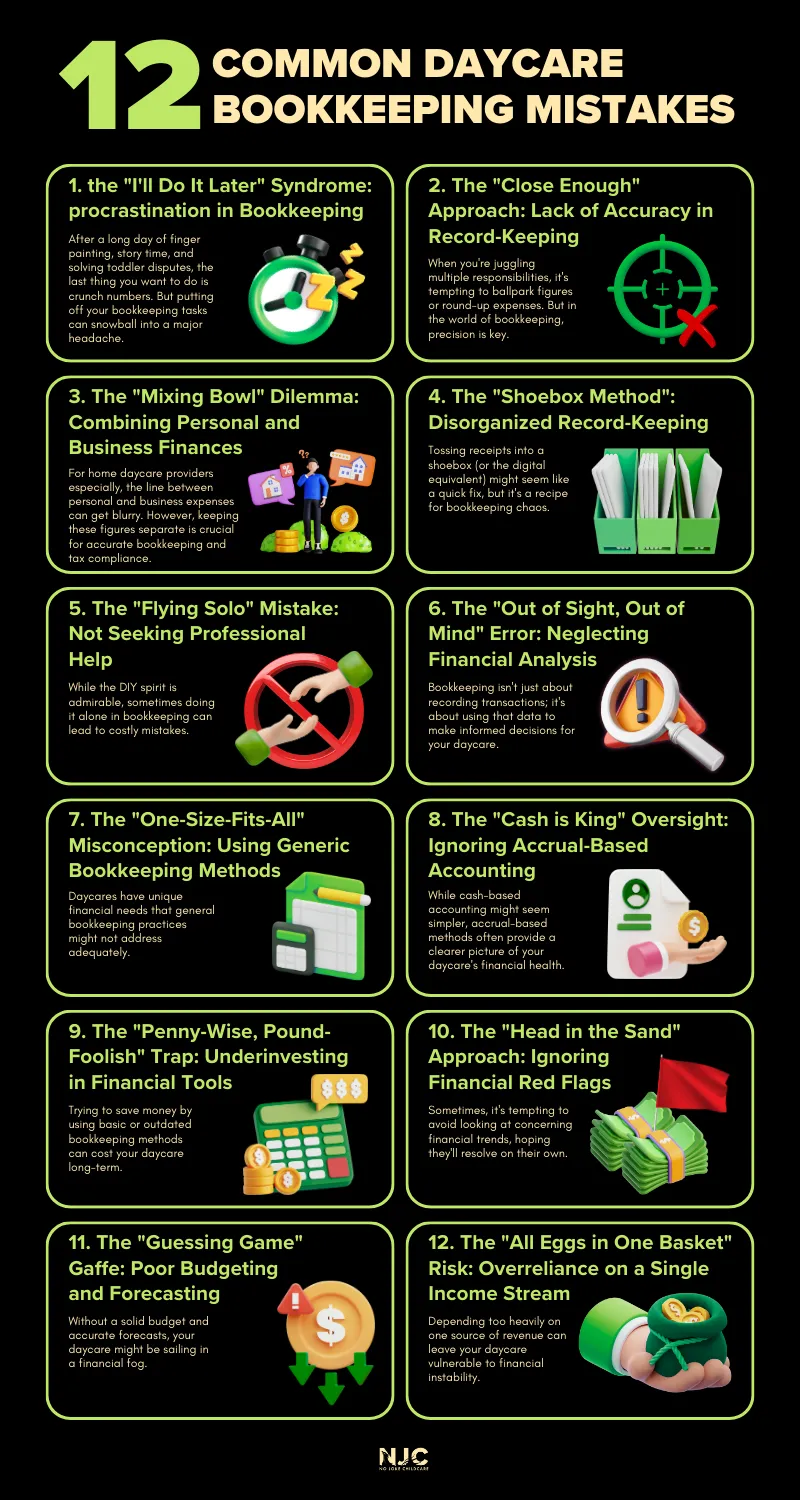
12 Common Daycare Bookkeeping Mistakes and How to Avoid Them

Published On: 07/09/2024By 7.6 min readCategories: Daycare Business, Daycare Operations, Software And ToolsViews: 1149
daycare bookkeeping

Running a daycare center is not a child’s play. Between managing energetic kids, keeping parents happy, and ensuring your staff is on top of their game, it’s easy to let bookkeeping slip through the cracks. But here’s the thing: solid financial management is the backbone of any successful childcare center.

This blog post will explore twelve common pitfalls in daycare bookkeeping – and, more importantly, how to sidestep them.

1. The “I’ll Do It Later” Syndrome: Procrastination in Bookkeeping

bookkeeping for daycares

After a long day of finger painting, story time, and solving toddler disputes, the last thing you want to do is crunch numbers. But putting off your bookkeeping tasks can snowball into a major headache.

Why it’s a problem:

  • Lost receipts and forgotten transactions
  • Rushed, error-prone entries when tax time looms
  • Missed opportunities for financial insights

How to avoid it:

  • Set aside dedicated bookkeeping time: Block out a specific time each week for financial tasks. Treat it like any other important appointment – because it is!

  • Use daycare bookkeeping software: Many tools designed specifically for childcare centers can automate data entry and make the process less daunting.

  • Break it down: Instead of facing a mountain of paperwork, tackle small tasks daily. Ten minutes of organized effort beats hours of last-minute panic.

2. The “Close Enough” Approach: Lack of Accuracy in Record-Keeping

When you’re juggling multiple responsibilities, it’s tempting to ballpark figures or round-up expenses. But in the world of bookkeeping, precision is key.

Why it’s a problem:

  • Inaccurate financial statements
  • Difficulty in identifying trends or issues
  • Potential legal and tax complications

How to avoid it:

  • Double-check entries: Take a moment to review each transaction as you enter it. A small error now can lead to big headaches later.

  • Reconcile regularly: Match your books with bank statements monthly. It’s like a financial health check-up for your daycare.

  • Invest in training: If bookkeeping isn’t your strong suit, consider taking a course or hiring a professional to set up a foolproof system for your daycare.

3. The “Mixing Bowl” Dilemma: Combining Personal and Business Finances

For home daycare providers especially, the line between personal and business expenses can get blurry. However, keeping these figures separate is crucial for accurate bookkeeping and tax compliance.

Why it’s a problem:

  • Difficulty in tracking true business expenses
  • Complications during tax filing
  • Potential red flags for audits

How to avoid it:

  • Open a separate business account: This simple step can make a world of difference in organizing your daycare’s finances.

  • Use dedicated credit cards: Have a card solely for business purchases to streamline expense tracking.

  • Create clear boundaries: Establish guidelines for what constitutes business expenses, especially for items that might serve dual purposes in a home daycare setting. Proper bookkeeping for home daycare relies on this clear separation of personal and business expenses.

4. The “Shoebox Method”: Disorganized Record-Keeping

Tossing receipts into a shoebox (or the digital equivalent) might seem like a quick fix, but it’s a recipe for bookkeeping chaos.

Why it’s a problem:

  • Time wasted searching for specific records
  • Risk of losing important documents
  • Stress and overwhelm when facing financial tasks

How to avoid it:

  • Develop a filing system: Whether physical or digital, create categories for different types of expenses and income sources.

  • Digitize documents: top-quality apps to scan and categorize receipts on the go. Many daycare bookkeeping software options include this feature.

  • Set up a routine: File documents weekly or bi-weekly to prevent backlog.

5. The “Flying Solo” Mistake: Not Seeking Professional Help

While the DIY spirit is admirable, sometimes doing it alone in bookkeeping can lead to costly mistakes.

Why it’s a problem:

  • Missed tax deductions specific to daycares
  • Lack of strategic financial planning
  • Overwhelm and stress for daycare owners

How to avoid it:

  • Consult a professional: Even if you handle day-to-day bookkeeping, an accountant familiar with daycare finances can provide valuable insights.

  • Join industry groups: Connect with other daycare owners to share best practices and recommendations for financial management.

  • Invest in specialized software: Look for bookkeeping tools designed with childcare centers in mind. They often include features tailored to your industry’s unique needs.

6. The “Out of Sight, Out of Mind” Error: Neglecting Financial Analysis

home daycare bookkeeping

Bookkeeping isn’t just about recording transactions; it’s about using that data to make informed decisions for your daycare.

Why it’s a problem:

  • Missed opportunities for growth or cost-saving
  • Lack of clarity on the financial health of your daycare
  • Difficulty in setting and achieving financial goals

How to avoid it:

  • Schedule regular financial reviews: Set aside time monthly or quarterly to analyze your daycare’s financial performance.

  • Use reporting features: Many daycare bookkeeping software options offer customizable reports. Learn to leverage these for insights.

  • Set measurable goals: Use your financial data to set realistic targets for enrollment, revenue, and expenses.

7. The “One-Size-Fits-All” Misconception: Using Generic Bookkeeping Methods

Daycares have unique financial needs that general bookkeeping practices might not address adequately.

Why it’s a problem:

  • Overlooked industry-specific expenses or income streams
  • Difficulty in tracking per-child costs and revenues
  • Challenges in managing variable income due to enrollment fluctuations

How to avoid it:

  • Customize your chart of accounts: Set up categories that reflect the specific income and expense types in your daycare.

  • Track enrollment-based metrics: Monitor financial data on a per-child basis to understand your true costs and profitability.

  • Use daycare-specific tools: Look for bookkeeping software that caters to childcare centers, offering features like attendance tracking linked to billing.

8. The “Cash is King” Oversight: Ignoring Accrual-Based Accounting

While cash-based accounting might seem simpler, accrual-based methods often provide a clearer picture of your daycare’s financial health.

Why it’s a problem:

  • Difficulty in matching revenues with associated expenses
  • Challenges in forecasting cash flow
  • Potential misrepresentation of your daycare’s financial position

How to avoid it:

  • Understand the difference: Educate yourself on cash vs. accrual accounting and how each applies to your daycare.

  • Consider switching methods: If you’re currently using cash-based accounting, explore whether accrual-based would be more beneficial.

  • Seek expert advice: Consult with an accountant familiar with daycare finances to determine the best approach for your center.

9. The “Penny-Wise, Pound-Foolish” Trap: Underinvesting in Financial Tools

Trying to save money by using basic or outdated bookkeeping methods can cost your daycare long-term.

Why it’s a problem:

  • Increased time spent on manual data entry
  • Higher risk of errors and oversights
  • Missed opportunities for financial insights and automation

How to avoid it:

  • Research options: Explore various daycare bookkeeping software solutions to find one that fits your needs and budget.

  • Calculate the ROI: Consider the time and stress saved, as well as potential financial gains, when evaluating the cost of bookkeeping tools.

  • Start small and scale: Begin with essential features and upgrade as your daycare grows and your needs evolve.

10. The “Head in the Sand” Approach: Ignoring Financial Red Flags

Sometimes, it’s tempting to avoid looking at concerning financial trends, hoping they’ll resolve on their own.

Why it’s a problem:

  • Small issues can snowball into major financial crises
  • Missed opportunities for early intervention and course correction
  • Increased stress and potential business instability

How to avoid it:

  • Set up financial alerts: Use your daycare bookkeeping software to notify you of concerning trends or thresholds.

  • Conduct regular financial health checks: Schedule monthly or quarterly reviews to catch potential issues early.

  • Be proactive: When you spot a red flag, develop an action plan immediately rather than hoping it will resolve itself.

11. The “Guessing Game” Gaffe: Poor Budgeting and Forecasting

Without a solid budget and accurate forecasts, your daycare might be sailing in a financial fog.

Why it’s a problem:

  • Difficulty in making informed decisions about expansions or cutbacks
  • Challenges in managing cash flow during slow periods
  • Missed opportunities for strategic investments in your daycare

How to avoid it:

  • Create a detailed budget: Break down your income and expenses into specific categories, considering seasonal fluctuations.

  • Use historical data: Leverage your past financial records to make more accurate projections.

  • Regular reviews and adjustments: Treat your budget as a living document, reviewing and updating it regularly based on actual performance.

12. The “All Eggs in One Basket” Risk: Overreliance on a Single Income Stream

Depending too heavily on one source of revenue can leave your daycare vulnerable to financial instability.

Why it’s a problem:

  • Increased financial risk if that income source diminishes
  • Missed opportunities for diversification and growth
  • Potential cash flow issues during enrollment fluctuations

How to avoid it:

  • Explore diverse revenue streams: Consider offering additional services like after-school programs, summer camps, or specialized classes.

  • Analyze the profitability of different age groups: Use your bookkeeping data to understand which age groups or programs are most profitable.

  • Create a financial safety net: Build up reserves to cushion against unexpected downturns in your primary income source.

Conclusion

Bookkeeping for daycare centers doesn’t have to be a headache. By avoiding these common pitfalls and implementing smart financial practices, you’re setting your childcare center up for success.

Solid bookkeeping is more than just number-crunching – it’s the foundation for making informed decisions, ensuring compliance, and providing the best care for the children in your charge.

Ready to take your daycare’s financial management to the next level? Schedule a free strategy call with No Joke Childcare today to discover how we can help streamline your bookkeeping and boost your business.

Do you want
more traffic?

Stop wasting money and unlock the hidden potential of your advertising.

Are you using Google Ads

Try our new free ads grader?

Boost your childcare center's ROI with Michael Tasner, Founder of No Joke Childcare. With his extensive experience and expertise in childcare marketing, Michael Tasner offers innovative strategies tailored to the unique needs of your center. From web 3.0 marketing to social media strategies, he'll guide you to achieve maximum visibility and generate quality leads. Don't miss out on this opportunity to supercharge your marketing efforts and position your center for success.

About Michael Tasner

Hey, I'm Michael Tasner. I'm determined to make your childcare center grow. My only question is, will it be yours?

Categories
daycare bookkeeping
Published On: 07/09/20247.6 min readViews: 1149

Running a daycare center is not a child’s play. Between managing energetic kids, keeping parents happy, and ensuring your staff is on top of their game, it’s easy to let bookkeeping slip through the cracks. But here’s the thing: solid financial management is the backbone of any successful childcare center.

This blog post will explore twelve common pitfalls in daycare bookkeeping – and, more importantly, how to sidestep them.

1. The “I’ll Do It Later” Syndrome: Procrastination in Bookkeeping

bookkeeping for daycares

After a long day of finger painting, story time, and solving toddler disputes, the last thing you want to do is crunch numbers. But putting off your bookkeeping tasks can snowball into a major headache.

Why it’s a problem:

  • Lost receipts and forgotten transactions
  • Rushed, error-prone entries when tax time looms
  • Missed opportunities for financial insights

How to avoid it:

  • Set aside dedicated bookkeeping time: Block out a specific time each week for financial tasks. Treat it like any other important appointment – because it is!

  • Use daycare bookkeeping software: Many tools designed specifically for childcare centers can automate data entry and make the process less daunting.

  • Break it down: Instead of facing a mountain of paperwork, tackle small tasks daily. Ten minutes of organized effort beats hours of last-minute panic.

2. The “Close Enough” Approach: Lack of Accuracy in Record-Keeping

When you’re juggling multiple responsibilities, it’s tempting to ballpark figures or round-up expenses. But in the world of bookkeeping, precision is key.

Why it’s a problem:

  • Inaccurate financial statements
  • Difficulty in identifying trends or issues
  • Potential legal and tax complications

How to avoid it:

  • Double-check entries: Take a moment to review each transaction as you enter it. A small error now can lead to big headaches later.

  • Reconcile regularly: Match your books with bank statements monthly. It’s like a financial health check-up for your daycare.

  • Invest in training: If bookkeeping isn’t your strong suit, consider taking a course or hiring a professional to set up a foolproof system for your daycare.

3. The “Mixing Bowl” Dilemma: Combining Personal and Business Finances

For home daycare providers especially, the line between personal and business expenses can get blurry. However, keeping these figures separate is crucial for accurate bookkeeping and tax compliance.

Why it’s a problem:

  • Difficulty in tracking true business expenses
  • Complications during tax filing
  • Potential red flags for audits

How to avoid it:

  • Open a separate business account: This simple step can make a world of difference in organizing your daycare’s finances.

  • Use dedicated credit cards: Have a card solely for business purchases to streamline expense tracking.

  • Create clear boundaries: Establish guidelines for what constitutes business expenses, especially for items that might serve dual purposes in a home daycare setting. Proper bookkeeping for home daycare relies on this clear separation of personal and business expenses.

4. The “Shoebox Method”: Disorganized Record-Keeping

Tossing receipts into a shoebox (or the digital equivalent) might seem like a quick fix, but it’s a recipe for bookkeeping chaos.

Why it’s a problem:

  • Time wasted searching for specific records
  • Risk of losing important documents
  • Stress and overwhelm when facing financial tasks

How to avoid it:

  • Develop a filing system: Whether physical or digital, create categories for different types of expenses and income sources.

  • Digitize documents: top-quality apps to scan and categorize receipts on the go. Many daycare bookkeeping software options include this feature.

  • Set up a routine: File documents weekly or bi-weekly to prevent backlog.

5. The “Flying Solo” Mistake: Not Seeking Professional Help

While the DIY spirit is admirable, sometimes doing it alone in bookkeeping can lead to costly mistakes.

Why it’s a problem:

  • Missed tax deductions specific to daycares
  • Lack of strategic financial planning
  • Overwhelm and stress for daycare owners

How to avoid it:

  • Consult a professional: Even if you handle day-to-day bookkeeping, an accountant familiar with daycare finances can provide valuable insights.

  • Join industry groups: Connect with other daycare owners to share best practices and recommendations for financial management.

  • Invest in specialized software: Look for bookkeeping tools designed with childcare centers in mind. They often include features tailored to your industry’s unique needs.

6. The “Out of Sight, Out of Mind” Error: Neglecting Financial Analysis

home daycare bookkeeping

Bookkeeping isn’t just about recording transactions; it’s about using that data to make informed decisions for your daycare.

Why it’s a problem:

  • Missed opportunities for growth or cost-saving
  • Lack of clarity on the financial health of your daycare
  • Difficulty in setting and achieving financial goals

How to avoid it:

  • Schedule regular financial reviews: Set aside time monthly or quarterly to analyze your daycare’s financial performance.

  • Use reporting features: Many daycare bookkeeping software options offer customizable reports. Learn to leverage these for insights.

  • Set measurable goals: Use your financial data to set realistic targets for enrollment, revenue, and expenses.

7. The “One-Size-Fits-All” Misconception: Using Generic Bookkeeping Methods

Daycares have unique financial needs that general bookkeeping practices might not address adequately.

Why it’s a problem:

  • Overlooked industry-specific expenses or income streams
  • Difficulty in tracking per-child costs and revenues
  • Challenges in managing variable income due to enrollment fluctuations

How to avoid it:

  • Customize your chart of accounts: Set up categories that reflect the specific income and expense types in your daycare.

  • Track enrollment-based metrics: Monitor financial data on a per-child basis to understand your true costs and profitability.

  • Use daycare-specific tools: Look for bookkeeping software that caters to childcare centers, offering features like attendance tracking linked to billing.

8. The “Cash is King” Oversight: Ignoring Accrual-Based Accounting

While cash-based accounting might seem simpler, accrual-based methods often provide a clearer picture of your daycare’s financial health.

Why it’s a problem:

  • Difficulty in matching revenues with associated expenses
  • Challenges in forecasting cash flow
  • Potential misrepresentation of your daycare’s financial position

How to avoid it:

  • Understand the difference: Educate yourself on cash vs. accrual accounting and how each applies to your daycare.

  • Consider switching methods: If you’re currently using cash-based accounting, explore whether accrual-based would be more beneficial.

  • Seek expert advice: Consult with an accountant familiar with daycare finances to determine the best approach for your center.

9. The “Penny-Wise, Pound-Foolish” Trap: Underinvesting in Financial Tools

Trying to save money by using basic or outdated bookkeeping methods can cost your daycare long-term.

Why it’s a problem:

  • Increased time spent on manual data entry
  • Higher risk of errors and oversights
  • Missed opportunities for financial insights and automation

How to avoid it:

  • Research options: Explore various daycare bookkeeping software solutions to find one that fits your needs and budget.

  • Calculate the ROI: Consider the time and stress saved, as well as potential financial gains, when evaluating the cost of bookkeeping tools.

  • Start small and scale: Begin with essential features and upgrade as your daycare grows and your needs evolve.

10. The “Head in the Sand” Approach: Ignoring Financial Red Flags

Sometimes, it’s tempting to avoid looking at concerning financial trends, hoping they’ll resolve on their own.

Why it’s a problem:

  • Small issues can snowball into major financial crises
  • Missed opportunities for early intervention and course correction
  • Increased stress and potential business instability

How to avoid it:

  • Set up financial alerts: Use your daycare bookkeeping software to notify you of concerning trends or thresholds.

  • Conduct regular financial health checks: Schedule monthly or quarterly reviews to catch potential issues early.

  • Be proactive: When you spot a red flag, develop an action plan immediately rather than hoping it will resolve itself.

11. The “Guessing Game” Gaffe: Poor Budgeting and Forecasting

Without a solid budget and accurate forecasts, your daycare might be sailing in a financial fog.

Why it’s a problem:

  • Difficulty in making informed decisions about expansions or cutbacks
  • Challenges in managing cash flow during slow periods
  • Missed opportunities for strategic investments in your daycare

How to avoid it:

  • Create a detailed budget: Break down your income and expenses into specific categories, considering seasonal fluctuations.

  • Use historical data: Leverage your past financial records to make more accurate projections.

  • Regular reviews and adjustments: Treat your budget as a living document, reviewing and updating it regularly based on actual performance.

12. The “All Eggs in One Basket” Risk: Overreliance on a Single Income Stream

Depending too heavily on one source of revenue can leave your daycare vulnerable to financial instability.

Why it’s a problem:

  • Increased financial risk if that income source diminishes
  • Missed opportunities for diversification and growth
  • Potential cash flow issues during enrollment fluctuations

How to avoid it:

  • Explore diverse revenue streams: Consider offering additional services like after-school programs, summer camps, or specialized classes.

  • Analyze the profitability of different age groups: Use your bookkeeping data to understand which age groups or programs are most profitable.

  • Create a financial safety net: Build up reserves to cushion against unexpected downturns in your primary income source.

Conclusion

Bookkeeping for daycare centers doesn’t have to be a headache. By avoiding these common pitfalls and implementing smart financial practices, you’re setting your childcare center up for success.

Solid bookkeeping is more than just number-crunching – it’s the foundation for making informed decisions, ensuring compliance, and providing the best care for the children in your charge.

Ready to take your daycare’s financial management to the next level? Schedule a free strategy call with No Joke Childcare today to discover how we can help streamline your bookkeeping and boost your business.

daycare bookkeeping
Published On: 07/09/20247.6 min readViews: 1149

Running a daycare center is not a child’s play. Between managing energetic kids, keeping parents happy, and ensuring your staff is on top of their game, it’s easy to let bookkeeping slip through the cracks. But here’s the thing: solid financial management is the backbone of any successful childcare center.

This blog post will explore twelve common pitfalls in daycare bookkeeping – and, more importantly, how to sidestep them.

1. The “I’ll Do It Later” Syndrome: Procrastination in Bookkeeping

bookkeeping for daycares

After a long day of finger painting, story time, and solving toddler disputes, the last thing you want to do is crunch numbers. But putting off your bookkeeping tasks can snowball into a major headache.

Why it’s a problem:

  • Lost receipts and forgotten transactions
  • Rushed, error-prone entries when tax time looms
  • Missed opportunities for financial insights

How to avoid it:

  • Set aside dedicated bookkeeping time: Block out a specific time each week for financial tasks. Treat it like any other important appointment – because it is!

  • Use daycare bookkeeping software: Many tools designed specifically for childcare centers can automate data entry and make the process less daunting.

  • Break it down: Instead of facing a mountain of paperwork, tackle small tasks daily. Ten minutes of organized effort beats hours of last-minute panic.

2. The “Close Enough” Approach: Lack of Accuracy in Record-Keeping

When you’re juggling multiple responsibilities, it’s tempting to ballpark figures or round-up expenses. But in the world of bookkeeping, precision is key.

Why it’s a problem:

  • Inaccurate financial statements
  • Difficulty in identifying trends or issues
  • Potential legal and tax complications

How to avoid it:

  • Double-check entries: Take a moment to review each transaction as you enter it. A small error now can lead to big headaches later.

  • Reconcile regularly: Match your books with bank statements monthly. It’s like a financial health check-up for your daycare.

  • Invest in training: If bookkeeping isn’t your strong suit, consider taking a course or hiring a professional to set up a foolproof system for your daycare.

3. The “Mixing Bowl” Dilemma: Combining Personal and Business Finances

For home daycare providers especially, the line between personal and business expenses can get blurry. However, keeping these figures separate is crucial for accurate bookkeeping and tax compliance.

Why it’s a problem:

  • Difficulty in tracking true business expenses
  • Complications during tax filing
  • Potential red flags for audits

How to avoid it:

  • Open a separate business account: This simple step can make a world of difference in organizing your daycare’s finances.

  • Use dedicated credit cards: Have a card solely for business purchases to streamline expense tracking.

  • Create clear boundaries: Establish guidelines for what constitutes business expenses, especially for items that might serve dual purposes in a home daycare setting. Proper bookkeeping for home daycare relies on this clear separation of personal and business expenses.

4. The “Shoebox Method”: Disorganized Record-Keeping

Tossing receipts into a shoebox (or the digital equivalent) might seem like a quick fix, but it’s a recipe for bookkeeping chaos.

Why it’s a problem:

  • Time wasted searching for specific records
  • Risk of losing important documents
  • Stress and overwhelm when facing financial tasks

How to avoid it:

  • Develop a filing system: Whether physical or digital, create categories for different types of expenses and income sources.

  • Digitize documents: top-quality apps to scan and categorize receipts on the go. Many daycare bookkeeping software options include this feature.

  • Set up a routine: File documents weekly or bi-weekly to prevent backlog.

5. The “Flying Solo” Mistake: Not Seeking Professional Help

While the DIY spirit is admirable, sometimes doing it alone in bookkeeping can lead to costly mistakes.

Why it’s a problem:

  • Missed tax deductions specific to daycares
  • Lack of strategic financial planning
  • Overwhelm and stress for daycare owners

How to avoid it:

  • Consult a professional: Even if you handle day-to-day bookkeeping, an accountant familiar with daycare finances can provide valuable insights.

  • Join industry groups: Connect with other daycare owners to share best practices and recommendations for financial management.

  • Invest in specialized software: Look for bookkeeping tools designed with childcare centers in mind. They often include features tailored to your industry’s unique needs.

6. The “Out of Sight, Out of Mind” Error: Neglecting Financial Analysis

home daycare bookkeeping

Bookkeeping isn’t just about recording transactions; it’s about using that data to make informed decisions for your daycare.

Why it’s a problem:

  • Missed opportunities for growth or cost-saving
  • Lack of clarity on the financial health of your daycare
  • Difficulty in setting and achieving financial goals

How to avoid it:

  • Schedule regular financial reviews: Set aside time monthly or quarterly to analyze your daycare’s financial performance.

  • Use reporting features: Many daycare bookkeeping software options offer customizable reports. Learn to leverage these for insights.

  • Set measurable goals: Use your financial data to set realistic targets for enrollment, revenue, and expenses.

7. The “One-Size-Fits-All” Misconception: Using Generic Bookkeeping Methods

Daycares have unique financial needs that general bookkeeping practices might not address adequately.

Why it’s a problem:

  • Overlooked industry-specific expenses or income streams
  • Difficulty in tracking per-child costs and revenues
  • Challenges in managing variable income due to enrollment fluctuations

How to avoid it:

  • Customize your chart of accounts: Set up categories that reflect the specific income and expense types in your daycare.

  • Track enrollment-based metrics: Monitor financial data on a per-child basis to understand your true costs and profitability.

  • Use daycare-specific tools: Look for bookkeeping software that caters to childcare centers, offering features like attendance tracking linked to billing.

8. The “Cash is King” Oversight: Ignoring Accrual-Based Accounting

While cash-based accounting might seem simpler, accrual-based methods often provide a clearer picture of your daycare’s financial health.

Why it’s a problem:

  • Difficulty in matching revenues with associated expenses
  • Challenges in forecasting cash flow
  • Potential misrepresentation of your daycare’s financial position

How to avoid it:

  • Understand the difference: Educate yourself on cash vs. accrual accounting and how each applies to your daycare.

  • Consider switching methods: If you’re currently using cash-based accounting, explore whether accrual-based would be more beneficial.

  • Seek expert advice: Consult with an accountant familiar with daycare finances to determine the best approach for your center.

9. The “Penny-Wise, Pound-Foolish” Trap: Underinvesting in Financial Tools

Trying to save money by using basic or outdated bookkeeping methods can cost your daycare long-term.

Why it’s a problem:

  • Increased time spent on manual data entry
  • Higher risk of errors and oversights
  • Missed opportunities for financial insights and automation

How to avoid it:

  • Research options: Explore various daycare bookkeeping software solutions to find one that fits your needs and budget.

  • Calculate the ROI: Consider the time and stress saved, as well as potential financial gains, when evaluating the cost of bookkeeping tools.

  • Start small and scale: Begin with essential features and upgrade as your daycare grows and your needs evolve.

10. The “Head in the Sand” Approach: Ignoring Financial Red Flags

Sometimes, it’s tempting to avoid looking at concerning financial trends, hoping they’ll resolve on their own.

Why it’s a problem:

  • Small issues can snowball into major financial crises
  • Missed opportunities for early intervention and course correction
  • Increased stress and potential business instability

How to avoid it:

  • Set up financial alerts: Use your daycare bookkeeping software to notify you of concerning trends or thresholds.

  • Conduct regular financial health checks: Schedule monthly or quarterly reviews to catch potential issues early.

  • Be proactive: When you spot a red flag, develop an action plan immediately rather than hoping it will resolve itself.

11. The “Guessing Game” Gaffe: Poor Budgeting and Forecasting

Without a solid budget and accurate forecasts, your daycare might be sailing in a financial fog.

Why it’s a problem:

  • Difficulty in making informed decisions about expansions or cutbacks
  • Challenges in managing cash flow during slow periods
  • Missed opportunities for strategic investments in your daycare

How to avoid it:

  • Create a detailed budget: Break down your income and expenses into specific categories, considering seasonal fluctuations.

  • Use historical data: Leverage your past financial records to make more accurate projections.

  • Regular reviews and adjustments: Treat your budget as a living document, reviewing and updating it regularly based on actual performance.

12. The “All Eggs in One Basket” Risk: Overreliance on a Single Income Stream

Depending too heavily on one source of revenue can leave your daycare vulnerable to financial instability.

Why it’s a problem:

  • Increased financial risk if that income source diminishes
  • Missed opportunities for diversification and growth
  • Potential cash flow issues during enrollment fluctuations

How to avoid it:

  • Explore diverse revenue streams: Consider offering additional services like after-school programs, summer camps, or specialized classes.

  • Analyze the profitability of different age groups: Use your bookkeeping data to understand which age groups or programs are most profitable.

  • Create a financial safety net: Build up reserves to cushion against unexpected downturns in your primary income source.

Conclusion

Bookkeeping for daycare centers doesn’t have to be a headache. By avoiding these common pitfalls and implementing smart financial practices, you’re setting your childcare center up for success.

Solid bookkeeping is more than just number-crunching – it’s the foundation for making informed decisions, ensuring compliance, and providing the best care for the children in your charge.

Ready to take your daycare’s financial management to the next level? Schedule a free strategy call with No Joke Childcare today to discover how we can help streamline your bookkeeping and boost your business.