

If you want my team to just do your marketing for you, click here.



Are you interested in learning how to start a daycare business? This comprehensive guide is your ultimate resource if you want to embark on a fulfilling and profitable journey.
The ever-increasing demand for dependable, high-quality childcare services creates an exceptional business opportunity. But all the same, running a daycare business provides a gratifying career where you can positively impact children’s lives and your community.
We give you this guide because knowing how to start a daycare business properly is pivotal for its long-term success. From comprehending licensing requirements to meticulous financial planning, strategic staffing considerations, and effective child care marketing strategies, each facet is vital in establishing a thriving and sustainable childcare center. So without further ado, let us walk you through the process of how to start a daycare business.
Why You Should Start a Childcare Business
Before we proceed to the actionable steps on how to start a daycare business, let’s first look at why choosing this entrepreneurial journey is worth your while.
How to Start a Daycare Business: Understanding Profitability
If you’re wondering why you should start a childcare business, profitability could be one reason. Starting a childcare business can be a highly profitable venture. Above all, the demand for reliable and quality childcare services continues to rise across the United States. According to a recent market analysis report the U.S. childcare market size was valued at USD 60.4 billion in 2022 and is expected to grow at a compound annual growth rate (CAGR) of 4.18% from 2023 to 2030.
Additionally, the U.S. Bureau of Labor Statistics projects that daycare businesses will have some of the fastest employment growth of all industries. This just shows how there’s a huge opportunity in the childcare industry that you can profit from.

So by providing exceptional care, establishing competitive pricing strategies, and ensuring a positive reputation within your community, you can attract a steady stream of clientele and achieve significant financial success.
Tax Benefits
Another appealing aspect of starting a childcare business is the tax benefits available. The Internal Revenue Service (IRS) offers various tax deductions and credits for childcare providers based on eligibility. For instance, you can deduct business expenses such as:
By consulting with a tax professional well-versed in the childcare industry, you can ensure that you maximize your tax benefits for your daycare business and optimize your financial position.
Rewarding Career
Few careers can match the inherent rewards of running a childcare business. Each day, you have the opportunity to positively impact the lives of children and their families. In addition, as a childcare provider, you become an integral part of their developmental journey, fostering their growth, learning, and social development.
At the same time, witnessing the smiles, milestones, and educational breakthroughs of the children in your care is profoundly fulfilling. It’s a career that allows you to leave a lasting impression, knowing you have played an important role in shaping the future generation.
How To Start A Daycare Business – What You Need to Know
To successfully open a daycare center, there are several key factors you need to consider and essential requirements you must fulfill. Let’s explore them!
Ready to advance your daycare business? Read the ultimate guide to starting your own child care business.
Knowledge about Early Childhood Education
While not always mandatory, having formal education or relevant certifications in early childhood education can greatly enhance the quality and credibility of your daycare center. Consider pursuing courses or obtaining certifications focusing on child development, curriculum planning, behavior management, and health and safety practices.
These educational credentials not only equip you with the necessary knowledge and skills to provide a nurturing and enriching environment for children but also instill confidence in parents and potential clients.
Capital
Establishing a daycare center requires careful financial planning. Create a comprehensive business plan that outlines your initial investment, monthly expenses, and projected revenue, to begin with. Subsequently, research the startup costs, including licensing fees, insurance premiums, facility renovation or rent, equipment, and supplies.
Explore funding options such as business loans, financial assistance programs, grants, and crowdfunding platforms. Having a clear understanding of your financial obligations and potential revenue streams will help you make informed decisions and ensure the long-term sustainability of your daycare center.
Team & Staff
Building a competent and dedicated team is crucial for running a successful daycare center. Define the roles and responsibilities you need to fulfill, such as teachers, assistants, administrators, and support staff. Seek individuals with a genuine passion for early childhood education and experience working with children.
Additionally, implement a thorough hiring process that includes background checks, interviews, and reference checks to ensure the safety and well-being of the children in your care. Foster a positive and supportive work environment that promotes professional growth and collaboration.
By addressing these key elements, you will lay a solid foundation for your daycare center. Each aspect contributes to your business’s overall success and reputation, ensuring that you provide a safe, nurturing, and enriching environment for children to learn and grow.

The Startup Cost of Starting a Daycare Center
When starting a daycare center, it’s crucial to carefully consider the various expenses involved. Understanding the startup costs will help you plan your finances effectively and ensure a smooth launch. Let’s explore the key elements of the startup cost for opening a daycare center, including licensing fees, insurance, rent and utilities, compensation, childcare supplies and equipment, and advertising and marketing.

Legal Requirements Fees
When starting a daycare center, it’s crucial to carefully consider the various expenses involved. Understanding the startup costs will help you plan your finances effectively and ensure a smooth launch. Let’s explore the key elements of the startup cost for opening a daycare center. For example, licensing fees, insurance, rent and utilities, compensation, childcare supplies and equipment, and advertising and marketing.
Insurance
Insurance coverage protects your daycare center from unforeseen circumstances and liability. There are three primary types of insurance you should consider:
Consult with an insurance agent specializing in childcare businesses to determine the most appropriate coverage for your specific needs.
Rent and Utilities
Renting or leasing a suitable space for your daycare center is another significant expense. The cost will depend on factors such as location, size, and amenities. Ensure you choose a facility that meets your licensing requirements and provides adequate space for children’s activities and classrooms.
Additionally, factor in the cost of utilities such as electricity, water, heating, and cooling. Conduct a thorough assessment of potential locations to determine the estimated monthly expenses for rent and utilities.
Compensation
Allocating a budget for employee compensation is essential for attracting and retaining qualified staff. The first thing to remember is to determine the appropriate salaries or hourly rates for your teachers, assistants, and administrative personnel. For instance, consider the local market rates, experience levels, and any additional benefits you may offer, such as healthcare or retirement plans. Adequate compensation ensures employee satisfaction and fosters a positive work environment.
Childcare Supplies and Equipment
Equipping your daycare center with the necessary supplies and equipment is essential to provide a safe and enriching environment for children. Firstly, create a comprehensive list of items you will need, including furniture, toys, educational materials, arts and crafts supplies, cribs, high chairs, and safety equipment. Lastly, research suppliers and compare prices to find the best deals without compromising quality.
Advertising and Marketing
To attract parents and fill your daycare center with children, effective advertising and marketing strategies are crucial. Firstly, allocate a portion of your budget to promote your services through various channels, such as online platforms, local directories, social media, and print advertisements. Similarly, consider hiring a marketing professional or utilizing digital marketing techniques to reach your target audience effectively.
By estimating and planning for these startup costs—licensing fees, insurance, rent and utilities, compensation, childcare supplies and equipment, and advertising and marketing, you will clearly understand the financial requirements of starting a daycare center. This preparation will unquestionably enable you to allocate your resources wisely and ensure a strong foundation for your business.
Here are Your Actionable Steps On How to Start A Daycare Business
This section will provide a concise and practical guide to starting your own daycare business. These actionable steps will help you navigate the initial stages and set a solid foundation for your venture.
1. Do Your Research
Before diving into the daycare entrepreneurship world, conducting thorough research is crucial. Start by learning about other daycare centers in your area. Understand their services, pricing, and unique selling points. It will help you identify gaps in the market and tailor your business to meet the specific needs of your target audience.
Additionally, familiarize yourself with licensing requirements and other legal obligations. Contact relevant authorities such as the Department of Health, Department of Children and Family Services, Department of Licenses and Inspections, and Department of Social Services to understand the regulations you need to comply with.
2. Get Certified in Early Childhood Education
To provide high-quality care and education, consider obtaining certification in early childhood education. It will equip you with the necessary skills and knowledge to create a nurturing and stimulating environment for children in your daycare center. In addition, explore local community colleges or online programs that offer early childhood education courses or certifications.
3. Write a Business Plan
A well-crafted business plan serves as a roadmap for your daycare business. A business plan can give you all the answers related to your question about how to start a daycare business. It outlines your vision, goals, and strategies for success at the same time. Here are some key components to include in your business plan:
A. Business Model
Decide on the structure of your daycare business. For example, as a sole proprietorship, partnership, or limited liability company (LLC). Each structure has its own implications for taxes, liability, and ownership.
B. Name and Branding
Choose a catchy and memorable name for your daycare business. Ensure it reflects your values, target market, and the image you want to portray. Develop a strong brand identity concurrently by creating a logo, selecting colors and fonts, and establishing a cohesive visual presence.
Above all, describe your daycare center’s mission, vision, and objectives and the services you will provide.
C. Operational plan
Decide on the structure of your daycare business, such as a sole proprietorship, partnership, or limited liability company (LLC). Each structure has its own implications for taxes, liability, and ownership.
D. Financial Plan
Create a comprehensive financial plan that includes startup costs, projected revenue, and anticipated expenses. Explore loan applications, financial assistance programs, grants, and funding options to secure the necessary capital. Thereafter, set up a dedicated business bank account to manage your finances effectively.
4. Find a Location
Choosing the right location for your daycare center is crucial for its success. For instance, look for an area with a high population of families, accessibility, and a safe neighborhood. Consider factors such as parking availability, proximity to schools or workplaces, and the overall ambiance of the surrounding area.
5. Obtain Licenses
Obtaining the necessary licenses is a fundamental step in opening a daycare center. Furthermore, each state has its own licensing regulations and requirements that govern the operation of childcare facilities. So, it is imperative to thoroughly research and comply with the licensing standards set by your state’s regulatory agencies, such as
Also, see this list of State and Territory Child Care and Development Fund Administrators to find the specific office in your state. Familiarize yourself with the specific licensing procedures, documentation, and inspections needed to ensure your daycare center meets the necessary safety, health, and educational standards.
6. Get Insurance
Protecting your daycare business from potential risks is essential. Explicitly acquire appropriate insurance coverage to safeguard against accidents, property damage, and liability claims. It’s equally important to consult with insurance professionals who specialize in childcare businesses to ensure you have adequate coverage tailored to your specific needs.
7. Prepare the Facility
Create a safe, welcoming, and child-friendly environment within your daycare facility. Ensure compliance with safety regulations, including childproofing measures, secure entry systems, and emergency protocols. Design age-appropriate play areas, classrooms, and restrooms, considering both functionality and aesthetics.
8. Develop Policies, Procedures, and Curriculum
Establish clear policies and procedures that govern all aspects of your daycare operations. For example, child supervision, health and safety protocols, discipline policies, and parent communication. Developing a well-rounded curriculum that promotes learning, creativity, and social development is also equally important. Finally, Incorporate age-appropriate activities, educational resources, and enrichment programs.
9. Hire Staff
Recruiting qualified and dedicated staff members is crucial to maintaining a high standard of care.
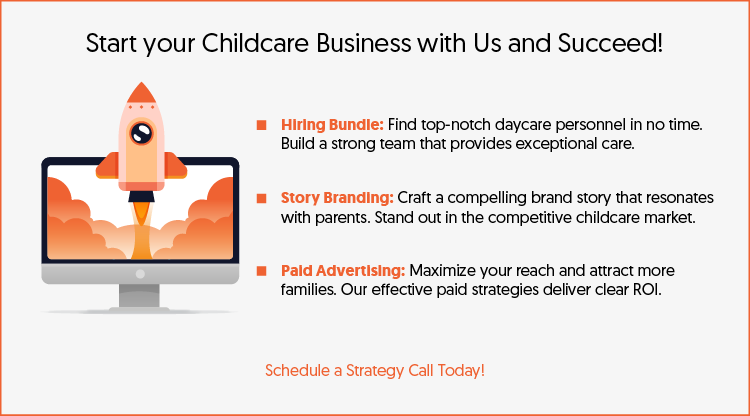
Make this step easier for yourself by getting our Hiring Bundle Solutions. We’ll help you hire the right people!
10. Software/Tools to Manage Everything
Utilize a customer relationship management (CRM) system to efficiently streamline administrative tasks, record-keeping, billing, enrollments, and parent communications. Doing so can also help you create automated marketing campaigns and access real-time analytics to improve efficiency.
Here at No Joke Childcare, we can simplify all these for you with our CRM tracking system. The ultimate goal of this service is to help you better manage and optimize your relationship with your customers. It is undoubtedly very important for the success of your business.
11. Market Your Business
Effective marketing attracts parents and fills your daycare center with eager children. Develop a comprehensive marketing strategy that includes both online and offline channels. Utilize digital marketing techniques such as search engine optimization (SEO), social media marketing, and targeted online advertising. Highlight the unique aspects of your daycare business and showcase the value you provide to parents and children.

Marketing your childcare business is important to generate brand awareness, build trust, and ultimately increase enrollment. At No Joke Childcare, we understand the significance of effective marketing strategies for daycare centers. We offer a range of services to help you promote your business, including
With careful planning, dedication, and a commitment to providing excellent care, you can create a successful daycare business that positively impacts the lives of children and their families.
FAQS
Are you interested in learning how to start a daycare business? This comprehensive guide is your ultimate resource if you want to embark on a fulfilling and profitable journey.
The ever-increasing demand for dependable, high-quality childcare services creates an exceptional business opportunity. But all the same, running a daycare business provides a gratifying career where you can positively impact children’s lives and your community.
We give you this guide because knowing how to start a daycare business properly is pivotal for its long-term success. From comprehending licensing requirements to meticulous financial planning, strategic staffing considerations, and effective child care marketing strategies, each facet is vital in establishing a thriving and sustainable childcare center. So without further ado, let us walk you through the process of how to start a daycare business.
Why You Should Start a Childcare Business
Before we proceed to the actionable steps on how to start a daycare business, let’s first look at why choosing this entrepreneurial journey is worth your while.
How to Start a Daycare Business: Understanding Profitability
If you’re wondering why you should start a childcare business, profitability could be one reason. Starting a childcare business can be a highly profitable venture. Above all, the demand for reliable and quality childcare services continues to rise across the United States. According to a recent market analysis report the U.S. childcare market size was valued at USD 60.4 billion in 2022 and is expected to grow at a compound annual growth rate (CAGR) of 4.18% from 2023 to 2030.
Additionally, the U.S. Bureau of Labor Statistics projects that daycare businesses will have some of the fastest employment growth of all industries. This just shows how there’s a huge opportunity in the childcare industry that you can profit from.
So by providing exceptional care, establishing competitive pricing strategies, and ensuring a positive reputation within your community, you can attract a steady stream of clientele and achieve significant financial success.
Tax Benefits
Another appealing aspect of starting a childcare business is the tax benefits available. The Internal Revenue Service (IRS) offers various tax deductions and credits for childcare providers based on eligibility. For instance, you can deduct business expenses such as:
By consulting with a tax professional well-versed in the childcare industry, you can ensure that you maximize your tax benefits for your daycare business and optimize your financial position.
Rewarding Career
Few careers can match the inherent rewards of running a childcare business. Each day, you have the opportunity to positively impact the lives of children and their families. In addition, as a childcare provider, you become an integral part of their developmental journey, fostering their growth, learning, and social development.
At the same time, witnessing the smiles, milestones, and educational breakthroughs of the children in your care is profoundly fulfilling. It’s a career that allows you to leave a lasting impression, knowing you have played an important role in shaping the future generation.
How To Start A Daycare Business – What You Need to Know
To successfully open a daycare center, there are several key factors you need to consider and essential requirements you must fulfill. Let’s explore them!
Ready to advance your daycare business? Read the ultimate guide to starting your own child care business.
Knowledge about Early Childhood Education
While not always mandatory, having formal education or relevant certifications in early childhood education can greatly enhance the quality and credibility of your daycare center. Consider pursuing courses or obtaining certifications focusing on child development, curriculum planning, behavior management, and health and safety practices.
These educational credentials not only equip you with the necessary knowledge and skills to provide a nurturing and enriching environment for children but also instill confidence in parents and potential clients.
Capital
Establishing a daycare center requires careful financial planning. Create a comprehensive business plan that outlines your initial investment, monthly expenses, and projected revenue, to begin with. Subsequently, research the startup costs, including licensing fees, insurance premiums, facility renovation or rent, equipment, and supplies.
Explore funding options such as business loans, financial assistance programs, grants, and crowdfunding platforms. Having a clear understanding of your financial obligations and potential revenue streams will help you make informed decisions and ensure the long-term sustainability of your daycare center.
Team & Staff
Building a competent and dedicated team is crucial for running a successful daycare center. Define the roles and responsibilities you need to fulfill, such as teachers, assistants, administrators, and support staff. Seek individuals with a genuine passion for early childhood education and experience working with children.
Additionally, implement a thorough hiring process that includes background checks, interviews, and reference checks to ensure the safety and well-being of the children in your care. Foster a positive and supportive work environment that promotes professional growth and collaboration.
By addressing these key elements, you will lay a solid foundation for your daycare center. Each aspect contributes to your business’s overall success and reputation, ensuring that you provide a safe, nurturing, and enriching environment for children to learn and grow.
The Startup Cost of Starting a Daycare Center
When starting a daycare center, it’s crucial to carefully consider the various expenses involved. Understanding the startup costs will help you plan your finances effectively and ensure a smooth launch. Let’s explore the key elements of the startup cost for opening a daycare center, including licensing fees, insurance, rent and utilities, compensation, childcare supplies and equipment, and advertising and marketing.
Legal Requirements Fees
When starting a daycare center, it’s crucial to carefully consider the various expenses involved. Understanding the startup costs will help you plan your finances effectively and ensure a smooth launch. Let’s explore the key elements of the startup cost for opening a daycare center. For example, licensing fees, insurance, rent and utilities, compensation, childcare supplies and equipment, and advertising and marketing.
Insurance
Insurance coverage protects your daycare center from unforeseen circumstances and liability. There are three primary types of insurance you should consider:
Consult with an insurance agent specializing in childcare businesses to determine the most appropriate coverage for your specific needs.
Rent and Utilities
Renting or leasing a suitable space for your daycare center is another significant expense. The cost will depend on factors such as location, size, and amenities. Ensure you choose a facility that meets your licensing requirements and provides adequate space for children’s activities and classrooms.
Additionally, factor in the cost of utilities such as electricity, water, heating, and cooling. Conduct a thorough assessment of potential locations to determine the estimated monthly expenses for rent and utilities.
Compensation
Allocating a budget for employee compensation is essential for attracting and retaining qualified staff. The first thing to remember is to determine the appropriate salaries or hourly rates for your teachers, assistants, and administrative personnel. For instance, consider the local market rates, experience levels, and any additional benefits you may offer, such as healthcare or retirement plans. Adequate compensation ensures employee satisfaction and fosters a positive work environment.
Childcare Supplies and Equipment
Equipping your daycare center with the necessary supplies and equipment is essential to provide a safe and enriching environment for children. Firstly, create a comprehensive list of items you will need, including furniture, toys, educational materials, arts and crafts supplies, cribs, high chairs, and safety equipment. Lastly, research suppliers and compare prices to find the best deals without compromising quality.
Advertising and Marketing
To attract parents and fill your daycare center with children, effective advertising and marketing strategies are crucial. Firstly, allocate a portion of your budget to promote your services through various channels, such as online platforms, local directories, social media, and print advertisements. Similarly, consider hiring a marketing professional or utilizing digital marketing techniques to reach your target audience effectively.
By estimating and planning for these startup costs—licensing fees, insurance, rent and utilities, compensation, childcare supplies and equipment, and advertising and marketing, you will clearly understand the financial requirements of starting a daycare center. This preparation will unquestionably enable you to allocate your resources wisely and ensure a strong foundation for your business.
Here are Your Actionable Steps On How to Start A Daycare Business
This section will provide a concise and practical guide to starting your own daycare business. These actionable steps will help you navigate the initial stages and set a solid foundation for your venture.
1. Do Your Research
Before diving into the daycare entrepreneurship world, conducting thorough research is crucial. Start by learning about other daycare centers in your area. Understand their services, pricing, and unique selling points. It will help you identify gaps in the market and tailor your business to meet the specific needs of your target audience.
Additionally, familiarize yourself with licensing requirements and other legal obligations. Contact relevant authorities such as the Department of Health, Department of Children and Family Services, Department of Licenses and Inspections, and Department of Social Services to understand the regulations you need to comply with.
2. Get Certified in Early Childhood Education
To provide high-quality care and education, consider obtaining certification in early childhood education. It will equip you with the necessary skills and knowledge to create a nurturing and stimulating environment for children in your daycare center. In addition, explore local community colleges or online programs that offer early childhood education courses or certifications.
3. Write a Business Plan
A well-crafted business plan serves as a roadmap for your daycare business. A business plan can give you all the answers related to your question about how to start a daycare business. It outlines your vision, goals, and strategies for success at the same time. Here are some key components to include in your business plan:
A. Business Model
Decide on the structure of your daycare business. For example, as a sole proprietorship, partnership, or limited liability company (LLC). Each structure has its own implications for taxes, liability, and ownership.
B. Name and Branding
Choose a catchy and memorable name for your daycare business. Ensure it reflects your values, target market, and the image you want to portray. Develop a strong brand identity concurrently by creating a logo, selecting colors and fonts, and establishing a cohesive visual presence.
Above all, describe your daycare center’s mission, vision, and objectives and the services you will provide.
C. Operational plan
Decide on the structure of your daycare business, such as a sole proprietorship, partnership, or limited liability company (LLC). Each structure has its own implications for taxes, liability, and ownership.
D. Financial Plan
Create a comprehensive financial plan that includes startup costs, projected revenue, and anticipated expenses. Explore loan applications, financial assistance programs, grants, and funding options to secure the necessary capital. Thereafter, set up a dedicated business bank account to manage your finances effectively.
4. Find a Location
Choosing the right location for your daycare center is crucial for its success. For instance, look for an area with a high population of families, accessibility, and a safe neighborhood. Consider factors such as parking availability, proximity to schools or workplaces, and the overall ambiance of the surrounding area.
5. Obtain Licenses
Obtaining the necessary licenses is a fundamental step in opening a daycare center. Furthermore, each state has its own licensing regulations and requirements that govern the operation of childcare facilities. So, it is imperative to thoroughly research and comply with the licensing standards set by your state’s regulatory agencies, such as
Also, see this list of State and Territory Child Care and Development Fund Administrators to find the specific office in your state. Familiarize yourself with the specific licensing procedures, documentation, and inspections needed to ensure your daycare center meets the necessary safety, health, and educational standards.
6. Get Insurance
Protecting your daycare business from potential risks is essential. Explicitly acquire appropriate insurance coverage to safeguard against accidents, property damage, and liability claims. It’s equally important to consult with insurance professionals who specialize in childcare businesses to ensure you have adequate coverage tailored to your specific needs.
7. Prepare the Facility
Create a safe, welcoming, and child-friendly environment within your daycare facility. Ensure compliance with safety regulations, including childproofing measures, secure entry systems, and emergency protocols. Design age-appropriate play areas, classrooms, and restrooms, considering both functionality and aesthetics.
8. Develop Policies, Procedures, and Curriculum
Establish clear policies and procedures that govern all aspects of your daycare operations. For example, child supervision, health and safety protocols, discipline policies, and parent communication. Developing a well-rounded curriculum that promotes learning, creativity, and social development is also equally important. Finally, Incorporate age-appropriate activities, educational resources, and enrichment programs.
9. Hire Staff
Recruiting qualified and dedicated staff members is crucial to maintaining a high standard of care.
Make this step easier for yourself by getting our Hiring Bundle Solutions. We’ll help you hire the right people!
10. Software/Tools to Manage Everything
Utilize a customer relationship management (CRM) system to efficiently streamline administrative tasks, record-keeping, billing, enrollments, and parent communications. Doing so can also help you create automated marketing campaigns and access real-time analytics to improve efficiency.
Here at No Joke Childcare, we can simplify all these for you with our CRM tracking system. The ultimate goal of this service is to help you better manage and optimize your relationship with your customers. It is undoubtedly very important for the success of your business.
11. Market Your Business
Effective marketing attracts parents and fills your daycare center with eager children. Develop a comprehensive marketing strategy that includes both online and offline channels. Utilize digital marketing techniques such as search engine optimization (SEO), social media marketing, and targeted online advertising. Highlight the unique aspects of your daycare business and showcase the value you provide to parents and children.
Marketing your childcare business is important to generate brand awareness, build trust, and ultimately increase enrollment. At No Joke Childcare, we understand the significance of effective marketing strategies for daycare centers. We offer a range of services to help you promote your business, including
With careful planning, dedication, and a commitment to providing excellent care, you can create a successful daycare business that positively impacts the lives of children and their families.
FAQS


