I hope you enjoy reading this blog post.

If you want my team to just do your marketing for you, click here.


Expanding Services: Integrating Childcare and Preschool Programs

Published On: 03/06/2025By 8 min readCategories: Child Care, Preschool MarketingViews: 722
Childcare and Preschool

Childcare and preschool programs are often treated as separate services—but when they’re thoughtfully integrated, the impact on children and families can be powerful. Parents are no longer looking for just a place to drop off their kids; they want continuity, consistency, and a clear path for development. A well-structured program that blends nurturing care with early learning meets and exceeds those needs.

Integration means fewer transitions, stronger relationships, and a unified approach supporting social-emotional and cognitive growth. In this article, we’ll explore how expanding services through an integrated model benefits children, empowers educators, and creates a more seamless, supportive experience for families from day one.

The Role of Early Education in a Comprehensive Care Model
Early Education

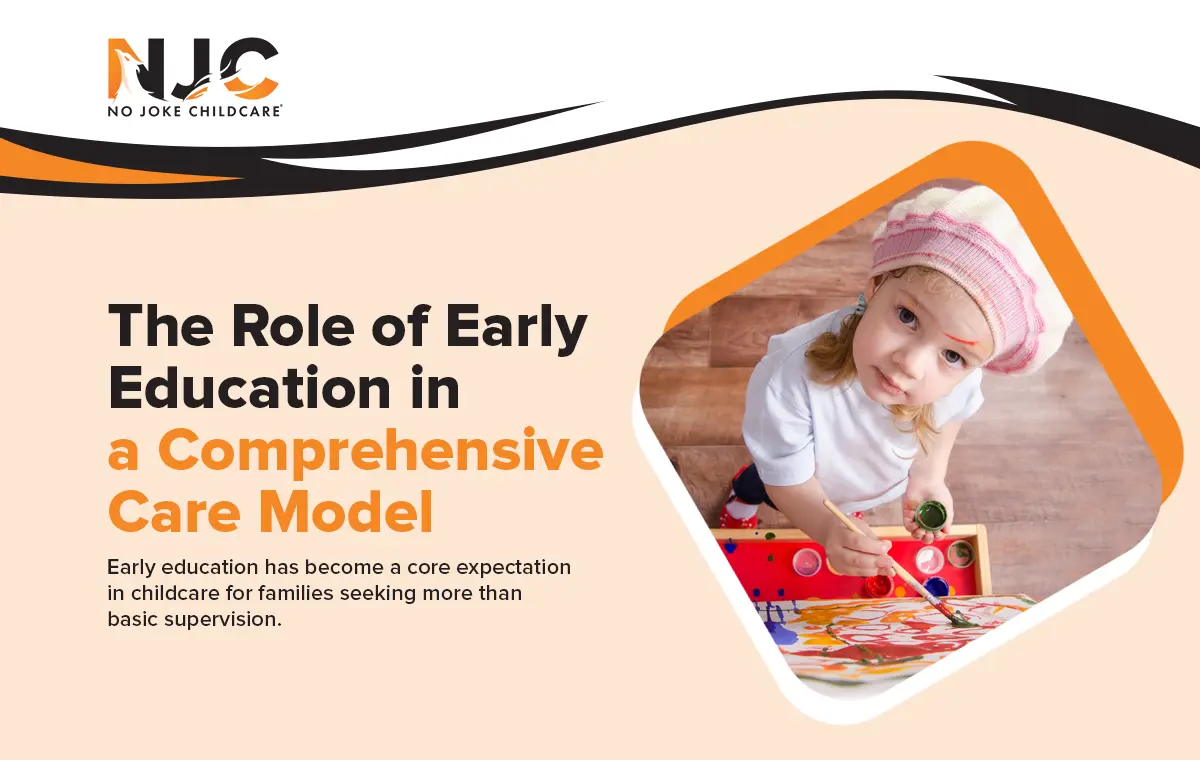
Early education has become a core expectation in childcare for families seeking more than basic supervision. Today’s parents want a care model that doesn’t just keep children safe but actively supports their growth emotionally, socially, and cognitively. A comprehensive approach blends nurturing care with intentional learning, giving children a strong foundation that extends far beyond the preschool years.

Building the Foundation for Lifelong Learning

Children begin learning the moment they’re born. The early years are critical for brain development, and early education takes full advantage of that window. Children naturally absorb essential skills through play, interaction, and exploration when learning is woven into everyday care. High-quality early education environments emphasize:

  • Language development: Daily conversations, stories, and songs expand vocabulary and comprehension.

  • Motor skill practice: Activities like stacking, drawing, or climbing help refine coordination and control.

  • Problem-solving: Open-ended play encourages curiosity, experimentation, and confidence in trying new things.

  • Social learning: Children begin to understand empathy, sharing, and cooperation through guided peer interactions.

  • Emotional literacy: Naming feelings, managing frustration, and practicing self-regulation are modeled and taught.

When these elements are embedded in a care setting, every child has a richer, more intentional experience.

Aligning Care and Curriculum for Better Outcomes

Too often, there’s a gap between what’s considered “care” and what’s seen as “education.” In a strong, comprehensive model, those lines are intentionally blurred. Learning doesn’t start at age three—it’s a process that begins in infancy and builds over time. Integrated early education supports:

  • Continuity in developmental goals: Skills taught in toddler rooms are built upon in preschool classrooms, creating a natural progression.

  • Consistent routines across age groups: Children feel secure when daily rhythms stay familiar, even as learning becomes more structured.

  • Intentional teaching moments: Everyday activities—from snack time to clean-up—are viewed as opportunities for growth.

This alignment ensures that children are never “just waiting” to start learning. They’ve been actively engaged in meaningful development since day one.

Meeting the Expectations of Today’s Families

Modern parents are looking for more than caretakers—they’re looking for collaborators in their child’s learning journey. Offering early education as part of your core childcare model shows families that your program is forward-thinking, intentional, and equipped to support their child’s full potential. Families respond positively to:

  • Clear learning objectives: Knowing what their child is working on gives parents confidence and a sense of partnership.

  • Documentation of growth: Sharing photos, progress notes, or developmental checklists builds transparency and trust.

  • Educator expertise: When caregivers are trained in early childhood education, parents immediately see the value.

By positioning early education as a central part of your care model—not a separate track—you communicate that your center is prepared to support the whole child at every stage.

Supporting Healthy Child Development Across Age Groups
Supporting Healthy Child Development Across Age Groups

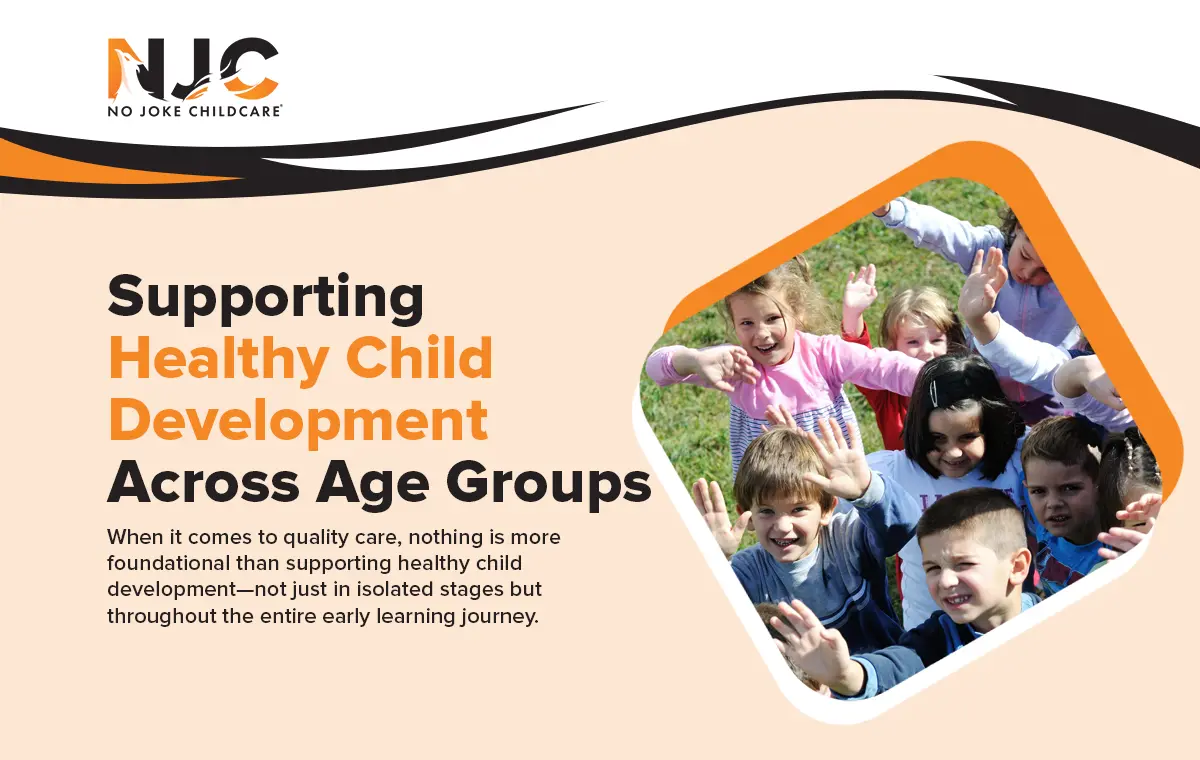
When it comes to quality care, nothing is more foundational than supporting healthy child development—not just in isolated stages but throughout the entire early learning journey. Integrated childcare and preschool programs are uniquely positioned to guide children through their most formative years with consistency, intention, and individualized support. This approach doesn’t just benefit children—it creates peace of mind for families and structure for educators.

The Power of Continuity in Early Childhood

Children thrive on familiarity. When the transition from infant care to preschool happens within the same program, children experience greater emotional security and fewer disruptions. Rather than adjusting to new environments, caregivers, and expectations every year, they’re able to build upon a stable foundation. Benefits of continuity across age groups include:

  • Stronger relationships with caregivers: Children develop trust more easily when surrounded by familiar faces and routines.

  • Smoother developmental transitions: Milestones like potty training or language growth feel more natural in a consistent setting.

  • Reduced anxiety and behavior issues: Stability lowers stress for children, which supports emotional regulation.

  • More meaningful observation: Educators who work with children over time can track progress and identify needs earlier.

This kind of long-term, relationship-based care is especially important during the early years when the brain is rapidly developing and children are forming their core sense of self.

Supporting the Whole Child at Every Stage

Development isn’t just about hitting milestones—it’s about nurturing the child as a whole person. Integrated programs that span multiple age groups can provide age-appropriate care while maintaining a unified developmental philosophy. A whole-child approach supports:

  • Social-emotional growth: Children learn to name feelings, resolve conflict, and build empathy in age-appropriate ways.

  • Cognitive development: Activities evolve from sensory play in toddlerhood to problem-solving and early academics in preschool.

  • Language and communication: Educators support emerging language at every stage, adjusting strategies to meet each child’s abilities.

  • Physical development: Gross and fine skills are consistently practiced through active play, crafts, and routines.

This framework ensures that children aren’t simply moving through classrooms but progressing through a developmentally aligned journey.

Customizing Care for Individual Developmental Needs

No two children grow at the same pace, even within the same age group. High-quality programs recognize this and provide responsive care that meets each child where they are. Practical approaches to individualized development include:

  • Ongoing developmental assessments: Regular tracking helps identify strengths and areas needing extra support.

  • Flexible curriculum pacing: Activities are adjusted to accommodate varying levels of readiness.

  • Small group and one-on-one time: Personalized attention allows children to thrive at their speed.

  • Open communication with families: Parents are informed and involved in their child’s growth decisions.

  • Inclusive practices: Children with developmental differences are supported within a nurturing, inclusive environment.

Responsive, customized care reinforces the message that each child is valued for who they are—not just for where they “should” be.

Key Elements of Successful Program Integration
Key Elements of Successful Program Integration

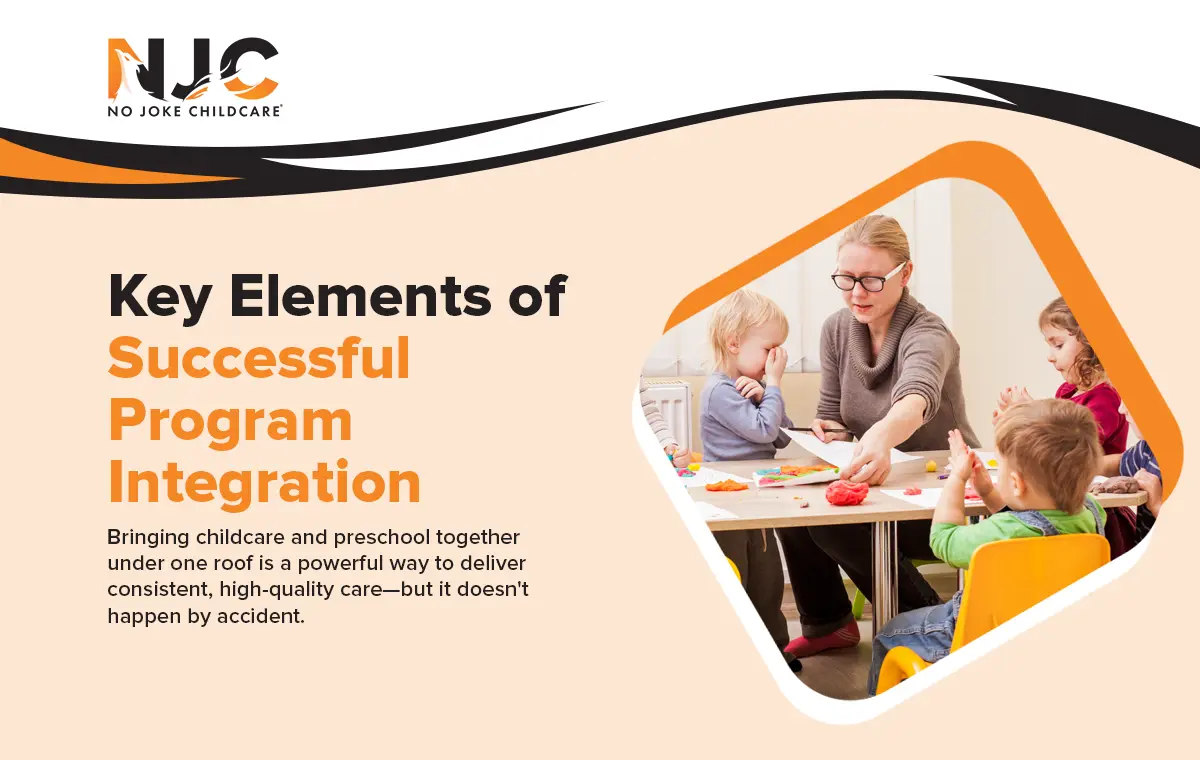
Bringing childcare and preschool together under one roof is a powerful way to deliver consistent, high-quality care—but it doesn’t happen by accident. Thoughtful program integration requires strategic planning, clear communication, and a unified vision across all age levels. When done well, integration strengthens learning outcomes, improves operational efficiency, and creates a more cohesive experience for families and staff.

Aligning Curriculum Across Age Groups

One of the most critical elements of program integration is ensuring that your curriculum flows smoothly from one age group to the next. While infants, toddlers, and preschoolers have unique developmental needs, the philosophy and structure guiding their learning should be consistent. To achieve curriculum alignment, successful programs often:

  • Define core learning objectives: Identify key developmental goals across social-emotional, cognitive, and physical domains.

  • Use a progressive framework: Ensure skills introduced in toddler rooms are built upon in preschool, reinforcing growth.

  • Standardize language and strategies: Use shared vocabulary (e.g., for emotions or routines) to create consistency.

  • Incorporate play-based learning: A unified approach to play supports development across all age groups.

  • Provide flexibility within structure: Adapt lessons to individual readiness while keeping long-term goals in view.

This alignment ensures that learning is intentional, even during classroom or age-level transitions.

Creating a Unified Staff Culture

Staff consistency plays a significant role in successful integration. When educators across rooms and age groups operate from a shared set of values and expectations, the result is a smoother, more supportive experience for children and families. Building a unified team culture requires the following:

  • Joint staff training sessions: Cross-room training fosters shared understanding and collaboration.

  • Clear behavior guidance policies: Everyone uses the same respectful, developmentally appropriate techniques.

  • Open lines of communication: Daily updates and team meetings keep staff informed and connected.

  • Shared leadership vision: Directors and lead teachers reinforce the same classroom goals and standards.

  • Staff mentorship opportunities: Pairing newer staff with experienced team members supports growth and cohesion.

When staff are aligned, children receive consistent support, no matter their room.

Strengthening Communication With Families

Program integration isn’t just about internal structure—it also impacts how families experience care. Consistent messaging, clear expectations, and accessible updates build trust and make transitions easier for parents and children. Strong family communication practices include:

  • Unified onboarding materials: Parents receive one cohesive message about philosophy, policies, and daily routines.

  • Consistent documentation: Progress updates and assessments follow a single format across age groups.

  • Transparent transitions: Families are prepared when their child moves to a new room, with support from both current and new teachers.

  • Centralized parent portals or apps: One platform makes tracking updates, events, and communication easier.

  • Regular check-ins: Scheduled conferences and informal chats keep parents engaged and informed.

Families that feel seen, heard, and supported are more likely to stay and share their constructive experiences with others.

Conclusion

Integrating childcare and preschool programs isn’t just about expanding services—it’s about expanding potential. When early education, child development, and operational strategy are woven together with intention, children thrive in every stage, educators feel empowered, and families experience a new level of trust and consistency. Top-performing centers know that strong integration builds more than a program—it creates a foundation for lifelong learning. And for parents, it offers exactly what they’ve been searching for: care that grows with their child, not apart from them.

Do you want
more traffic?

Stop wasting money and unlock the hidden potential of your advertising.

Are you using Google Ads

Try our new free ads grader?

Boost your childcare center's ROI with Michael Tasner, Founder of No Joke Childcare. With his extensive experience and expertise in childcare marketing, Michael Tasner offers innovative strategies tailored to the unique needs of your center. From web 3.0 marketing to social media strategies, he'll guide you to achieve maximum visibility and generate quality leads. Don't miss out on this opportunity to supercharge your marketing efforts and position your center for success.

About Michael Tasner

Hey, I'm Michael Tasner. I'm determined to make your childcare center grow. My only question is, will it be yours?

Categories
Childcare and Preschool
Published On: 03/06/20258 min readViews: 722

Childcare and preschool programs are often treated as separate services—but when they’re thoughtfully integrated, the impact on children and families can be powerful. Parents are no longer looking for just a place to drop off their kids; they want continuity, consistency, and a clear path for development. A well-structured program that blends nurturing care with early learning meets and exceeds those needs.

Integration means fewer transitions, stronger relationships, and a unified approach supporting social-emotional and cognitive growth. In this article, we’ll explore how expanding services through an integrated model benefits children, empowers educators, and creates a more seamless, supportive experience for families from day one.

The Role of Early Education in a Comprehensive Care Model

Early Education

Early education has become a core expectation in childcare for families seeking more than basic supervision. Today’s parents want a care model that doesn’t just keep children safe but actively supports their growth emotionally, socially, and cognitively. A comprehensive approach blends nurturing care with intentional learning, giving children a strong foundation that extends far beyond the preschool years.

Building the Foundation for Lifelong Learning

Children begin learning the moment they’re born. The early years are critical for brain development, and early education takes full advantage of that window. Children naturally absorb essential skills through play, interaction, and exploration when learning is woven into everyday care. High-quality early education environments emphasize:

  • Language development: Daily conversations, stories, and songs expand vocabulary and comprehension.

  • Motor skill practice: Activities like stacking, drawing, or climbing help refine coordination and control.

  • Problem-solving: Open-ended play encourages curiosity, experimentation, and confidence in trying new things.

  • Social learning: Children begin to understand empathy, sharing, and cooperation through guided peer interactions.

  • Emotional literacy: Naming feelings, managing frustration, and practicing self-regulation are modeled and taught.

When these elements are embedded in a care setting, every child has a richer, more intentional experience.

Aligning Care and Curriculum for Better Outcomes

Too often, there’s a gap between what’s considered “care” and what’s seen as “education.” In a strong, comprehensive model, those lines are intentionally blurred. Learning doesn’t start at age three—it’s a process that begins in infancy and builds over time. Integrated early education supports:

  • Continuity in developmental goals: Skills taught in toddler rooms are built upon in preschool classrooms, creating a natural progression.

  • Consistent routines across age groups: Children feel secure when daily rhythms stay familiar, even as learning becomes more structured.

  • Intentional teaching moments: Everyday activities—from snack time to clean-up—are viewed as opportunities for growth.

This alignment ensures that children are never “just waiting” to start learning. They’ve been actively engaged in meaningful development since day one.

Meeting the Expectations of Today’s Families

Modern parents are looking for more than caretakers—they’re looking for collaborators in their child’s learning journey. Offering early education as part of your core childcare model shows families that your program is forward-thinking, intentional, and equipped to support their child’s full potential. Families respond positively to:

  • Clear learning objectives: Knowing what their child is working on gives parents confidence and a sense of partnership.

  • Documentation of growth: Sharing photos, progress notes, or developmental checklists builds transparency and trust.

  • Educator expertise: When caregivers are trained in early childhood education, parents immediately see the value.

By positioning early education as a central part of your care model—not a separate track—you communicate that your center is prepared to support the whole child at every stage.

Supporting Healthy Child Development Across Age Groups

Supporting Healthy Child Development Across Age Groups

When it comes to quality care, nothing is more foundational than supporting healthy child development—not just in isolated stages but throughout the entire early learning journey. Integrated childcare and preschool programs are uniquely positioned to guide children through their most formative years with consistency, intention, and individualized support. This approach doesn’t just benefit children—it creates peace of mind for families and structure for educators.

The Power of Continuity in Early Childhood

Children thrive on familiarity. When the transition from infant care to preschool happens within the same program, children experience greater emotional security and fewer disruptions. Rather than adjusting to new environments, caregivers, and expectations every year, they’re able to build upon a stable foundation. Benefits of continuity across age groups include:

  • Stronger relationships with caregivers: Children develop trust more easily when surrounded by familiar faces and routines.

  • Smoother developmental transitions: Milestones like potty training or language growth feel more natural in a consistent setting.

  • Reduced anxiety and behavior issues: Stability lowers stress for children, which supports emotional regulation.

  • More meaningful observation: Educators who work with children over time can track progress and identify needs earlier.

This kind of long-term, relationship-based care is especially important during the early years when the brain is rapidly developing and children are forming their core sense of self.

Supporting the Whole Child at Every Stage

Development isn’t just about hitting milestones—it’s about nurturing the child as a whole person. Integrated programs that span multiple age groups can provide age-appropriate care while maintaining a unified developmental philosophy. A whole-child approach supports:

  • Social-emotional growth: Children learn to name feelings, resolve conflict, and build empathy in age-appropriate ways.

  • Cognitive development: Activities evolve from sensory play in toddlerhood to problem-solving and early academics in preschool.

  • Language and communication: Educators support emerging language at every stage, adjusting strategies to meet each child’s abilities.

  • Physical development: Gross and fine skills are consistently practiced through active play, crafts, and routines.

This framework ensures that children aren’t simply moving through classrooms but progressing through a developmentally aligned journey.

Customizing Care for Individual Developmental Needs

No two children grow at the same pace, even within the same age group. High-quality programs recognize this and provide responsive care that meets each child where they are. Practical approaches to individualized development include:

  • Ongoing developmental assessments: Regular tracking helps identify strengths and areas needing extra support.

  • Flexible curriculum pacing: Activities are adjusted to accommodate varying levels of readiness.

  • Small group and one-on-one time: Personalized attention allows children to thrive at their speed.

  • Open communication with families: Parents are informed and involved in their child’s growth decisions.

  • Inclusive practices: Children with developmental differences are supported within a nurturing, inclusive environment.

Responsive, customized care reinforces the message that each child is valued for who they are—not just for where they “should” be.

Key Elements of Successful Program Integration

Key Elements of Successful Program Integration

Bringing childcare and preschool together under one roof is a powerful way to deliver consistent, high-quality care—but it doesn’t happen by accident. Thoughtful program integration requires strategic planning, clear communication, and a unified vision across all age levels. When done well, integration strengthens learning outcomes, improves operational efficiency, and creates a more cohesive experience for families and staff.

Aligning Curriculum Across Age Groups

One of the most critical elements of program integration is ensuring that your curriculum flows smoothly from one age group to the next. While infants, toddlers, and preschoolers have unique developmental needs, the philosophy and structure guiding their learning should be consistent. To achieve curriculum alignment, successful programs often:

  • Define core learning objectives: Identify key developmental goals across social-emotional, cognitive, and physical domains.

  • Use a progressive framework: Ensure skills introduced in toddler rooms are built upon in preschool, reinforcing growth.

  • Standardize language and strategies: Use shared vocabulary (e.g., for emotions or routines) to create consistency.

  • Incorporate play-based learning: A unified approach to play supports development across all age groups.

  • Provide flexibility within structure: Adapt lessons to individual readiness while keeping long-term goals in view.

This alignment ensures that learning is intentional, even during classroom or age-level transitions.

Creating a Unified Staff Culture

Staff consistency plays a significant role in successful integration. When educators across rooms and age groups operate from a shared set of values and expectations, the result is a smoother, more supportive experience for children and families. Building a unified team culture requires the following:

  • Joint staff training sessions: Cross-room training fosters shared understanding and collaboration.

  • Clear behavior guidance policies: Everyone uses the same respectful, developmentally appropriate techniques.

  • Open lines of communication: Daily updates and team meetings keep staff informed and connected.

  • Shared leadership vision: Directors and lead teachers reinforce the same classroom goals and standards.

  • Staff mentorship opportunities: Pairing newer staff with experienced team members supports growth and cohesion.

When staff are aligned, children receive consistent support, no matter their room.

Strengthening Communication With Families

Program integration isn’t just about internal structure—it also impacts how families experience care. Consistent messaging, clear expectations, and accessible updates build trust and make transitions easier for parents and children. Strong family communication practices include:

  • Unified onboarding materials: Parents receive one cohesive message about philosophy, policies, and daily routines.

  • Consistent documentation: Progress updates and assessments follow a single format across age groups.

  • Transparent transitions: Families are prepared when their child moves to a new room, with support from both current and new teachers.

  • Centralized parent portals or apps: One platform makes tracking updates, events, and communication easier.

  • Regular check-ins: Scheduled conferences and informal chats keep parents engaged and informed.

Families that feel seen, heard, and supported are more likely to stay and share their constructive experiences with others.

Conclusion

Integrating childcare and preschool programs isn’t just about expanding services—it’s about expanding potential. When early education, child development, and operational strategy are woven together with intention, children thrive in every stage, educators feel empowered, and families experience a new level of trust and consistency. Top-performing centers know that strong integration builds more than a program—it creates a foundation for lifelong learning. And for parents, it offers exactly what they’ve been searching for: care that grows with their child, not apart from them.

Childcare and Preschool
Published On: 03/06/20258 min readViews: 722

Childcare and preschool programs are often treated as separate services—but when they’re thoughtfully integrated, the impact on children and families can be powerful. Parents are no longer looking for just a place to drop off their kids; they want continuity, consistency, and a clear path for development. A well-structured program that blends nurturing care with early learning meets and exceeds those needs.

Integration means fewer transitions, stronger relationships, and a unified approach supporting social-emotional and cognitive growth. In this article, we’ll explore how expanding services through an integrated model benefits children, empowers educators, and creates a more seamless, supportive experience for families from day one.

The Role of Early Education in a Comprehensive Care Model

Early Education

Early education has become a core expectation in childcare for families seeking more than basic supervision. Today’s parents want a care model that doesn’t just keep children safe but actively supports their growth emotionally, socially, and cognitively. A comprehensive approach blends nurturing care with intentional learning, giving children a strong foundation that extends far beyond the preschool years.

Building the Foundation for Lifelong Learning

Children begin learning the moment they’re born. The early years are critical for brain development, and early education takes full advantage of that window. Children naturally absorb essential skills through play, interaction, and exploration when learning is woven into everyday care. High-quality early education environments emphasize:

  • Language development: Daily conversations, stories, and songs expand vocabulary and comprehension.

  • Motor skill practice: Activities like stacking, drawing, or climbing help refine coordination and control.

  • Problem-solving: Open-ended play encourages curiosity, experimentation, and confidence in trying new things.

  • Social learning: Children begin to understand empathy, sharing, and cooperation through guided peer interactions.

  • Emotional literacy: Naming feelings, managing frustration, and practicing self-regulation are modeled and taught.

When these elements are embedded in a care setting, every child has a richer, more intentional experience.

Aligning Care and Curriculum for Better Outcomes

Too often, there’s a gap between what’s considered “care” and what’s seen as “education.” In a strong, comprehensive model, those lines are intentionally blurred. Learning doesn’t start at age three—it’s a process that begins in infancy and builds over time. Integrated early education supports:

  • Continuity in developmental goals: Skills taught in toddler rooms are built upon in preschool classrooms, creating a natural progression.

  • Consistent routines across age groups: Children feel secure when daily rhythms stay familiar, even as learning becomes more structured.

  • Intentional teaching moments: Everyday activities—from snack time to clean-up—are viewed as opportunities for growth.

This alignment ensures that children are never “just waiting” to start learning. They’ve been actively engaged in meaningful development since day one.

Meeting the Expectations of Today’s Families

Modern parents are looking for more than caretakers—they’re looking for collaborators in their child’s learning journey. Offering early education as part of your core childcare model shows families that your program is forward-thinking, intentional, and equipped to support their child’s full potential. Families respond positively to:

  • Clear learning objectives: Knowing what their child is working on gives parents confidence and a sense of partnership.

  • Documentation of growth: Sharing photos, progress notes, or developmental checklists builds transparency and trust.

  • Educator expertise: When caregivers are trained in early childhood education, parents immediately see the value.

By positioning early education as a central part of your care model—not a separate track—you communicate that your center is prepared to support the whole child at every stage.

Supporting Healthy Child Development Across Age Groups

Supporting Healthy Child Development Across Age Groups

When it comes to quality care, nothing is more foundational than supporting healthy child development—not just in isolated stages but throughout the entire early learning journey. Integrated childcare and preschool programs are uniquely positioned to guide children through their most formative years with consistency, intention, and individualized support. This approach doesn’t just benefit children—it creates peace of mind for families and structure for educators.

The Power of Continuity in Early Childhood

Children thrive on familiarity. When the transition from infant care to preschool happens within the same program, children experience greater emotional security and fewer disruptions. Rather than adjusting to new environments, caregivers, and expectations every year, they’re able to build upon a stable foundation. Benefits of continuity across age groups include:

  • Stronger relationships with caregivers: Children develop trust more easily when surrounded by familiar faces and routines.

  • Smoother developmental transitions: Milestones like potty training or language growth feel more natural in a consistent setting.

  • Reduced anxiety and behavior issues: Stability lowers stress for children, which supports emotional regulation.

  • More meaningful observation: Educators who work with children over time can track progress and identify needs earlier.

This kind of long-term, relationship-based care is especially important during the early years when the brain is rapidly developing and children are forming their core sense of self.

Supporting the Whole Child at Every Stage

Development isn’t just about hitting milestones—it’s about nurturing the child as a whole person. Integrated programs that span multiple age groups can provide age-appropriate care while maintaining a unified developmental philosophy. A whole-child approach supports:

  • Social-emotional growth: Children learn to name feelings, resolve conflict, and build empathy in age-appropriate ways.

  • Cognitive development: Activities evolve from sensory play in toddlerhood to problem-solving and early academics in preschool.

  • Language and communication: Educators support emerging language at every stage, adjusting strategies to meet each child’s abilities.

  • Physical development: Gross and fine skills are consistently practiced through active play, crafts, and routines.

This framework ensures that children aren’t simply moving through classrooms but progressing through a developmentally aligned journey.

Customizing Care for Individual Developmental Needs

No two children grow at the same pace, even within the same age group. High-quality programs recognize this and provide responsive care that meets each child where they are. Practical approaches to individualized development include:

  • Ongoing developmental assessments: Regular tracking helps identify strengths and areas needing extra support.

  • Flexible curriculum pacing: Activities are adjusted to accommodate varying levels of readiness.

  • Small group and one-on-one time: Personalized attention allows children to thrive at their speed.

  • Open communication with families: Parents are informed and involved in their child’s growth decisions.

  • Inclusive practices: Children with developmental differences are supported within a nurturing, inclusive environment.

Responsive, customized care reinforces the message that each child is valued for who they are—not just for where they “should” be.

Key Elements of Successful Program Integration

Key Elements of Successful Program Integration

Bringing childcare and preschool together under one roof is a powerful way to deliver consistent, high-quality care—but it doesn’t happen by accident. Thoughtful program integration requires strategic planning, clear communication, and a unified vision across all age levels. When done well, integration strengthens learning outcomes, improves operational efficiency, and creates a more cohesive experience for families and staff.

Aligning Curriculum Across Age Groups

One of the most critical elements of program integration is ensuring that your curriculum flows smoothly from one age group to the next. While infants, toddlers, and preschoolers have unique developmental needs, the philosophy and structure guiding their learning should be consistent. To achieve curriculum alignment, successful programs often:

  • Define core learning objectives: Identify key developmental goals across social-emotional, cognitive, and physical domains.

  • Use a progressive framework: Ensure skills introduced in toddler rooms are built upon in preschool, reinforcing growth.

  • Standardize language and strategies: Use shared vocabulary (e.g., for emotions or routines) to create consistency.

  • Incorporate play-based learning: A unified approach to play supports development across all age groups.

  • Provide flexibility within structure: Adapt lessons to individual readiness while keeping long-term goals in view.

This alignment ensures that learning is intentional, even during classroom or age-level transitions.

Creating a Unified Staff Culture

Staff consistency plays a significant role in successful integration. When educators across rooms and age groups operate from a shared set of values and expectations, the result is a smoother, more supportive experience for children and families. Building a unified team culture requires the following:

  • Joint staff training sessions: Cross-room training fosters shared understanding and collaboration.

  • Clear behavior guidance policies: Everyone uses the same respectful, developmentally appropriate techniques.

  • Open lines of communication: Daily updates and team meetings keep staff informed and connected.

  • Shared leadership vision: Directors and lead teachers reinforce the same classroom goals and standards.

  • Staff mentorship opportunities: Pairing newer staff with experienced team members supports growth and cohesion.

When staff are aligned, children receive consistent support, no matter their room.

Strengthening Communication With Families

Program integration isn’t just about internal structure—it also impacts how families experience care. Consistent messaging, clear expectations, and accessible updates build trust and make transitions easier for parents and children. Strong family communication practices include:

  • Unified onboarding materials: Parents receive one cohesive message about philosophy, policies, and daily routines.

  • Consistent documentation: Progress updates and assessments follow a single format across age groups.

  • Transparent transitions: Families are prepared when their child moves to a new room, with support from both current and new teachers.

  • Centralized parent portals or apps: One platform makes tracking updates, events, and communication easier.

  • Regular check-ins: Scheduled conferences and informal chats keep parents engaged and informed.

Families that feel seen, heard, and supported are more likely to stay and share their constructive experiences with others.

Conclusion

Integrating childcare and preschool programs isn’t just about expanding services—it’s about expanding potential. When early education, child development, and operational strategy are woven together with intention, children thrive in every stage, educators feel empowered, and families experience a new level of trust and consistency. Top-performing centers know that strong integration builds more than a program—it creates a foundation for lifelong learning. And for parents, it offers exactly what they’ve been searching for: care that grows with their child, not apart from them.